




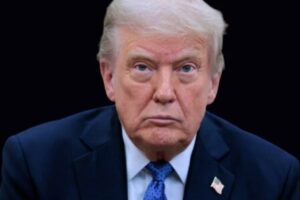






















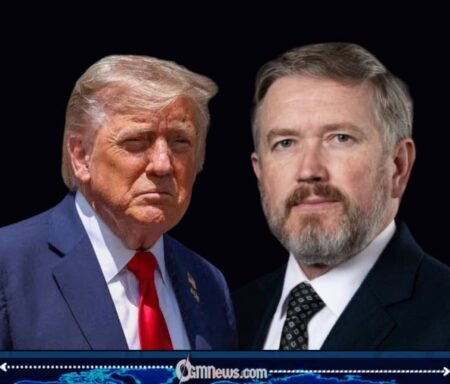
A fresh political battle erupted in Washington after Thomas Massie announced plans to push for a congressional vote aimed at blocking U.S. military strikes against Iran ordered by Donald Trump, the current U.S. president serving a second term. Massie, a Republican from Kentucky, said he would work with lawmakers from both parties to force Congress to debate and vote on the military action.
The move comes amid intensifying global tensions following coordinated strikes reportedly targeting Iranian military and nuclear facilities. The issue has sparked sharp reactions both in the United States and internationally, raising questions about presidential war powers, constitutional authority, and the risk of a broader Middle East conflict.
Massie’s statement—“I am opposed to this war. This is NOT ‘America First’”—quickly gained attention across political circles and international media outlets, highlighting divisions even within the president’s own party.
Massie’s Push for a Congressional Vote
According to multiple reports, Massie said he plans to invoke congressional procedures to compel lawmakers to vote on whether the United States should be involved in military action against Iran. The Kentucky congressman has argued that the Constitution requires Congress not the president to authorize acts of war.
Massie has also indicated he will collaborate with the Democratic Representative Ro Khanna of California on the effort. The bipartisan initiative seeks to use the War Powers Resolution to force the House of Representatives to consider legislation that would restrict unauthorized military action against Iran.
In social media statements and interviews cited by several outlets, Massie emphasized that lawmakers must go on record regarding the war. He argued that the American public deserves transparency about decisions that could lead to large-scale military conflict.
Debate Over Presidential War Powers
The controversy has reignited longstanding debates about the limits of presidential authority during military crises. Under the U.S. Constitution, Congress has the power to declare war, while presidents often argue they have authority to conduct limited military operations as commander-in-chief.
Critics in Congress say the recent strikes against Iran were carried out without sufficient consultation with lawmakers, raising concerns about executive overreach. Several members of Congress from both parties have questioned whether the administration complied with the War Powers Resolution, which requires the president to notify Congress within a specific timeframe when U.S. forces enter hostilities.
According to reporting from The Wall Street Journal and The Guardian, some lawmakers described the strikes as potentially unconstitutional if Congress was not fully consulted beforehand. These concerns have fueled calls for urgent briefings and legislative oversight.
Divisions Within Both Political Parties
The debate has not fallen neatly along party lines. While many Democrats have criticized the strikes, some Republicans including Massie have also voiced concerns about the administration’s approach to Iran.
Reports indicate that Senate and House lawmakers have introduced or are preparing resolutions aimed at limiting further military escalation without congressional approval. The push reflects broader worries about the United States becoming entangled in another prolonged Middle East conflict.
At the same time, other political leaders have strongly defended the strikes. Some allies of President Trump argued the operation was necessary to deter Iranian threats and prevent Tehran from advancing its nuclear ambitions.
International Reactions and Diplomatic Concerns
The strikes have drawn significant reactions from global leaders and governments. European officials, including Emmanuel Macron of France, have warned that military action alone will not resolve the long-running dispute over Iran’s nuclear program.
Macron stressed that diplomacy remains essential and said the crisis could have severe consequences for international peace and stability. He also called for urgent diplomatic engagement and discussions at the United Nations Security Council to prevent further escalation.
European leaders from France, Germany, and the United Kingdom have urged Iran to pursue negotiations while also warning that continued escalation could destabilize the wider Middle East region.
Rising Global Tensions and Strategic Stakes
The confrontation highlights the fragile geopolitical landscape surrounding Iran, whose nuclear program and regional influence have been sources of tension for decades.
Washington has long argued that preventing Iran from obtaining nuclear weapons is a major security priority. However, critics warn that unilateral military actions could trigger retaliation or spark wider regional conflict involving U.S. allies and adversaries.
International observers note that diplomatic negotiations over Iran’s nuclear program were still ongoing before the latest escalation, making the current crisis particularly concerning for policymakers seeking stability in the Middle East.


[…] […]