





























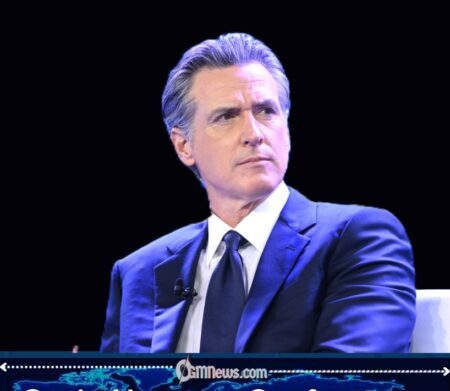
Gavin Newsom, the Democratic governor of California since 2019, is stepping more decisively onto the national stage, addressing questions about populism, ideological divisions within his party and his own political future. In a wide-ranging conversation coinciding with the release of his memoir, Young Man in a Hurry, Newsom presents himself as both a product of privilege and hardship — and as a potential unifier for a fractured American left.
The 58-year-old governor, often mentioned as a leading Democratic contender for the 2028 presidential election, has long been viewed as a polished, camera-ready politician. In contrast to the populist style of President Donald Trump, who is currently serving his second term in the White House, Newsom embodies a more traditional political archetype. That contrast has fueled both admiration and skepticism as he weighs his next steps.
Image, Elitism and the Populist Age
Newsom’s critics have frequently described him as overly ambitious and emblematic of political elitism. His polished public persona — tall, composed and frequently flanked by his family — has reinforced perceptions that he represents an older model of political leadership at a time when authenticity and outsider credentials resonate strongly with voters.
In a political climate shaped by populist rhetoric and suspicion of establishment figures, that image has proven difficult to shake. Opponents argue that Newsom’s ascent through California politics appeared seamless, aided by connections to influential families and powerful networks in San Francisco.
Yet Newsom contends that such portrayals oversimplify his life story. He argues that the “one-dimensional portrait” often painted in media coverage fails to capture the economic instability and personal challenges that shaped his upbringing.
Newsom :Childhood Between Two Worlds
Central to Newsom’s memoir is his description of growing up in what he calls a “duality.” After his parents divorced when he was three, he and his sister were primarily raised by their mother, who worked multiple jobs to support the family. He describes long hours alone at home and modest meals, portraying a childhood marked by financial constraint.
At the same time, his father maintained a close professional relationship with investor Gordon Getty, placing young Newsom in proximity to extraordinary wealth. He recounts attending lavish gatherings and international trips, experiences that contrasted sharply with his home life.
Newsom insists that exposure to privilege did not equate to personal wealth. “To work for them doesn’t make you them,” he has said of his father’s association with the Getty family, emphasizing that his upbringing included both scarcity and opportunity.
Political Formation in California
Newsom’s political career began early. In his twenties, he was appointed to a San Francisco city commission by then-mayor Willie Brown. He later succeeded Brown as mayor in 2004, gaining national attention for authorizing same-sex marriages in San Francisco — a move that positioned him as a bold progressive voice within the Democratic Party.
Since becoming governor in 2019, Newsom has overseen California through major crises, including devastating wildfires and the COVID-19 pandemic. He has also been an outspoken critic of President Trump’s policies, frequently drawing contrasts between California’s governance model and that of the federal administration.
Those years have solidified his reputation as one of the Democratic Party’s most visible figures. They have also intensified speculation about his presidential ambitions.
Populism, ‘Purity Tests’ and Party Unity
In discussing the state of American politics, Newsom has warned against what he calls “purity tests” within his own party — ideological benchmarks that, in his view, can narrow the coalition needed to win national elections. He argues that Democrats must broaden their appeal while maintaining core principles.
At the same time, he acknowledges the potency of populist messaging. President Trump’s political rise reshaped expectations about leadership style and voter engagement, breaking longstanding norms. Newsom suggests that countering that appeal requires more than policy proposals; it demands an understanding of voter frustration and economic anxiety.
Whether he can bridge divides within the Democratic coalition — between progressives and moderates, activists and institutional leaders — remains an open question. Supporters believe his executive experience and national profile position him well for that challenge. Skeptics question whether his image will resonate beyond coastal strongholds.
The Road to 2028
While Newsom has stopped short of formally declaring a presidential campaign, his recent remarks and the timing of his memoir have intensified speculation. His focus on personal narrative, party strategy and national themes signals preparation for a broader role.
Political observers note that memoirs often precede presidential bids, offering candidates a chance to shape public perception on their own terms. Newsom rejects the notion that his book is purely strategic, describing it instead as an effort to correct misconceptions.
Still, his message is unmistakable: he sees himself as more than a state executive. Whether Democratic voters ultimately agree — and whether he can navigate the evolving terrain of American politics — will define the next chapter of his career.
Casinoabc999? Good Site. The interface is sleek, and there is a lot of stuff to...