











Hillary Clinton has publicly urged President Donald Trump to testify under oath regarding his past association with disgraced financier Jeffrey Epstein, reigniting political debate over accountability and transparency in one of the most controversial criminal cases of recent years. The remarks, first reported by Agence France-Presse (AFP) and subsequently covered by multiple international outlets, have added fresh momentum to discussions surrounding the lingering political fallout of the Epstein scandal.
Clinton’s call comes amid renewed scrutiny of individuals who had documented social or professional interactions with Epstein prior to his 2019 arrest on federal sex trafficking charges. While no new legal action has been announced against President Trump in connection with Epstein, the former secretary of state argued that sworn testimony would help “clear the air” and reinforce public trust in institutions.
Clinton’s Argument: Transparency and Institutional Integrity
In comments cited by AFP and echoed by Reuters and The Guardian, Clinton framed her demand as a matter of principle rather than partisan rivalry. She maintained that individuals who held or currently hold public office should be willing to answer questions under oath when their names arise in connection with major criminal investigations.
Clinton did not accuse President Trump of criminal wrongdoing in her remarks. Instead, she emphasized that sworn testimony—whether in a congressional, judicial, or investigative context—could provide clarity and dispel speculation that has circulated for years. According to Reuters’ political analysis, Clinton’s position aligns with broader Democratic messaging centered on government transparency and oversight.
The Guardian noted that Clinton’s comments reflect the enduring political resonance of the Epstein case, which continues to influence discourse about elite accountability and systemic oversight failures.
Trump’s Historical Association with Epstein
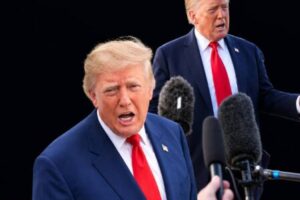
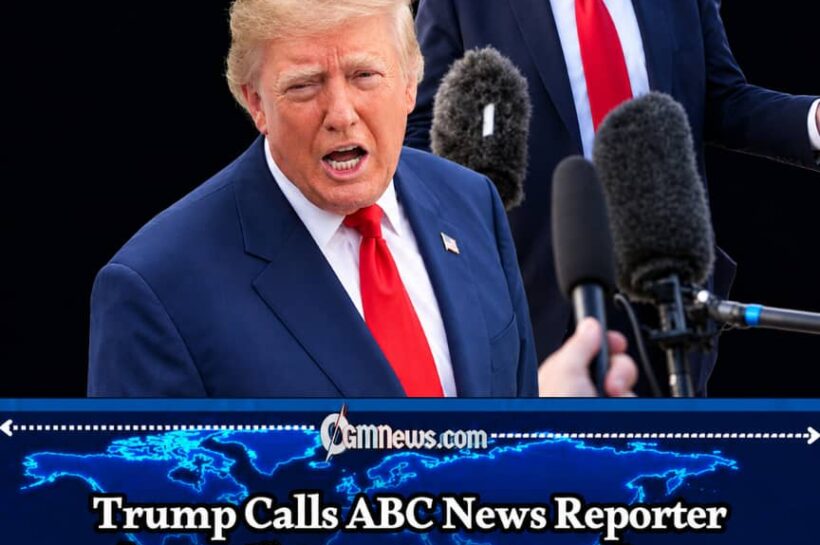
President Trump, now serving his second term in office, has previously acknowledged knowing Epstein socially during the 1990s and early 2000s. Media investigations by The New York Times and The Washington Post have documented that the two men moved within overlapping social circles in Palm Beach and New York during that period.
However, President Trump has consistently stated that he distanced himself from Epstein well before the financier’s criminal activities became publicly known. Past reporting indicates that Trump barred Epstein from his Mar-a-Lago club following a reported dispute, though accounts vary regarding the circumstances. The White House has reiterated that there is no evidence implicating the president in Epstein’s crimes.
The broader context, as detailed by major news outlets, shows that Epstein cultivated relationships with a wide range of prominent figures across political, business, and academic spheres before his arrest.
Political Reactions and Partisan Divides.
Clinton’s call for sworn testimony has triggered swift reactions from both sides of the political aisle. Republican lawmakers and conservative commentators have characterized the remarks as politically motivated, arguing that they represent an attempt to revive a controversial narrative without new evidence.
Democratic voices, meanwhile, have defended the call as consistent with demands for accountability across party lines. Some have argued that transparency should extend to all public figures who had ties to Epstein, not solely President Trump. According to Reuters’ congressional coverage, the issue underscores continuing partisan disagreements about the scope and intent of investigative oversight.
Political analysts interviewed by The Guardian suggest that the renewed focus on Epstein reflects broader electoral and institutional tensions, particularly as debates over public ethics and accountability remain central to national politics.
The Enduring Impact of the Epstein Case
Epstein’s 2019 arrest on federal sex trafficking charges brought renewed attention to his extensive network of high-profile contacts. After his death in custody later that year, investigations continued into associates and alleged facilitators, including British socialite Ghislaine Maxwell, who was convicted in 2021 on sex trafficking-related charges.
Coverage from BBC News has emphasized the global ramifications of the scandal, noting how it exposed systemic weaknesses in oversight mechanisms and highlighted the challenges of holding powerful individuals accountable.
The case has also fueled ongoing public skepticism about institutional transparency, particularly concerning how Epstein was able to cultivate relationships with influential figures for years before facing serious legal consequences.
Broader Implications for Public Trust
Clinton’s demand for sworn testimony places renewed emphasis on the intersection of law, politics, and public perception. While there is currently no formal legal requirement compelling President Trump to testify in relation to Epstein, the political optics of transparency remain significant.
Observers note that the controversy underscores a persistent theme in American political life: the tension between legal standards and public expectations. Calls for testimony even absent new allegations reflect a broader societal demand for clarity in matters involving prominent leaders.
As the Epstein case continues to cast a long shadow over Washington, Clinton’s remarks have ensured that questions surrounding transparency and accountability remain firmly in the national conversation.

Logging in is a breeze and the site stability is amazing even during peak hours....