





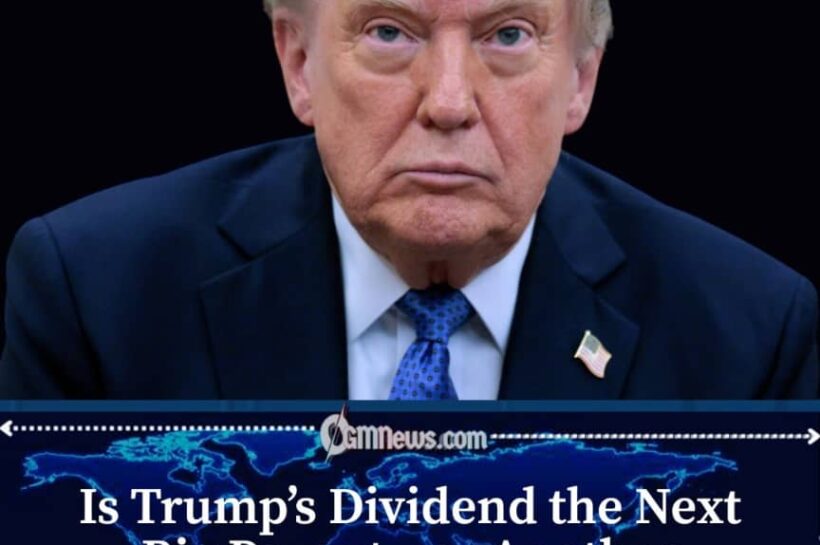













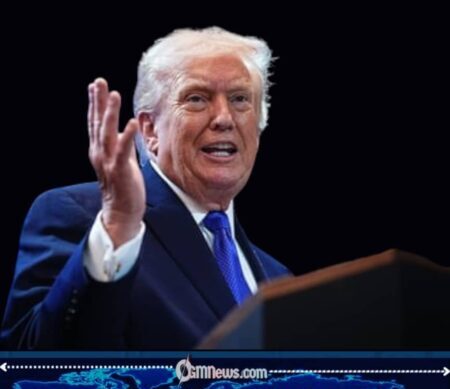
President Donald J. Trump, currently serving his second term, used the national platform of the State of the Union to directly address the Supreme Court of the United States after it curtailed elements of his administration’s tariff authority. Calling the Court’s involvement “unfortunate,” Trump asserted that the ruling would not halt his broader economic strategy and insisted that alternative legal mechanisms would keep key tariffs in place.
Standing before lawmakers and several justices seated in the chamber, Donald Trump maintained that congressional action would not be necessary to sustain the administration’s trade objectives. His remarks signaled a rapid policy pivot rather than retreat, setting the stage for a renewed legal and political debate over executive trade powers.
Donald Trump Confronts the Court’s Decision Head-On
Donald Trump framed the Court’s 6–3 ruling as a procedural obstacle rather than a substantive rejection of his trade philosophy. The decision found that portions of the administration’s previous tariff framework exceeded the authority granted under emergency economic powers statutes, particularly the International Emergency Economic Powers Act (IEEPA).
Chief Justice John Roberts authored the majority opinion, emphasizing statutory limits on executive authority. The ruling did not invalidate all tariffs imposed during Trump’s presidency, but it narrowed the legal foundation for broad emergency-based trade penalties.
In response, Donald Trump argued that the administration had anticipated legal scrutiny and had prepared alternative statutory pathways to ensure continuity of policy.
Legal Pivot: Alternative Trade Authorities Activated
Following the Court’s ruling, administration officials confirmed that revised tariffs were being implemented under Section 122 of the Trade Act of 1974. This provision permits temporary duties typically capped at 15 percent for up to 150 days to address balance-of-payments concerns.
Donald Trump indicated that these tools would allow his administration to maintain leverage in global trade negotiations without requiring new legislation from Congress. Trade attorneys note, however, that such authorities are narrower in scope and subject to procedural requirements that differ from those under IEEPA.
The administration has also suggested that other statutory mechanisms, including national security-based trade provisions, remain available if further adjustments become necessary.
Reaction Inside the Chamber and Beyond
Several justices, including Roberts and Justice Amy Coney Barrett, were present during the president’s remarks at the State of the Union. Observers described their demeanor as composed and neutral as Donald Trump criticized the Court’s intervention.
On Capitol Hill, responses were mixed. Some Republican lawmakers expressed support for the president’s determination to preserve tariff measures, arguing that strong trade enforcement is essential to protecting domestic industries. Democratic leaders, meanwhile, characterized the ruling as a reaffirmation of constitutional checks and balances.
Legal scholars say the episode underscores the evolving relationship between the judiciary and executive branch, particularly in areas where Congress has delegated discretionary authority.
Market and International Implications
Financial markets reacted cautiously to the ruling and the subsequent policy shift. Some analysts believe that greater judicial clarity may reduce long-term uncertainty, while others warn that repeated legal adjustments could complicate business planning.
Importers and manufacturers are evaluating the impact of newly imposed temporary tariffs, particularly in sectors reliant on global supply chains. Economists remain divided over whether the revised measures will produce inflationary pressures or serve as effective negotiation leverage.
International partners are also assessing their responses. Trade officials in several countries have signaled they are reviewing countermeasures while monitoring how the administration’s alternative legal strategy unfolds.
Broader Constitutional Stakes
At its core, the dispute reflects a long-standing constitutional tension: how far Congress may delegate authority over commerce to the executive branch. While presidents historically wield broad trade powers, courts have increasingly signaled that statutory boundaries must be respected.
Donald Trump’s forceful defense of his tariff program suggests that trade will remain a defining feature of his second-term agenda. Whether additional litigation follows may depend on how expansively the administration interprets alternative statutory provisions.
For now, the administration maintains that its economic strategy remains intact even as the judiciary asserts a more pronounced role in shaping its legal contours.
[…] […]