



























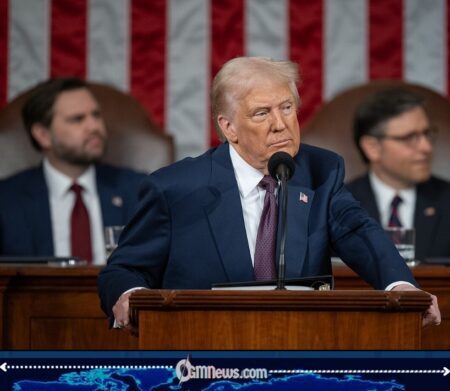
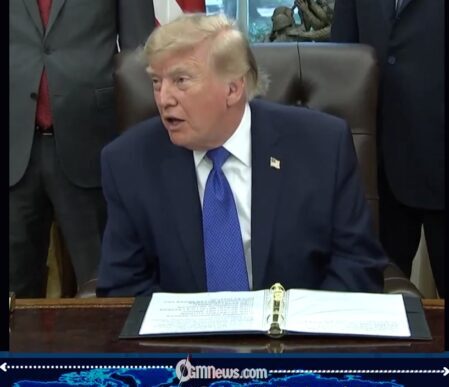
U.S. President Donald Trump, serving a second term in the White House, will address Congress on Tuesday night in a State of the Union speech delivered at a fraught moment for his administration. With approval ratings sliding, economic anxieties mounting and foreign policy tensions intensifying, the prime-time address is expected to serve as both a defense of his record and a blueprint for the months ahead.
The speech, his second formal address to Congress since returning to office 13 months ago, comes as the November midterm elections approach. For Republicans seeking to retain control of Congress, the address offers a nationally televised opportunity to reset the political narrative. For Democrats, it presents a moment to sharpen their critique of the president’s policies and leadership style.
Recent days have underscored the challenges confronting the Trump administration, from a Supreme Court decision striking down Trump’s global tariff regime to new economic data showing slowing growth and accelerating inflation. Against that backdrop, the president Trump’s remarks will be closely watched at home and abroad.
Mounting Economic Pressures
Economic concerns are expected to feature prominently in the address. Although Trump campaigned on pledges to ease the cost of living and stimulate growth, recent data suggest the economy has slowed more sharply than anticipated while inflation has ticked upward. Polls indicate that many Americans remain unconvinced that their financial burdens have eased.
White House officials say the president Trump will “claim victory on the economy,” pointing to stock market gains, private-sector investment and recently enacted tax cut legislation. He is also expected to argue that he inherited structural weaknesses from his Democratic predecessor, President Joe Biden, and that affordability concerns have been overstated by political opponents.
The president Trump challenge will be to persuade skeptical voters that his policies are delivering tangible improvements. Republican campaign advisers have privately urged him to maintain a disciplined focus on economic messaging, particularly as lawmakers in competitive districts prepare for demanding reelection battles.
Tariffs, the Supreme Court and Institutional Tensions Against Trump Administration
A significant portion of the address is likely to focus on the recent Supreme Court ruling invalidating Trump’s global tariff framework. The decision represented a setback for a cornerstone of his trade agenda, prompting sharp criticism from the president.
Trump is expected to argue that the court erred in its interpretation of executive authority and to outline alternative statutory tools he could employ to reinstate many of the levies. His remarks may carry added sensitivity, as several of the nine justices are anticipated to attend the joint session of Congress.
The ruling has revived debate over the balance of powers between the executive branch and the judiciary. How forcefully Trump addresses the issue could shape perceptions of his relationship with the court and the broader institutional climate in Washington.
A Public Case Against Iran
Foreign policy is also poised to dominate the speech, particularly rising tensions with Iran over its nuclear program. Trump Administration officials have confirmed that the president will discuss his plans regarding Iran, though they have declined to provide specifics.
In recent weeks, the United States has repositioned warships to the Middle East, and officials have acknowledged contingency planning that could include military options. Tuesday’s address may mark Trump’s first comprehensive public case for potential intervention, framed within the broader context of regional security and nonproliferation.
The speech coincides with the fourth anniversary of Russia’s invasion of Ukraine, a reminder of Trump’s earlier pledge to swiftly resolve that conflict. The administration is also expected to highlight diplomatic initiatives and peace-brokering efforts, reinforcing the president’s long-standing aspiration to be recognized for international deal-making.
Immigration, Security and Domestic Strains
Domestically, the administration faces a partial shutdown of the Department of Homeland Security amid a congressional impasse over immigration policy. The dispute follows fatal shootings of two U.S. citizens in Minneapolis, which intensified debate over enforcement strategies and border security.
Trump is likely to defend his deportation campaign and broader border policies, despite polls indicating that many Americans believe enforcement actions have been overly aggressive. Immigration remains a core issue for his political base, even as it fuels partisan division in Congress.
The president has also struggled to move beyond controversy surrounding the government’s release of files linked to convicted sex offender Jeffrey Epstein. The lingering scandal has added to the sense of turbulence surrounding his administration in the lead-up to the address.
Political Theater and Democratic Pushback
The State of the Union will unfold amid visible partisan tension. More than 20 Democratic lawmakers have announced plans to skip the speech in favor of an outdoor rally on the National Mall. Senator Jeff Merkley of Oregon described the rally as offering what he called a more “honest description” of the administration’s record.
Virginia Governor Abby Spanberger is scheduled to deliver the official Democratic response, a role often used to present a contrasting vision on economic and social policy. Additionally, Senator Alex Padilla of California will offer a Spanish-language rebuttal, underscoring the party’s outreach to diverse constituencies.
Last year’s address was marked by interruptions and walkouts from some Democratic members. With Trump known for lengthy, freewheeling speeches—his 100-minute address last March was the longest of its kind in modern history—White House officials say this year’s version has been crafted with room for unscripted moments
[…] […]