





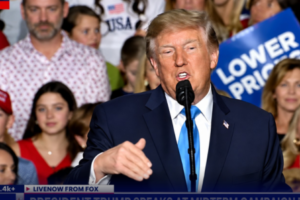















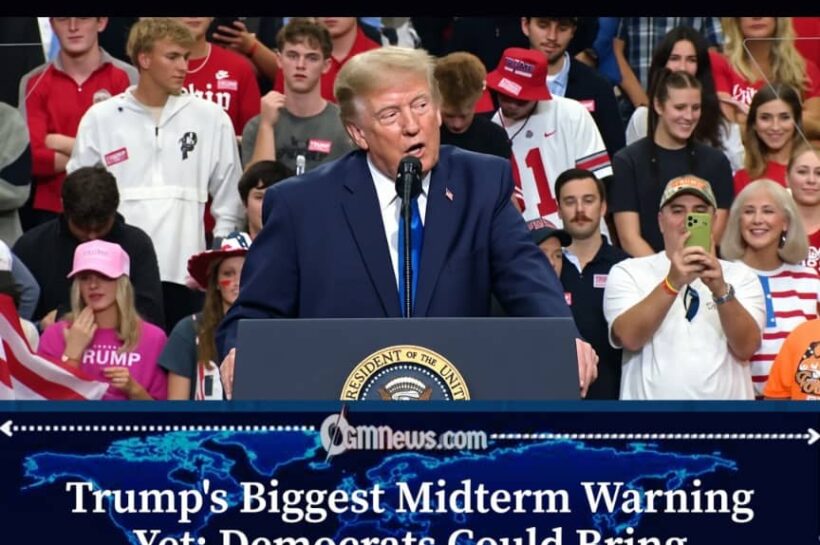


“America is WINNING again,” declared President Donald Trump, the current U.S. president serving a second term, as he unveiled Japanese-backed investment projects tied to a proposed $550 billion surge into the American economy. Yet within days of that announcement, a major court ruling disrupted his tariff strategy, sending shockwaves through global markets and complicating trade relations worldwide.
The latest developments underscore the fragility of a trade policy that has already reshaped international economic relationships since 2025. While the Trump administration sought to project confidence through new bilateral agreements, a ruling by the US Supreme Court has cast doubt over the legal foundation of significant portions of the tariff regime.
The outcome has left allies, rivals and investors grappling with uncertainty, as governments reassess agreements painstakingly negotiated over recent months.
Investment Promises and a Bold Declaration
President Donald Trump last week highlighted the first tranche of Japanese-backed projects under what his administration described as a sweeping investment initiative linked to a trade pact with Japan. The arrangement was framed as a cornerstone of a revitalised US industrial and economic policy.
Japan had pledged to increase its investment footprint in the United States in exchange for lower American tariffs on Japanese exports. The deal was presented as a mutually beneficial recalibration of trade ties following sweeping tariff measures introduced earlier in the president’s second term.
The announcement was positioned as evidence that Washington’s assertive trade stance was yielding tangible economic dividends. However, optimism proved short-lived.
Supreme Court Intervention Alters the Landscape
Two days after the president Trump’s remarks, the Supreme Court of the United States ruled that substantial elements of the Trump administration’s tariff framework were unlawful. The decision has curtailed the legal scope of executive authority over trade measures and introduced fresh complexity into an already unsettled global system.
Financial markets reacted cautiously, with investors seeking clarity on how the ruling would affect existing and pending trade agreements. Analysts noted that uncertainty over enforcement mechanisms and future tariff adjustments weighed on sentiment.
In practical terms, the immediate consequence is that nearly all trading partners will now face a uniform 15 percent tariff on most exports to the United States, at least temporarily. This new rate significantly reshapes competitive dynamics.
A Compressed Tariff Structure
Under the previous system, tariff rates varied widely among nations. Countries such as China and India were subject to elevated duties, while exporters in parts of Europe and North America enjoyed comparatively lower rates.
Johannes Fritz, chief executive of the St Gallen Endowment for Prosperity Through Trade, observed that the new 15 percent rate “compresses” these differences. The result is a narrower spread between countries that once faced steep penalties and those that secured preferential treatment.
While some nations benefit from reduced exposure, others that negotiated concessions may find their relative advantage diminished. The uniform tariff structure has therefore produced both winners and losers.
Allies Reassess Hard-Fought Agreements With Trump Administration
The ruling has prompted several governments to reconsider agreements reached with Trump Administration. The European Union has paused ratification of its trade arrangement, requesting greater clarity regarding the future direction of US policy.
In Japan, political leaders have openly acknowledged the confusion surrounding the evolving framework. Officials expressed concern that agreements struck under one interpretation of executive authority may not retain their original meaning under the revised legal context.
From London to Seoul and Jakarta, negotiators who offered concessions to secure favourable tariff terms now face the prospect of less advantageous outcomes than anticipated.
Emerging Economies and Uneven Gains
Some major economies appear to have benefited from the recalibration. China, India and Brazil have reportedly received meaningful tariff reductions without offering new concessions in return.
Conversely, countries such as the United Kingdom may now encounter higher relative tariff burdens despite prior compromises. The shift underscores how rapidly changing policy parameters can alter strategic calculations.
Trade experts note that the compressed tariff regime could reshape supply chains and export strategies, particularly in manufacturing sectors sensitive to price competitiveness.
Negotiations Stall Amid Legal Uncertainty
The legal setback has also affected ongoing bilateral talks. President Trump recently stated that India had agreed to curtail purchases of Russian oil in exchange for a reduction in US tariffs from 50 percent to 18 percent, alongside a commitment to purchase $500 billion in American goods over five years.
However, a planned visit by Indian officials to Washington has been postponed. Observers interpret the delay as evidence that negotiating partners are waiting for clearer guidance on the administration’s legal authority.
Arvind Subramanian, a former chief economic adviser to India’s government, suggested that discussions may remain on hold until the United States defines the scope of permissible action. According to him, the administration’s leverage has weakened, potentially encouraging some countries to seek improved terms.
A Global Trade Order in Transition
The broader consequence of the court’s ruling is a renewed sense of volatility in the international trading system. Agreements once considered settled now require reinterpretation, while prospective deals face greater scrutiny.
For the United States, the challenge lies in reconciling judicial limits with strategic trade ambitions. For its partners, the task is to navigate uncertainty without undermining economic stability.
As Trump administration assess their positions, global markets continue to monitor developments closely, aware that policy adjustments in Washington carry far-reaching implications.

[…] […]