




























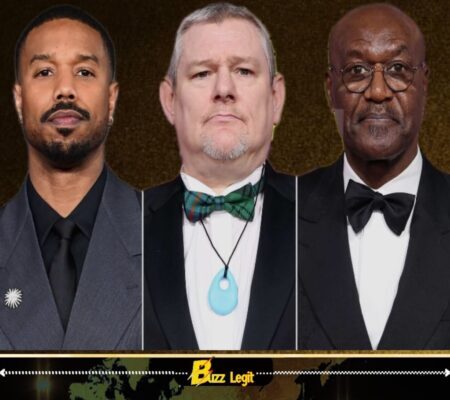
The BBC has issued a formal apology after a racial slur was heard during its delayed broadcast of the 2026 BAFTA Film Awards, acknowledging that the language should have been edited before transmission. The remark came from John Davidson, whose experience living with Tourette syndrome inspired the film I Swear, and occurred while actors Michael B. Jordan and Delroy Lindo were presenting on stage.
The incident unfolded during the annual ceremony hosted by the British Academy of Film and Television Arts in London. Although the awards were broadcast on delay to allow producers to remove inappropriate material, the offensive word was not edited out before airing on the BBC.
In a statement released after the ceremony, the BBC apologised to viewers and acknowledged that stronger editorial safeguards should have been applied. The broadcaster confirmed that the programme was later edited on its streaming platform to remove the language.
Incident During Live Ceremony
The moment occurred while Michael B. Jordan and Delroy Lindo were presenting an award at the 2026 BAFTAs. Both actors continued professionally with their presentation following the audible outburst, though the unexpected nature of the moment drew immediate attention on social media.
The remark was attributed to John Davidson, a Scottish advocate whose lived experience with Tourette syndrome is the subject of the film I Swear. Tourette syndrome is a neurological condition characterised by involuntary motor and vocal tics. In rare cases, it can involve coprolalia — the involuntary utterance of socially inappropriate or offensive words.
Earlier in the ceremony, host Alan Cumming had warned audiences that some strong language might be heard due to involuntary tics. However, critics argue that despite this advisory, the delayed television broadcast provided sufficient opportunity for the slur to have been removed.
BBC and BAFTA Response
In its formal apology, the BBC said: “Some viewers may have heard strong and offensive language during the BAFTA Film Awards broadcast. We regret that this was not edited prior to transmission and apologise to audiences.”
The British Academy of Film and Television Arts also issued a statement expressing regret over the incident and reaffirming its commitment to inclusion and respect. Organisers thanked the presenters for maintaining professionalism during what they described as an “unexpected and difficult moment.”
The edited version of the broadcast was later restored to BBC iPlayer. Media analysts note that while live award ceremonies often contain unpredictable elements, delayed broadcasts are specifically structured to prevent offensive content from reaching audiences.
Broader Debate on Disability and Editorial Responsibility
The incident has sparked renewed discussion about how broadcasters balance disability awareness with editorial responsibility. Advocacy groups have emphasised that Tourette syndrome is involuntary and that individuals living with the condition should not face stigma for neurological symptoms beyond their control.
At the same time, commentators have questioned whether award show producers and broadcasters should implement clearer contingency measures, particularly when sensitive language may affect presenters or viewers.
Industry observers say the episode highlights the evolving challenges of live-event broadcasting in an era of heightened social awareness and rapid digital reaction. As discussions continue, the BBC’s response is likely to shape future editorial policies for major televised events.
[…] […]