













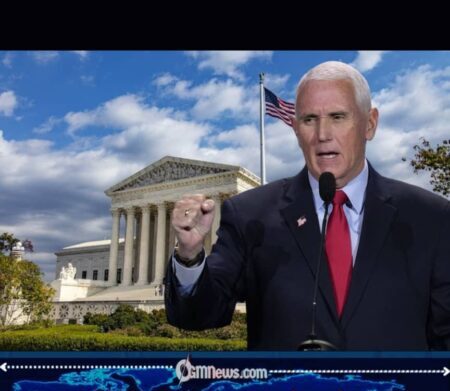
In a forceful and carefully worded statement, Mike Pence praised the Supreme Court of the United States for what he described as a decisive reaffirmation of constitutional boundaries in U.S. trade policy. Pence said he “strongly and wholeheartedly” welcomed the Court’s decision to limit the scope of executive tariff authority, arguing that it preserves the separation of powers at a critical moment in American governance.
According to Pence, the ruling underscores that even in matters of urgent economic strategy, the Constitution’s allocation of authority between Congress and the presidency must remain intact. By framing the decision as a defense of institutional integrity rather than a political rebuke, Mike Pence positioned himself squarely in a constitutional debate that is likely to reverberate through Washington.
The case centers on the extent to which the executive branch can impose sweeping tariffs without explicit and narrowly tailored congressional authorization ,a question that has increasingly drawn scrutiny from legal scholars, lawmakers, and business leaders.
Pence Places Constitution at the Center of the Debate
Mike Pence emphasized that Article I of the Constitution vests Congress with the authority to regulate commerce with foreign nations. While Congress has historically delegated limited trade powers to the executive branch through statutes such as the Trade Expansion Act of 1962 and the International Emergency Economic Powers Act, Pence argued that such delegations are not without limits.
In his remarks, Mike Pence described the Supreme Court’s ruling as a “clear signal” that statutory authority cannot be stretched beyond congressional intent. Legal analysts note that the Court’s reasoning appears aligned with a broader judicial trend toward narrowing expansive readings of executive power.
Pence’s intervention adds complexity to the Republican policy landscape. Though aligned with many of President Donald Trump’s economic priorities in the past, Mike Pence has now publicly drawn a constitutional distinction between strong trade enforcement and unilateral executive action.
The Trump Administration’s Trade Strategy Under Review
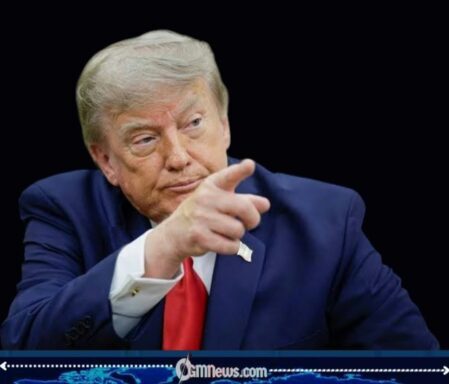
The legal dispute emerged from a broad tariff initiative advanced by President Donald J. Trump, currently serving his second term. The administration defended its authority by citing statutory provisions that allow the president to respond to national security concerns and economic threats.
Officials within the administration have argued that decisive tariff measures are necessary to address trade imbalances, counter unfair foreign subsidies, and protect strategic industries. President Donald Trump has repeatedly maintained that assertive trade policy is central to revitalizing American manufacturing and strengthening domestic supply chains.
However, critics including trade associations and some members of Congress contended that the scale of the tariff program exceeded the bounds of delegated authority. They argued that such expansive economic action requires more direct congressional involvement.
Broader Political Reactions and Institutional Implications
Mike Pence’s statement placed him among a group of policymakers emphasizing the constitutional architecture underlying trade decisions. Some Republican lawmakers echoed his view that the separation of powers must remain non-negotiable, even when pursuing aggressive economic reforms.
Democratic lawmakers largely welcomed the Court’s decision as a reaffirmation of legislative authority. Several members of Congress have indicated that the ruling could prompt renewed efforts to clarify or revise trade statutes to better define executive discretion.
The White House, while respecting the ruling, has signaled that President Donald Trump remains committed to using all lawful tools available to advance U.S. trade interests. The administration has also indicated that it may seek alternative mechanisms within statutory bounds to continue pursuing its economic agenda.
Economic and Market Consequences
Financial markets reacted with measured caution, as investors assessed how the ruling might affect ongoing trade negotiations and tariff enforcement. Some economists suggest that a clearer judicial boundary could reduce uncertainty for import-dependent industries and global supply chains.
Business groups have long argued that sudden tariff escalations complicate investment planning and pricing strategies. The Court’s intervention may introduce greater predictability, though it could also lengthen the policy process by requiring closer coordination between Congress and the executive branch.
Trade experts note that while the ruling constrains unilateral action, it does not eliminate the president’s ability to impose tariffs under properly defined statutory authority. Instead, it reinforces procedural and constitutional guardrails.
A Defining Moment in the Separation of Powers Debate
The Supreme Court’s decision reflects an ongoing judicial examination of how far Congress may delegate policymaking discretion to the executive branch. In recent years, the Court has shown increased interest in reinforcing textual and structural constitutional principles.
Mike Pence concluded that the ruling should be viewed as a stabilizing force in American governance. By reaffirming Congress’s central role in regulating commerce, he argued, the Court has strengthened not weakened the durability of U.S. economic policy.
As President Donald Trump advances his second-term agenda, the recalibration of executive trade authority is likely to shape both domestic legislative negotiations and America’s posture in global markets. The ruling may ultimately serve as a precedent for future cases testing the outer limits of presidential power.
The vibes here are amazing and the winning streaks are real. It feels just like...