




















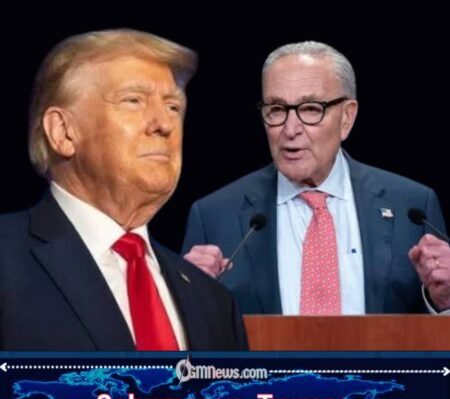
Chuck Schumer has launched a forceful campaign to block plans by Donald Trump, the current U.S. president serving a second term, to extend sweeping tariffs that have defined the administration’s trade agenda. Chuck Schumer argues that prolonging the duties could raise consumer prices, strain supply chains, and trigger renewed trade tensions with key allies.
Framing the issue as both an economic and constitutional concern, Chuck Schumer says Congress must reassert its authority over trade policy. His remarks have energized Senate Democrats, who are now coordinating legislative and procedural strategies aimed at halting the tariff expansion.
Chuck Schumer Rallies Senate Democrats Around Legislative Strategy
Chuck Schumer is guiding Senate Democrats as they explore multiple avenues to block or limit tariff extensions. Options under review include Congressional Review Act resolutions, targeted funding restrictions, and measures designed to narrow the scope of executive tariff authority.
According to aides, Chuck Schumer’s strategy seeks not only to stop the immediate extension but also to establish clearer boundaries on presidential trade powers. Lawmakers supporting the effort argue that tariffs, while sometimes necessary, must remain subject to congressional oversight.
Political observers note that bipartisan support will be crucial. While some lawmakers share Chuck Schumer’s concerns about consumer costs, others worry that limiting tariffs could weaken U.S. leverage in global negotiations.
Economic Concerns Drive Opposition
Chuck Schumer and fellow Democrats warn that extending tariffs could increase costs for American households, particularly on everyday goods such as electronics, furniture, and automobiles. Economists frequently note that tariffs often translate into higher retail prices rather than penalties for foreign producers.
Manufacturers that rely on imported components have also voiced concerns about rising production costs and supply chain disruptions. Industry groups caution that prolonged tariffs could erode competitiveness, especially for small and mid-sized firms with limited sourcing flexibility.
Agricultural exporters remain wary of retaliatory measures, recalling past trade disputes in which U.S. farm products were targeted. Lawmakers from rural states are watching closely, aware of the sector’s vulnerability to global trade tensions.
White House Defends Tariffs as Strategic Leverage
The administration maintains that tariffs remain a vital tool for protecting domestic industries and securing favorable trade agreements. Officials argue that the duties have strengthened the U.S. bargaining position in negotiations with partners across Asia and Europe.
Supporters contend that tariff pressure has led to improved market access, stronger intellectual property protections, and commitments to address industrial subsidies. They warn that limiting tariffs could undermine these gains and weaken America’s negotiating leverage.
The White House also emphasizes tariff revenue as a meaningful source of federal income, supporting domestic investment and economic priorities.
Legal Debate Rekindles Constitutional Questions
The clash has revived longstanding questions about the scope of presidential authority over tariffs. While Congress holds constitutional power over trade taxation, it has delegated significant authority to the executive branch through various statutes.
Recent court rulings limiting certain tariff authorities have intensified scrutiny of executive actions. Chuck Schumer argues that these decisions underscore the need for Congress to reclaim its central role in shaping trade policy.
Legal experts suggest that ongoing litigation and legislative action could redefine the balance of power between Congress and the presidency for years to come.
Global and Business Reactions: Stability vs. Uncertainty
Global partners are closely monitoring the Senate’s push to block tariff extensions, urging clarity from Washington on its long-term trade framework. Past tariff disputes prompted retaliatory measures from allies, affecting sectors from agriculture to manufacturing.
Business leaders offer mixed reactions. Some support tariffs as protection against unfair competition, while others emphasize the need for predictable trade rules to guide investment and supply chain decisions.
Trade associations stress that uncertainty rather than tariffs alone poses the greatest risk to economic planning. Companies are urging policymakers to provide consistent frameworks to maintain U.S. competitiveness in global markets.
Conclusion
Chuck Schumer’s campaign to block tariff extensions marks a pivotal moment in U.S. trade policy, blending economic concerns with constitutional debate. As Congress, the White House, and global partners weigh their next moves, the outcome will shape consumer prices, international relationships, and the future scope of presidential trade authority.
[…] […]