









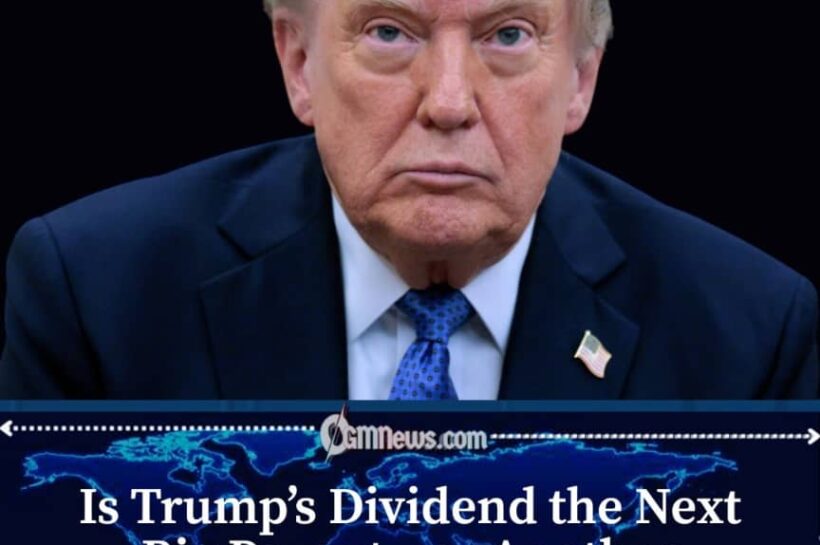















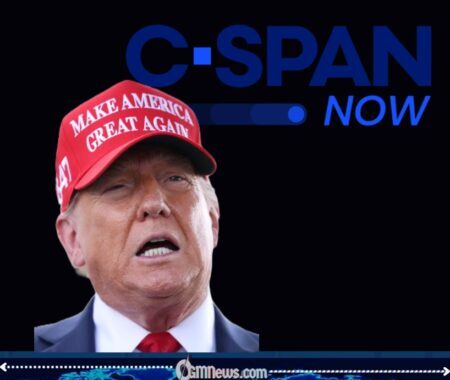
C-SPAN has formally dismissed claims that President Donald Trump secretly called into a live programme under the pseudonym “John Barron” to criticise a recent Supreme Court ruling. The clarification followed widespread online speculation after a caller with a voice strikingly similar to the president’s phoned in during a broadcast to condemn the court’s decision blocking his sweeping tariff policies.
In a statement issued on Sunday, the network stated unequivocally that the caller was not the president. According to C-SPAN, the call originated from a central Virginia telephone number at a time when Mr Trump was engaged in a publicly documented White House meeting with state governors. The network urged viewers to tune in to official presidential appearances rather than rely on speculation circulating online.
The Broadcast and the Emergence of “John Barron”
The incident occurred during a live segment hosted by Greta Brawner, who invited viewers to share their reactions to the Supreme Court’s decision. Introducing the caller as “John in Virginia, Republican,” the host proceeded with what appeared to be a routine audience contribution.
However, attention quickly shifted as listeners noted that the caller’s tone, cadence and rhetorical style closely resembled that of Mr Trump. The caller sharply criticised the ruling, describing it as a grave mistake and directing disparaging remarks at prominent Democratic figures including Hakeem Jeffries and Chuck Schumer. He also referenced earlier programme participants, further fuelling suspicions among viewers that the voice belonged to the president.
Complicating matters was the use of the name “John Barron,” an alias historically linked to Mr Trump during the 1980s and 1990s. Reports, including past coverage by The Washington Post, have documented his prior acknowledgment under oath in 1990 that he had used the pseudonym in dealings with journalists.
C-SPAN’s Response and the President’s Schedule
In response to the mounting speculation, C-SPAN issued a detailed clarification. “Because so many of you are talking about Friday’s C-SPAN caller who identified himself as ‘John Barron,’ we want to put this to rest: it was not the president,” the statement read. The network explained that the call came from a central Virginia number while the president was attending a widely covered in-person meeting at the White House.
On the day in question, Mr Trump was hosting members of the National Governors’ Association ahead of a formal dinner event. The schedule included a meeting with governors, followed by briefings and engagements in the Oval Office. Supporters sceptical of the network’s denial argued online that the president could have made a brief call during a gap in proceedings, pointing to the reported time of the broadcast. Others speculated that the segment might have been pre-recorded.
Despite the conjecture, no evidence has emerged to substantiate claims that Mr Trump participated in the call. C-SPAN reiterated that viewers would have the opportunity to hear directly from the president during his official State of the Union address.
The Supreme Court Ruling and Political Fallout
The controversy unfolded against the backdrop of a significant decision by the Supreme Court of the United States, which voted six to three to block the president’s tariff policy. The ruling determined that the measure was not authorised under the International Emergency Economic Powers Act.
Among those voting against the administration’s position were Trump appointees Amy Coney Barrett and Neil Gorsuch, who joined Justices Elena Kagan, Sonia Sotomayor, John Roberts and Ketanji Brown Jackson. The decision marked a notable instance of cross-ideological alignment on the bench.
Although C-SPAN denied that the president had aired his grievances through the anonymous call, Mr Trump later criticised the justices publicly on social media, describing those who ruled against him as “very unpatriotic.” His remarks underscored the broader political tensions surrounding the court’s decision and its implications for executive authority.

[…] […]