

















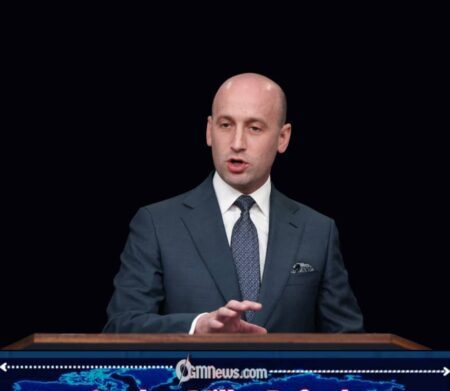
Stephen Miller opened the administration’s response to the Supreme Court ruling with a forceful defense of President Donald Trump’s trade agenda, arguing that the decision clarified rather than curtailed presidential tariff authority. According to Miller, the Court’s opinion confirmed that the president retains the power to impose tariffs through alternative statutory pathways, strengthening the legal foundation for future trade actions.
The remarks have intensified debate over executive power and economic policy, as supporters frame the ruling as a roadmap for rebuilding tariffs while critics view it as a constitutional check on unilateral trade measures.
Stephen Miller Frames the Ruling as Strategic Clarity
Stephen Miller has characterized the decision as a turning point that defines permissible tariff tools rather than eliminating them. He argues that by narrowing the use of emergency powers while leaving other authorities intact, the Court effectively provided a legal blueprint for reconstituting and expanding tariffs.
Supporters of the administration echo Stephen Miller’s interpretation, emphasizing that the ruling did not invalidate tariffs imposed under national security or trade enforcement statutes. Instead, they contend, it clarified how such measures must be structured to withstand judicial scrutiny.
What the Supreme Court Actually Decided
The Court ruled that the president exceeded his authority by using emergency economic powers to impose sweeping tariffs without congressional approval. The decision reaffirmed that tariff and taxation powers primarily reside with Congress, limiting the scope of unilateral executive action.
However, the ruling did not eliminate presidential tariff authority altogether. Legal analysts note that existing statutes continue to permit tariffs under defined circumstances, a nuance that Stephen Miller and other allies highlight as central to the administration’s next steps.
Alternative Legal Pathways for Tariffs
Trade experts point to several statutory mechanisms still available to the administration, including national security tariffs, retaliatory duties for unfair trade practices, and temporary measures to address economic imbalances. These tools have long been part of U.S. trade law and remain unaffected by the Court’s decision.
Stephen Miller has argued that relying on these established authorities could make future tariffs more resilient in court. By aligning policy with explicit statutory provisions, the administration may preserve trade leverage while minimizing legal vulnerabilities.
Economic Implications and Market Reactions
Markets and industry groups have reacted cautiously to the evolving tariff landscape. Some sectors welcomed the potential rollback of broad tariffs, while others expressed concern that restructured or expanded duties could prolong uncertainty in supply chains and pricing.
Economists remain divided. Supporters say tariffs protect domestic industries and encourage local production, while critics warn of higher consumer prices and retaliatory measures from trading partners. Stephen Miller has maintained that the long-term benefits of a stronger domestic industrial base outweigh short-term market disruptions.
Political Reactions and Policy Debate
The ruling has deepened partisan divisions over trade policy. Supporters of President Trump argue tariffs are essential for protecting American jobs and countering unfair trade practices, while critics describe them as hidden taxes on consumers.
Stephen Miller has urged a more assertive approach, suggesting that the clarified legal framework enables broader tariff strategies. Opponents counter that expanding tariffs could intensify inflationary pressures and strain relationships with key allies.
Global Trade Implications
International partners are closely monitoring the United States’ tariff strategy in the wake of the ruling. Some allies have expressed concern about potential escalation, while competitors are preparing contingency plans should new duties be imposed.
The decision may influence global perceptions of U.S. trade policy stability. By clarifying legal boundaries, the ruling could either reassure partners about procedural limits or signal a more structured yet still assertive American trade posture shaped in part by Stephen Miller’s policy advocacy.
Conclusion
By framing the Supreme Court’s decision as an opportunity rather than a setback, Stephen Miller has positioned the ruling as a foundation for rebuilding tariff policy on firmer legal ground. The coming months will determine whether the administration expands tariffs within the clarified framework and how those actions affect consumers, industries, and global trade relationships.
[…] […]