





















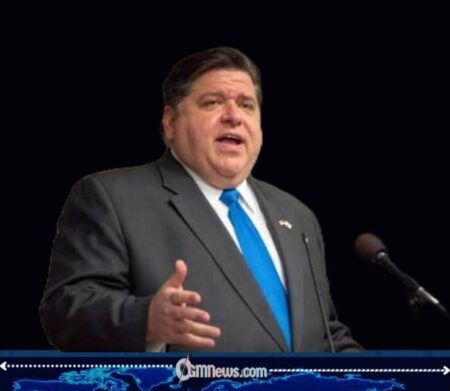
JB Pritzker stood before the Illinois state legislature and delivered a speech that blended policy critique with philosophical reflection, urging lawmakers and citizens alike to view political disagreement through the lens of shared values rather than division. His remarks, widely circulated across media platforms, centered on themes of responsibility, empathy, and democratic engagement.
The governor’s address did not focus solely on legislative proposals. Instead, it framed the current political climate as a test of civic character, emphasizing that democratic institutions depend on both participation and restraint. Observers described the tone as deliberate and carefully structured.
The speech also included pointed references to national leadership, including President Donald Trump, though Pritzker’s broader theme extended beyond partisan lines. He positioned the debate as one about the direction of civic culture rather than personalities alone.
A Philosophical Framing of Political Conflict
JB Pritzker characterized the present moment as one requiring moral clarity and composure. He argued that governance should reflect not only lawmaking authority but also ethical responsibility.
Rather than centering on confrontation, the governor framed his critique around shared ideals—justice, fairness, and dignity. Supporters described the approach as an attempt to elevate the tone of discourse.
Critics, however, questioned whether philosophical language alone can bridge structural political divides. They argue that rhetoric must ultimately translate into concrete policy outcomes to be effective.
JB Pritzker and the Power of Civic Language
JB Pritzker emphasized that language shapes political reality, noting that public officials influence not only policy decisions but also cultural narratives. He suggested that words grounded in empathy can counter polarization.
Throughout the address, he referenced love not as sentimentality, but as a civic principle—an obligation to safeguard rights and protect institutions even amid disagreement. Analysts observed that such framing seeks to humanize policy debates.
The strategic use of philosophical themes reflects a broader effort among some leaders to reorient public discourse toward common ground. Whether that approach resonates widely remains to be seen.
Response from Political Circles
JB Pritzker received both praise and criticism following the speech. Allies described the address as a compelling articulation of democratic values in a tense political era.
Opponents argued that references to national leadership, including President Donald Trump, risk deepening partisan divides. They contend that calls for unity must avoid selective framing to maintain credibility.
Political analysts note that speeches delivered in legislative chambers often carry symbolic weight beyond immediate policy implications. They can signal priorities and define narrative direction.
The Broader National Context
JB Pritzker situated his remarks within the larger American political landscape, where debates over executive authority, institutional norms, and civic trust remain prominent.
The national climate has seen increasing tension between federal and state leaders on a range of issues, from economic policy to civil rights protections. Governors often serve as counterpoints or complements to federal priorities.
Public reception of such speeches frequently depends on preexisting political alignment. Still, philosophical framing can influence broader conversations about democratic resilience.
Implications for Future Engagement
JB Pritzker concluded his address by urging sustained engagement rather than episodic reaction. He argued that the durability of democratic systems depends on consistent civic participation.
Whether the speech shifts legislative dynamics or public opinion remains uncertain. Symbolic moments can energize supporters, but long-term impact requires institutional follow-through.
Ultimately, the address underscores a recurring question in modern politics: can appeals to shared humanity and ethical responsibility reshape the tone of public life, or will entrenched divisions continue to define the era?


[…] […]