




















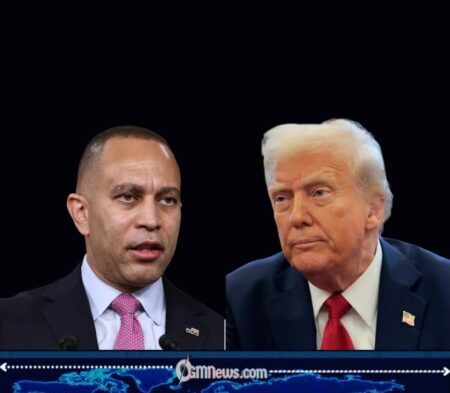
House Democratic Leader Hakeem Jeffries has called on Donald Trump, the current U.S. president serving a second term, to seek congressional approval before initiating any military action against Iran. Framing his stance as a defense of constitutional order rather than partisan opposition, Jeffries emphasized that decisions of war and peace must involve the legislative branch to ensure accountability and prevent unintended escalation in an already volatile Middle East.
His remarks come amid renewed tensions between Washington and Tehran, ongoing nuclear negotiations, and heightened regional instability. The debate has revived longstanding questions about presidential war powers, congressional oversight, and the legal thresholds required for the United States to engage in hostilities abroad.
Constitutional Authority and the War Powers Debate
Jeffries’ position rests on the U.S. Constitution’s allocation of war-making authority to Congress. While the president serves as commander-in-chief, the power to declare war lies with lawmakers—a balance designed to prevent unilateral military action. Jeffries argues that bypassing Congress risks undermining democratic accountability and weakening institutional safeguards.
The War Powers Resolution of 1973 further reinforces this principle by requiring presidents to consult Congress before introducing U.S. forces into hostilities, except in cases of imminent threat. Supporters of Jeffries’ stance say adherence to these provisions is essential to maintaining constitutional norms, especially in conflicts that could expand beyond limited strikes.
White House Position and Executive Authority
The White House has defended the president’s authority to act swiftly in matters of national security, arguing that emerging threats may require immediate responses. Officials note that past administrations from both parties have conducted limited military operations without prior congressional authorization, citing the need for operational secrecy and rapid decision-making.
Supporters of the administration contend that deterrence against Iran’s nuclear ambitions and regional activities demands flexibility. They argue that requiring advanced congressional approval in all cases could constrain the president’s ability to protect U.S. interests, allies, and global stability.
Congressional Divisions Reflect Broader Policy Rift
The debate has exposed sharp divisions within Congress. Many Democrats have backed Jeffries’ call for legislative approval, warning that unilateral action could draw the United States into another protracted Middle East conflict. Some lawmakers have proposed resolutions to limit unauthorized military engagement, reflecting growing concern over executive overreach.
Republicans, meanwhile, are divided. While some support congressional consultation, others emphasize the necessity of strong executive leadership in confronting Iran. They argue that credible military deterrence strengthens diplomatic leverage and reassures allies concerned about Tehran’s regional influence.
Regional Tensions and Diplomatic Efforts
Jeffries’ warning comes at a delicate moment in U.S.–Iran relations. Indirect nuclear negotiations have resumed, signaling cautious diplomatic engagement even as tensions persist over sanctions, regional proxy conflicts, and maritime security. Analysts warn that military action without broad political consensus could derail fragile talks and escalate hostilities.
The Middle East remains a complex security environment, with global energy markets, shipping routes, and allied security arrangements at stake. Policymakers across the political spectrum acknowledge that any U.S. action against Iran would carry far-reaching consequences beyond the immediate military objective.
Transparency, Briefings, and Oversight Concerns
Another point of contention involves congressional notification and intelligence briefings. Jeffries and other lawmakers have called for timely, detailed briefings to ensure Congress can fulfill its oversight responsibilities. They argue that meaningful consultation requires more than cursory notifications after decisions have effectively been made.
The administration maintains that it has followed established procedures for notifying congressional leaders. However, disagreements over the adequacy and timing of these communications continue to fuel tensions between the executive and legislative branches.
Why the Debate Matters for U.S. Governance
At its core, the dispute reflects a broader institutional struggle over the separation of powers. Jeffries’ call underscores concerns about preserving Congress’s constitutional role, preventing unchecked executive action, and ensuring public accountability for decisions that could lead to war.
The outcome of this debate may shape future precedents governing U.S. military engagements. Whether through legislation, court challenges, or political compromise, the balance between presidential authority and congressional oversight remains a defining issue in American governance.

[…] […]