




























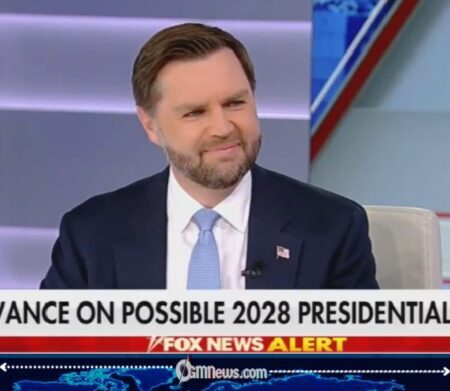
Vice President JD Vance faced scrutiny after a live television interview in which he struggled to respond to a straightforward question about the presidency. While he displayed ease handling a pastry during the segment, his performance on policy questions highlighted potential gaps in public communication and leadership preparedness. The moment has sparked discussion among political analysts, media commentators, and voters about Vance’s readiness for higher office.
Vance’s Live TV Performance Draws Attention
During the broadcast, JD Vance was asked a simple, soft-spoken question regarding the responsibilities of the presidency. Observers noted that Vance appeared hesitant, struggling to articulate a clear response. While minor missteps on live television are not uncommon, this instance quickly became a talking point in political circles, especially given Vance’s prominence within the Republican Party.
Despite the awkward exchange, Vance maintained composure throughout the segment. Commentators pointed out that while handling physical tasks, such as managing a donut on set, he seemed more confident than when addressing substantive questions about governance and leadership.
Contrast Between Public Persona and Policy Confidence
Political analysts noted a striking contrast between Vance’s comfort with informal, lighthearted elements of the broadcast and his hesitation when answering policy-related questions. This distinction has raised questions about how effectively he communicates under pressure and whether he is prepared to address complex national and international issues.
Public reaction on social media was immediate, with viewers noting the juxtaposition between Vance’s physical poise and verbal uncertainty. Some analysts suggested that this may reflect broader challenges in translating policy expertise into clear, concise messaging for a national audience.
Implications for Republican Leadership
JD Vance’s live TV segment comes at a critical juncture for the Republican Party, as leadership positioning and public image are increasingly scrutinized in the lead-up to upcoming elections. While Vance remains a prominent figure within the party, media coverage of the interview has led some political commentators to question his readiness for higher office or expanded leadership roles.
Party strategists emphasize that public perception and media performance are key factors in shaping voter confidence. How Vance addresses this episode in subsequent appearances may influence both his personal political trajectory and broader party messaging.
Vance and the National Political Climate
The interview also occurred against the backdrop of President Trump’s administration, with the current U.S. president serving a second term. Analysts suggest that high-profile figures such as Vance are increasingly expected to articulate clear policy positions while maintaining composure under live scrutiny, particularly as the administration navigates complex domestic and international issues.
Observers noted that public confidence in leadership figures is influenced not only by policy positions but also by effective communication. Vance’s performance illustrates the growing importance of media readiness for political figures operating on a national stage.
Public and Media Reaction
Reaction to the segment has been mixed. Supporters of JD Vance argue that brief moments of hesitation are normal and emphasize his policy knowledge and political accomplishments. Critics, however, contend that public speaking and live communication are essential components of leadership, highlighting the need for preparation and composure under pressure.
Social media platforms were particularly active following the broadcast, with hashtags referencing the segment trending for several hours. Memes and commentary emphasized the disparity between Vance’s confident handling of a donut and his response to questions about governance, framing it as both a humorous and telling moment.
Looking Ahead for JD Vance
Political analysts suggest that JD Vance’s next public appearances will be closely watched, both by supporters seeking reassurance of his leadership capabilities and by opponents analyzing potential weaknesses. Effective handling of live media interactions may become a determining factor in shaping public perception and political viability in the months ahead.
While the live TV segment highlighted areas for improvement, it also underscores the challenges facing emerging political figures as they navigate the intersection of policy expertise, media engagement, and public scrutiny. Vance’s approach to future appearances may well define his trajectory within national politics.


Ae888covenuscasino, okay, I'm curious. Gonna check out this site and try to find some amazing...