
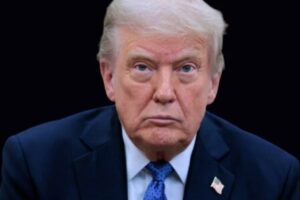





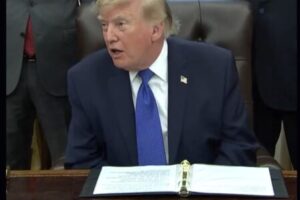



















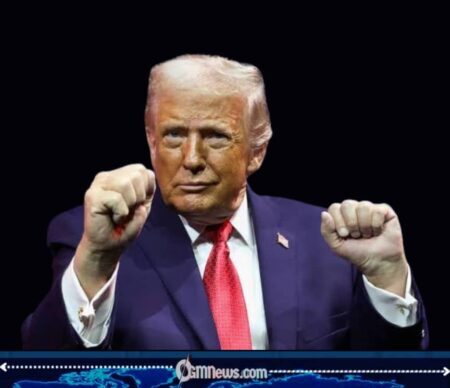
President Donald Trump, currently serving a second term, marked Presidents’ Day with a message celebrating what he described as falling inflation, rising markets, record-low crime, a secure border, and renewed national strength. The statement framed these developments as evidence of a resurgent United States and urged Americans to “enjoy your day.”
While supporters view the message as a reflection of improving economic indicators and national confidence, economists, law-enforcement analysts, and policy experts say the claims require context. Data from federal agencies and reporting by major news organizations show a more nuanced picture of inflation trends, crime rates, border activity, and economic performance.
Economic Indicators: Inflation Eases but Prices Remain Elevated
president Trump assertion that inflation is “way down” aligns with recent federal data showing a significant cooling from post-pandemic peaks. According to the U.S. Bureau of Labor Statistics, annual inflation has declined markedly since its 2022 high, reflecting tighter monetary policy and stabilizing supply chains.
However, economists cited by outlets such as The New York Times and Financial Times emphasize that lower inflation does not mean lower prices. Many consumer goods and housing costs remain substantially higher than pre-pandemic levels, continuing to strain household budgets despite slower price growth.
Analysts note that public perception often lags behind statistical improvements, contributing to mixed views among voters about the state of the economy.
Stock Market Surge and Retirement Savings Growth
president Trump claim that the stock market and retirement accounts are “way up” is broadly supported by recent market performance. Major indices, including the S&P 500 and Nasdaq, have reached or approached record highs, buoyed by strong corporate earnings and investor expectations of interest-rate cuts.
Financial outlets such as The Wall Street Journal and CNBC report that rising equity values have boosted 401(k) and pension portfolios tied to the markets. For many investors, retirement savings have recovered losses experienced during earlier market volatility.
Yet economists caution that market gains are unevenly distributed. Higher-income households with substantial investments benefit more than lower-income families, many of whom have limited exposure to equities.
Crime Trends: Declines Reported, but Not Historic Lows
In his message, Trump stated that murders and crime are at record lows. Data from the FBI and the Council on Criminal Justice show that violent crime, including homicide, has declined significantly since its pandemic-era surge in 2020–2021.
However, criminologists note that current crime rates are not the lowest in U.S. history. Reporting from The Washington Post and The Guardian indicates that crime levels in earlier decades—particularly the mid-20th century—were lower by several measures.
Experts also caution against comparisons to the year 1900, as national crime data were not systematically recorded at that time, making such claims difficult to verify.
Border Security: Ongoing Challenges Amid Policy Disputes
president Trump statement that the U.S. border is “100% secure” contrasts with ongoing reporting from Reuters, CNN, and other outlets documenting continued migrant encounters at the southern border. Federal agencies describe the situation as dynamic, influenced by regional instability, economic migration, and asylum policy changes.
The Department of Homeland Security has acknowledged operational pressures while highlighting enforcement efforts and deportations. Immigration remains one of the most divisive policy areas, with Republicans emphasizing security and Democrats focusing on humanitarian protections and legal pathways.
Policy analysts say absolute claims of border security oversimplify a complex and evolving situation.
Military Strength and Law Enforcement Capacity
Trump’s praise for the U.S. military reflects broad consensus that the United States maintains the world’s most powerful armed forces by budget, global reach, and technological capability. Defense analysts note continued investments in modernization and strategic deterrence.
At the same time, reporting from Politico and defense publications highlights recruitment shortfalls and debates over spending priorities. These challenges have prompted new initiatives aimed at attracting service members and improving readiness.
Law-enforcement agencies across the country report declining crime in many cities but also face staffing shortages and retention issues, underscoring the complexity behind national crime trends.
Political Messaging and Public Perception
Presidents Trump’ Day messages have long served as platforms for political leaders to highlight national achievements. Analysts cited by NBC News and Reuters say Trump’s statement reflects a broader strategy of framing economic improvements and security measures as evidence of strong leadership during his second term.
Democratic leaders and policy experts argue that economic gains stem from global recovery trends and bipartisan legislation. The competing narratives illustrate how economic data and public-safety statistics are increasingly central to political messaging.
As the election cycle approaches, such claims are likely to face intensified scrutiny from fact-checkers, economists, and voters seeking clarity on the nation’s trajectory.
Conclusion
President Trump’s Presidents’ Day message underscores improving trends in inflation and market performance while advancing broader claims about crime, border security, and national strength. Data from federal agencies and reporting by major news organizations support some elements of the president’s remarks but challenge others, highlighting the complexity behind headline-level assertions.
The debate surrounding the message reflects broader political divisions over how to interpret economic indicators and public-safety data. As policymakers and analysts continue to evaluate these trends, public perception will play a critical role in shaping the national conversation.
[…] […]