




























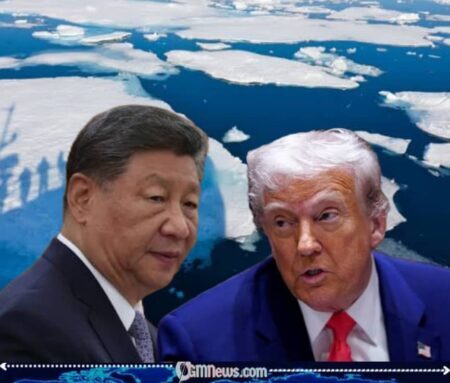
China has issued a warning to the United States over what it describes as potential steps toward militarizing Greenland, a sparsely populated Arctic territory that has increasingly drawn global strategic attention. Officials cautioned that expanding military infrastructure in the region could destabilize Arctic cooperation and heighten geopolitical tensions.
China’s foreign ministry signaled concern that Arctic security dynamics are shifting, emphasizing that the region should remain a zone of peaceful development rather than military rivalry. The statement follows renewed U.S. interest in Arctic bases and resource access as polar ice melt reshapes global trade routes.
The warning underscores how Greenland — often viewed as remote and isolated — has become a focal point in broader great-power competition. With climate change opening new shipping lanes and exposing untapped mineral reserves, the island now sits at the intersection of environmental transformation and strategic calculation.
Strategic Importance of the Arctic
China has steadily increased its Arctic engagement over the past decade, describing itself as a “near-Arctic state” and investing in scientific research and infrastructure partnerships. Its involvement reflects growing recognition that Arctic routes could shorten shipping times between Asia and Europe.
Greenland’s geographic position is particularly significant. Located between North America and Europe, it offers strategic vantage points for monitoring air and sea activity across the North Atlantic. Existing U.S. military facilities already operate on the island, highlighting its longstanding defense relevance.
Analysts argue that control or influence over Arctic territory carries implications for missile defense systems, early warning radar networks, and submarine operations. As such, even incremental military adjustments can draw heightened scrutiny from global powers.
Greenland’s Political and Economic Landscape
China has also shown economic interest in Greenland’s rare earth minerals and infrastructure development, though some projects have faced political resistance. Rare earth elements are essential for advanced technologies, renewable energy systems, and defense equipment.
Greenland, an autonomous territory within the Kingdom of Denmark, has sought to balance economic development with environmental preservation. Its small population and limited domestic revenue streams make foreign investment appealing, yet geopolitical sensitivities complicate partnerships.
Local leaders have repeatedly emphasized that decisions regarding development or defense must prioritize Greenlandic interests. The island’s leadership walks a delicate line between maintaining sovereignty and navigating global attention.
China and the Broader U.S. Arctic Strategy
China has framed its criticism within a broader argument that Arctic governance should remain multilateral and cooperative. Officials stress adherence to international law and existing Arctic Council frameworks to prevent escalation.
China’s warning comes amid increased U.S. Arctic investments, including modernization of facilities and expanded naval operations. American officials argue that such measures are defensive and aimed at protecting national and allied security interests.
Observers note that the Arctic Council — historically focused on environmental and scientific collaboration — faces new pressures as geopolitical competition intensifies. The balance between cooperation and competition may define the region’s future stability.
Climate Change and Emerging Trade Routes
China recognizes that climate change is reshaping Arctic accessibility. Melting ice has extended navigable seasons along northern sea routes, potentially reducing global shipping distances by thousands of miles.
Commercial shipping through Arctic waters could alter trade patterns, energy flows, and economic leverage. However, environmental advocates caution that increased traffic carries ecological risks for fragile ecosystems.
Scientific communities emphasize that climate change remains the underlying driver of Arctic transformation. Any militarization debate exists alongside urgent environmental concerns that transcend geopolitical rivalry.
A Growing Global Flashpoint
China’s warning reflects broader anxieties about power projection in a rapidly evolving region. While Greenland remains sparsely populated, its strategic value has never been higher.
China continues to advocate for dialogue and restraint, arguing that militarization could trigger countermeasures and diminish trust among Arctic stakeholders. Whether such appeals will alter U.S. strategy remains uncertain.
Ultimately, Greenland’s rise as a geopolitical flashpoint highlights how climate, commerce, and security intersect in the 21st century. What was once viewed primarily as an icy expanse now commands the attention of global powers, raising a pivotal question: can cooperation prevail in the Arctic, or will competition define its future?



[…] […]