














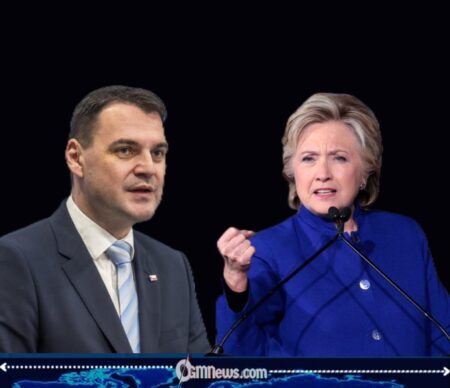
Pete Macinka, Czech Deputy Prime Minister and Foreign Minister, dominated discussions at the 62nd Munich Security Conference in Munich, Germany, by taking a firm stance on biological sex during a panel that included former U.S. Secretary of State Hillary Clinton. Pete Macinka emphasized a binary view of gender, sparking a wider debate on Western cultural trends, democracy, and U.S. policy under President Trump’s second term. Macinka’s remarks quickly became one of the most-discussed moments of the international forum, highlighting ideological divides within the West.
Setting the Stage: Munich Security Conference Spotlight
Pete Macinka arrived at the Munich Security Conference amid heightened global attention on NATO cohesion, the war in Ukraine, and Western domestic policy debates. Macinka’s presence signaled a strong engagement with issues he views as central to Europe’s political and cultural trajectory. Macinka’s participation in panel discussions drew immediate notice because he addressed not only security concerns but also societal trends, reflecting a broader European conservative perspective.
Pete Macinka’s remarks illustrated how cultural discourse increasingly intertwines with strategic geopolitical dialogue. Macinka contributed to a conference atmosphere that blended traditional security issues with ideological debates, demonstrating that topics like identity and social policy can influence transatlantic relations.
Pete Macinka’s Comments on Gender
Pete Macinka stated unequivocally, “there are two genders — male and female,” positioning his viewpoint as rooted in biological reality. Macinka framed this comment within a critique of what he described as the “gender revolution” in Western societies.
Pete Macinka also connected his stance on gender to broader societal changes, including climate debates and cultural movements, which he suggested could create political divisions. Macinka emphasized that such trends reflect shifts in public opinion that policymakers must consider.
Macinka’s statements drew reactions from other panelists, signaling the growing visibility of cultural issues in discussions traditionally focused on security and diplomacy. Macinka’s approach exemplified the intersection of social commentary and political strategy.
Hillary Clinton Pushes Back
Macinka’s comments prompted a response from Hillary Clinton, who defended the inclusion of broader gender discourse in democratic societies. Macinka’s framing of the issue was challenged as overly simplistic by Clinton, highlighting an ideological contrast between them.
Macinka continued to press his perspective while Clinton emphasized that discussions of identity are central to Western values. Macinka’s exchange with Clinton highlighted the tension between conservative and progressive viewpoints in global policy discussions. Macinka’s interaction with Clinton drew attention to the way cultural debates intersect with diplomatic dialogue, illustrating the broader ideological divides shaping Western politics today.
Context: U.S. Policy and Western Alliances
Pete Macinka discussed perceptions of U.S. policy under President Trump’s second term, framing shifts in American politics as responses to societal and cultural changes. Pete Macinka highlighted the importance of pragmatism in governance when addressing public sentiment.
Pete Macinka’s statements also suggested that Western nations must reconcile cultural debates with alliance obligations, especially in the context of NATO and the war in Ukraine. Pete Macinka stressed that understanding voter concerns is part of maintaining political legitimacy. Pete Macinka’s comments underscored a European conservative perspective, balancing social critique with considerations of strategic policy and alliance management.
Reactions and Implications
Macinka’s remarks quickly dominated social and traditional media coverage, with commentators noting the symbolic nature of the exchange with Clinton. Macinka’s statements were interpreted by some as reflecting broader European political trends, while others viewed them as a distraction from security issues.
Pete Macinka’s panel exchange also raised questions about diplomatic implications, with observers noting that cultural disagreements can influence perceptions of Western cohesion. Macinka’s emphasis on gender and societal norms highlighted the interplay of domestic and international policy debates. Macinka’s approach illustrates the challenge leaders face in balancing ideological positions with strategic objectives in high-profile international forums.
Expert Perspectives on Cultural and Policy Debates
Pete Macinka’s comments sparked discussion among policy analysts about the importance of carefully navigating cultural discourse without undermining security priorities. Pete Macinka exemplified a European political approach that links social values to governance and international policy.
Pete Macinka’s stance also drew attention to the need for reconciliation between domestic ideological debates and global security responsibilities. Pete Macinka’s remarks reflect a growing trend of policymakers engaging in discussions that merge culture and strategy. Macinka’s position demonstrates that while social issues are critical, they must complement strategic dialogue rather than overshadow it, especially in forums like the Munich Security Conference.
Pete Macinka’s Moment in Munich
Pete Macinka’s interaction with Hillary Clinton underscored the intersection of cultural debate and geopolitical strategy. Macinka’s focus on gender, societal trends, and U.S. policy highlighted ideological divides in Western political and security circles.
Macinka’s participation at the conference showed how cultural discourse is increasingly central to international debate. Macinka’s remarks serve as a reminder that values, policy priorities, and alliance cohesion must be balanced carefully in global forums.
Macinka’s moment in Munich is likely to be remembered as a defining example of the interplay between conservative European perspectives and progressive Western discourse on culture and policy.


[…] […]