


















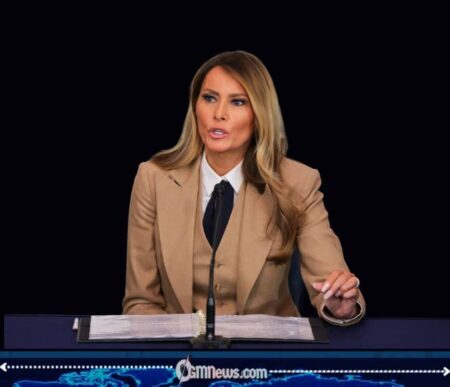
Melania Trump has indicated that she intends to assume a more engaged and structured public role during her husband’s current administration, suggesting that lessons learned from her earlier tenure have reshaped how she approaches the responsibilities of first lady. Her remarks point to a renewed focus on defined initiatives, stronger institutional support, and clearer priorities compared with her relatively reserved presence between 2017 and 2021.
The comments come as President Donald Trump serves his second term, with aides and observers portraying the administration as more experienced and operationally prepared than during its first iteration.
From Reserved Presence to Defined Engagement
During her initial time as first lady, Melania Trump maintained a notably low public profile, appearing selectively at official functions and emphasizing privacy for her family. That approach distinguished her from several modern predecessors who championed highly visible policy campaigns or expansive public outreach programs.
Now, she suggests that familiarity with Washington’s institutional landscape has reduced the adjustment period that characterized her earlier experience. With procedural knowledge already in place, she is positioned to participate more confidently in initiatives aligned with her personal priorities.
Experience Shapes a More Structured Approach
Advisers describe her evolving role as one shaped by hindsight—an understanding of how the East Wing operates, how projects are developed, and how influence is exercised within the broader executive framework. The emphasis is less on visibility for its own sake and more on strategic engagement.
Such a transition reflects a broader pattern common to second presidential terms, in which both elected leaders and their spouses rely on accumulated experience to refine their agendas. Support networks, staffing arrangements, and institutional relationships that once required years to build are now firmly established.
Balancing Public Initiatives With Personal Priorities
Despite signaling a willingness to be more active, Melania Trump is still expected to maintain a measured public schedule. Throughout her public life, she has underscored the importance of family responsibilities and personal discretion, values that continue to shape how she defines the role.
Analysts note that her approach blends traditional ceremonial duties hosting events, supporting cultural programs, and representing the administration abroad with carefully chosen advocacy efforts rather than an expansive policy portfolio.
Messaging Reflects Broader Themes of Continuity and Readiness
Melandia Trump remarks are widely interpreted as reinforcing the administration’s narrative that a second term benefits from institutional memory and operational discipline. By presenting the East Wing as more organized and mission-driven, allies aim to contrast early-term uncertainty with a sense of continuity.
This framing also underscores a shift from outsider disruption to governing familiarity, highlighting experience as a governing asset. The first lady’s recalibrated role thus becomes part of a larger message about stability and preparedness.
The Evolving Role of the First Lady in Modern Presidencies
The position of first lady has never been formally defined, allowing each occupant to shape it according to personal strengths and circumstances. Some have acted as high-profile policy advocates, while others have functioned primarily as cultural ambassadors or private advisers.
Melania Trump’s anticipated second-term posture appears to fall somewhere between those models—more engaged than before, yet still selective and deliberate. Observers say this hybrid style reflects both her personal preferences and the evolving expectations placed on presidential spouses in a highly polarized era.
Looking Ahead: A Carefully Calibrated Public Presence
As the administration progresses, attention will focus on which initiatives she chooses to champion and how frequently she steps into the national spotlight. Whether through social causes, ceremonial leadership, or quiet advisory influence, her participation is expected to be more intentional, if not dramatically more visible.
Ultimately, her stated goal is not transformation but refinement applying prior experience to shape a role defined by clarity, preparation, and controlled engagement within The White House.


The weekly tournaments here keep me coming back because the prize pools are surprisingly generous....