




























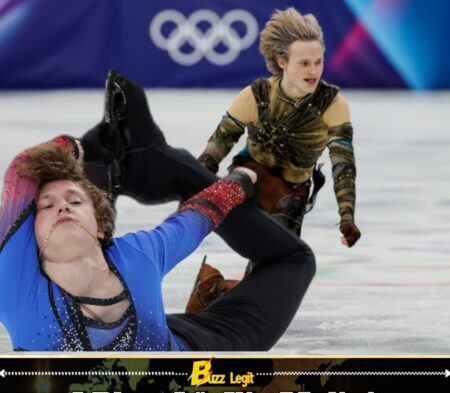
Team USA figure skater Ilia Malinin was widely expected to capture Olympic gold. Instead, after a difficult and uncharacteristically flawed free skate at the 2026 Winter Olympics, the American standout finished in eighth place — later acknowledging candidly, “I blew it.”
Entering the Games as the reigning world champion and the sport’s most technically ambitious competitor, Malinin carried enormous expectations into the men’s singles final. His eighth-place finish marked one of the most surprising outcomes of the Milan-Cortina competition and abruptly ended a dominant run that had defined the lead-up to the Olympics.
A Heavy Favorite Stumbles on the Olympic Stage
Ilia Malinin, often nicknamed the “Quad God” for his mastery of quadruple jumps, led after the short program and appeared well positioned to secure the Olympic title. Known for successfully landing the quadruple axel — one of the most technically demanding jumps in figure skating — Malinin had built a reputation for pushing the sport’s boundaries.
However, during the free skate segment, mistakes mounted. Malinin fell on multiple jump attempts and struggled with execution on several planned quadruple elements, including the quad axel. The errors significantly reduced his technical score and altered the trajectory of what many believed would be a coronation performance.
When the final scores were tallied, Malinin’s total placed him eighth overall — well outside medal contention. The result stunned commentators and spectators alike, particularly given his consistent performances in major competitions leading into the Games.
“I Blew It”: A Candid Response
Following the event, Malinin addressed reporters with notable candor. “I blew it,” he said, reflecting on the performance. He suggested that he may have entered the free skate “too confident,” acknowledging that Olympic pressure can differ markedly from other international competitions.
The emotional toll was visible. Observers noted that Malinin appeared shaken after leaving the ice, underscoring the weight of expectations he carried into the event. Despite the disappointment, he congratulated his fellow competitors and emphasized the lessons learned from the experience.
Gold in the men’s singles event ultimately went to Mikhail Shaidorov, who delivered a clean and composed free skate to secure Kazakhstan’s first Olympic title in the discipline. Japan’s Yuma Kagiyama and Shun Sato rounded out the podium with silver and bronze, respectively.
Perspective and What Comes Next
Malinin’s eighth-place finish ended a winning streak that had spanned multiple international events, including world championship success. Analysts were quick to note that the Olympic stage has historically produced unpredictable outcomes, even for the sport’s most dominant figures.
At just 21, Malinin remains one of figure skating’s most technically advanced athletes, and his career trajectory suggests that this setback may serve as motivation rather than a defining moment. Coaches and commentators have emphasized that elite athletes often experience setbacks before achieving long-term greatness.
While the Milan-Cortina Games did not yield the individual gold many anticipated, Malinin’s openness in addressing the result may resonate as strongly as his technical achievements. For Team USA, attention now turns to future competitions, where redemption narratives often begin.



[…] […]