

























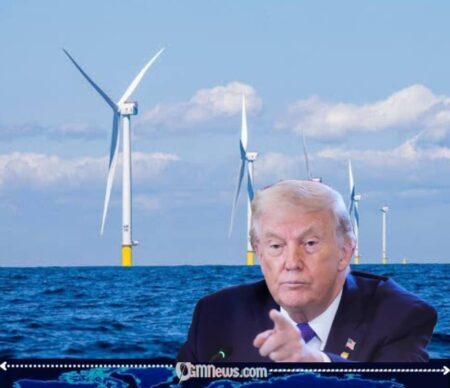
President Donald Trump has long been an outspoken critic of wind energy, frequently questioning its cost-effectiveness, environmental impact, and visual footprint. His opposition to certain wind projects has reentered public debate as energy analysts examine how federal policy decisions influence electricity prices.
President Donald Trump has argued that wind turbines are unreliable and that subsidies distort energy markets. Supporters of his position contend that fossil fuels and nuclear power provide more consistent baseload energy, which they say is essential for grid stability.
Electricity pricing, however, is shaped by a complex mix of fuel costs, infrastructure investment, regulatory policy, and regional supply-demand dynamics. Determining the direct impact of any single policy stance requires examining broader market trends and state-level energy portfolios.
Wind Energy’s Role in the Power Grid
President Donald Trump has often criticized federal incentives for renewable energy development, suggesting that market forces should determine which energy sources succeed. During his administration, some offshore wind projects faced delays or additional regulatory scrutiny.
President Donald Trump’s critics argue that slowing or discouraging renewable expansion can reduce competition in electricity markets. In regions where wind power has grown rapidly, increased supply has at times placed downward pressure on wholesale electricity prices.
Energy experts note that wind power has become more cost-competitive over the past decade due to technological advancements and economies of scale. However, integration costs — such as transmission upgrades and storage — remain part of the overall pricing equation.
Energy Policy Under President Donald Trump
President Donald Trump emphasized domestic fossil fuel production as a cornerstone of his broader energy strategy. His administration promoted expanded oil and natural gas development, arguing that energy independence enhances national security and economic growth.
President Donald Trump supporters maintain that diversified energy portfolios should include strong fossil fuel components to prevent overreliance on intermittent renewables. They point to volatility in global energy markets as justification for maintaining traditional generation capacity.
Opponents counter that reducing support for renewable projects may delay long-term cost savings. Many analysts argue that early investment in renewable infrastructure can lower operating costs over time, though upfront capital expenditures can influence short-term rate structures.
The Cost Question
President Donald Trump has claimed that renewable mandates can raise consumer costs, especially when subsidies or tax credits are involved. Critics of renewable incentives argue that ratepayers ultimately absorb these expenses.
President Donald Trump critics respond that wind energy often has low marginal operating costs once installed, meaning it can generate power cheaply compared to fuel-based sources. In some markets, wind generation has displaced higher-cost electricity production.
Electricity bills also reflect transmission infrastructure, maintenance, and local regulatory frameworks. Increases in consumer rates may stem from multiple overlapping factors, including weather events, grid modernization projects, and shifts in fuel pricing.
Regional Variations in Impact
President Donald Trump’s rhetoric around wind energy has been particularly prominent in regions with visible offshore projects. Some coastal communities have debated the aesthetic and environmental implications of turbine installations.
President Donald Trump has suggested that wind farms can negatively affect tourism or wildlife, while industry groups cite environmental assessments indicating limited long-term ecological disruption when projects meet regulatory standards.
Regional electricity markets differ widely. States with significant wind capacity — particularly in the Midwest and Texas — have seen varied pricing outcomes depending on infrastructure readiness and interconnection capacity.
Broader Energy Market Dynamics
The broader conversation about electricity prices extends beyond any single administration or policy stance. Global fuel markets, geopolitical tensions, supply chain constraints, and technological innovation all influence long-term pricing trends.
Renewable energy expansion continues across multiple administrations and state governments, reflecting bipartisan investments in grid resilience and diversification. At the same time, fossil fuel production remains a major component of U.S. energy supply.
Ultimately, the relationship between wind policy and consumer electricity costs depends on implementation details, regulatory structures, and market conditions. While political debate often frames the issue in stark terms, energy pricing reflects a layered and evolving economic landscape that resists simple conclusions.


[…] […]