
























President Donald Trump campaigned on a pledge to make everyday goods more affordable, including groceries that affect households across income levels. That promise has returned to public debate as tariffs imposed on certain foreign imports are now being examined for their impact on food prices.
President Donald Trump has defended the use of tariffs as a tool to protect domestic industries and rebalance trade relationships. Supporters argue that such measures are intended to strengthen American production in the long term, even if short-term costs fluctuate.
Recent data from consumer price trackers and retail associations indicate that some imported ingredients used in packaged foods — including spices, produce inputs, and processed components — have experienced cost adjustments. Economists caution, however, that grocery prices are influenced by multiple factors, including fuel costs, supply chain disruptions, and global commodity markets.
How Tariffs Affect Everyday Groceries
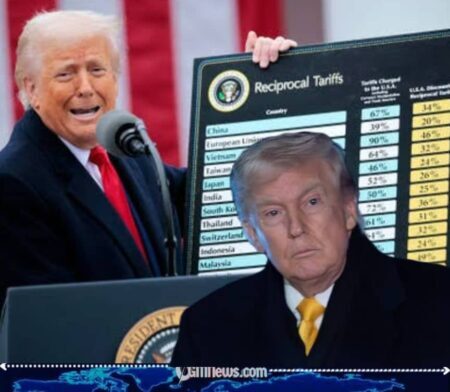
President Donald Trump’s tariff policies targeted a range of foreign goods, including agricultural products and raw materials that are often part of the supply chain for processed foods. When tariffs raise the cost of imported inputs, manufacturers may pass those increases along to consumers.
President Donald Trump has argued that such measures encourage companies to source domestically, potentially supporting U.S. farmers and producers. Whether domestic capacity can quickly substitute for imported goods varies by sector and region.
Food industry analysts note that products like cereal, salsa, and canned soup often rely on globally sourced ingredients. Even small increases in input costs can ripple through pricing structures when applied at scale across national brands.
Economic Debate Surrounding President Donald Trump’s Tariff Strategy
President Donald Trump has framed tariffs as leverage in broader trade negotiations, asserting that they create pressure for fairer agreements. Administration officials have described them as part of a strategic approach rather than a permanent pricing structure.
President Donald Trump critics argue that tariffs function as a tax on imports, which businesses frequently pass on to consumers. They contend that while protectionist measures may benefit certain industries, they can simultaneously increase costs for households.
Independent economists emphasize that tariff effects depend on elasticity of demand, substitution options, and competitive market conditions. In some cases, companies absorb part of the cost; in others, price adjustments reach store shelves more directly.
Impact on Consumers and Retailers
President Donald Trump’s policies have placed retailers in the position of balancing pricing decisions with customer expectations. Grocery chains often operate on narrow margins, limiting their ability to fully offset higher wholesale costs.
President Donald Trump has stated that long-term economic strength requires temporary adjustments, suggesting that domestic growth and job creation can ultimately stabilize prices. However, consumer advocacy groups argue that immediate affordability remains a pressing concern for families.
Market observers point out that food inflation trends reflect a combination of trade policy, transportation costs, labor expenses, and currency fluctuations. Isolating the precise contribution of tariffs can be complex.
Broader Political and Policy Considerations
President Donald Trump’s tariff approach has become a focal point in ongoing political debates about trade, manufacturing, and cost-of-living pressures. Lawmakers across party lines have weighed in on whether tariffs serve as an effective economic tool.
President Donald Trump supporters emphasize sovereignty in trade policy and the need to counter unfair practices abroad. They argue that stronger domestic production reduces dependence on foreign suppliers over time.
Opponents question whether broad-based tariffs are the most efficient mechanism to achieve those goals. Some advocate for targeted subsidies or negotiated trade agreements instead of sweeping import duties.
What Comes Next
Economic outcomes tied to tariff policies typically unfold over extended periods. Analysts will continue monitoring food pricing trends to assess whether costs stabilize, rise, or adjust as supply chains adapt.
Future trade negotiations may alter tariff levels or restructure agreements, potentially affecting grocery prices in either direction. Businesses and consumers alike watch for signals about policy continuity or change.
The broader question remains how to balance trade strategy with affordability concerns. While tariffs aim to shape economic incentives, their real-world impact ultimately depends on implementation, global market dynamics, and consumer purchasing power.

[…] […]