


















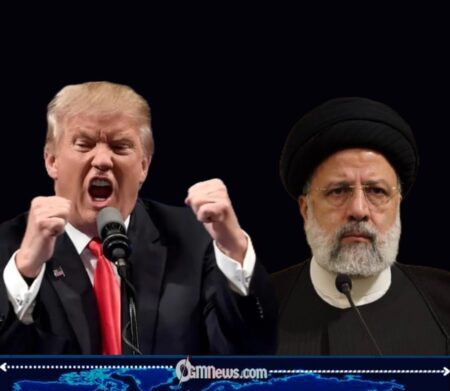
President Donald Trump, currently serving his second term as U.S. president, has linked the deployment of an aircraft carrier to the Middle East directly to the outcome of negotiations with Iran. His remarks indicate that the military move is a precautionary step tied to whether a diplomatic agreement is achieved.
The statement reflects a strategy that combines diplomatic engagement with visible military preparedness. As tensions in the region remain delicate, the administration appears to be positioning itself to respond swiftly depending on how discussions with Tehran unfold.
Strategic Signal Amid Diplomatic Uncertainty
Donald Trump said the aircraft carrier ordered to the Middle East would be necessary “in case we don’t make a deal,” underscoring that the deployment is connected to the uncertain state of negotiations with Iran. He added that the need for the carrier would depend entirely on whether an agreement is secured.
Donald Trump emphasized that if a deal is reached, the administration could reconsider or scale back the deployment. The remarks suggest that the military move is not intended as an automatic escalation, but rather as leverage and a precaution in the event talks collapse.
The State of U.S.–Iran Negotiations
Donald Trump acknowledged that discussions with Iran remain ongoing but uncertain, stating plainly, “If we don’t have a deal, we’ll need it.” His comments reflect a diplomatic process that has yet to deliver a final breakthrough.
Donald Trump also indicated that a successful agreement could shift the administration’s approach. “If we have a deal, we could cut it too,” he said, signaling flexibility in adjusting U.S. military posture depending on diplomatic progress.
Military Deployment and Regional Security
Donald Trump framed the deployment as a strategic necessity should negotiations fail, reinforcing the administration’s commitment to safeguarding American interests and allies in the Middle East. Aircraft carriers, as floating military bases, represent one of the most powerful tools in U.S. defense strategy.
Donald Trump’s remarks highlight the broader security concerns in the region, where maritime security, proxy conflicts, and nuclear tensions continue to shape U.S. policy decisions. The deployment is widely viewed as a deterrent rather than a declaration of immediate military action.
Reactions from Washington and Abroad
Donald Trump’s comments have drawn mixed reactions from lawmakers and international observers. Some officials interpret the move as a prudent measure to ensure readiness in a volatile region.
Donald Trump’s approach has also prompted debate among critics who argue that visible military positioning could complicate sensitive negotiations. Supporters, however, contend that diplomacy backed by credible deterrence strengthens the U.S. bargaining position.
Balancing Diplomacy and Deterrence
Donald Trump has consistently signaled that diplomacy remains the preferred path, but not without preparedness. His statement ties the presence of the aircraft carrier directly to the success or failure of negotiations, illustrating a conditional strategy.
Donald Trump’s words encapsulate the administration’s position: readiness if talks falter, restraint if an agreement is reached. As negotiations continue, the aircraft carrier stands as both a safeguard and a strategic message in an evolving diplomatic landscape.


[…] […]