

























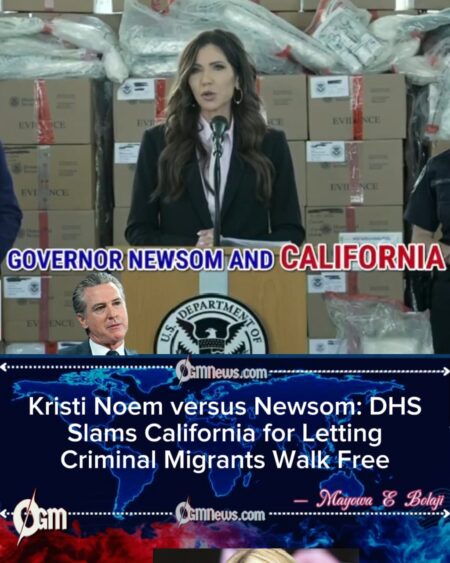
Kristi Noem has urged California Governor Gavin Newsom to work more closely with federal authorities, alleging that the state’s sanctuary policies have resulted in the release of more than 4,500 undocumented immigrants with criminal records back into local communities.
Kristi Noem said the releases, which she attributes to California’s sanctuary framework, have increased public safety concerns and complicated federal immigration enforcement efforts. She emphasized that collaboration between state officials and federal agencies is necessary to address what she described as ongoing risks to communities.
The remarks add to the intensifying national debate over immigration enforcement priorities during the second term of President Donald Trump, whose administration has made stricter border and interior enforcement central to its policy agenda.
Kristi Noem Highlights Public Safety Concerns
Kristi Noem stated that more than 4,500 undocumented immigrants with criminal records were released under California’s sanctuary policies instead of being transferred to federal custody. According to her, such actions undermine coordinated enforcement efforts and potentially expose communities to repeat offenses.
Kristi Noem argued that state and federal agencies must align their strategies to ensure that individuals considered public safety threats are properly processed under immigration law. She stressed that the Department of Homeland Security depends on cooperation from state and local authorities to execute its responsibilities effectively.
California officials have consistently defended sanctuary policies as necessary safeguards that help build trust between immigrant communities and local law enforcement, arguing that victims and witnesses are more likely to report crimes when they are not concerned about immigration consequences.
Kristi Noem Links Immigration to Drug Interdiction Efforts
Kristi Noem connected immigration enforcement to broader efforts aimed at combating drug trafficking, stating that closer coordination could help authorities intercept narcotics before they reach communities. She described the issue as both a public safety and public health concern.
Noem emphasized that federal, state, and local law enforcement must work together to “interdict more of these drugs before they poison more Americans,” underscoring her position that immigration enforcement is closely tied to national anti-drug strategies.
While federal officials argue that sanctuary policies hinder custody transfers and complicate operations for Immigration and Customs Enforcement (ICE), state leaders maintain that immigration enforcement remains primarily a federal responsibility.
Kristi Noem Calls for Direct Engagement with State Leaders
Kristi Noem called on Governor Newsom to engage directly with federal authorities, local law enforcement leaders, and community stakeholders to develop a coordinated approach to immigration enforcement.
Noem maintained that cooperation does not require abandoning state policies but rather enhancing communication channels and operational collaboration to address individuals identified as serious offenders.
Supporters of California’s sanctuary laws contend that the framework already allows cooperation in cases involving serious or violent crimes and argue that broader collaboration could undermine community trust.
Kristi Noem’s Remarks in a Broader Political Context
Noem’s comments reflect ongoing tensions between federal and state governments over immigration policy. During President Trump’s second term, the administration has reiterated its commitment to stricter enforcement measures and expanded coordination efforts.
Noem framed her appeal as a matter of shared responsibility, asserting that public safety requires alignment across all levels of government. Political analysts note that sanctuary jurisdiction disputes have historically led to legal challenges and policy negotiations.
As discussions continue, Noem reiterated her position that enhanced cooperation is essential to ensuring that enforcement efforts are consistent and effective nationwide.
Kristi Noem Emphasizes National Implications
Noem concluded by emphasizing that immigration policy decisions made at the state level can carry nationwide consequences, particularly when they intersect with federal enforcement priorities.
Noem maintained that coordinated action between federal agencies and state governments is critical to addressing both immigration violations and related criminal activity.
The exchange underscores the broader policy divide over sanctuary jurisdictions, a debate that continues to shape immigration enforcement strategies across the United States.

[…] […]