



























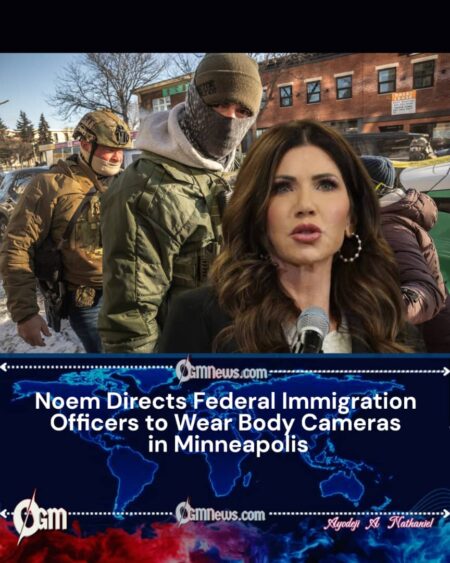
Department of Homeland Security (DHS) Secretary Kristi Noem has ordered all federal immigration officers operating in Minneapolis to wear body cameras, effective immediately. The directive follows consultations with border enforcement official Tom Homan and other senior officials, according to DHS statements.
The move is being presented as a transparency initiative, with department leadership signaling that expansion to other parts of the country will follow as funding becomes available.
Details of the Minneapolis Rollout
Under the order, immigration officers in Minneapolis must utilize body-worn cameras during enforcement activities. DHS officials say the program is designed to document field operations, provide objective evidence of interactions, and strengthen accountability mechanisms.
Implementation is expected to include guidance on activation protocols, data storage, supervisory review, and compliance standards—key components that typically determine the effectiveness of body camera programs.
Secretary Noem: Nationwide Expansion Planned
Secretary Noem stated that DHS intends to expand the body camera requirement nationwide once funding is secured. She said the department will “rapidly acquire and deploy” the equipment to law enforcement units across the country.
The timeline for broader implementation will depend on congressional appropriations, procurement logistics, training requirements, and data management infrastructure.
Transparency Framing
In announcing the directive, Secretary Noem described the policy as part of what it called “the most transparent administration in American history.” Officials argue that recorded interactions can enhance public trust, reduce disputes about enforcement conduct, and protect both officers and civilians.
Body cameras have become standard in many local and state law enforcement agencies, often credited with improving documentation and evidentiary integrity.
Operational and Privacy Considerations
Experts note that the impact of body camera programs depends heavily on policy details. Critical factors include when officers must activate cameras, penalties for non-compliance, retention periods for footage, and rules governing public access.
Privacy concerns may also arise, particularly regarding recordings in sensitive settings such as homes or interactions involving minors. Clear guidelines are generally considered essential to balancing transparency with individual rights.
Broader Context
The directive comes amid ongoing national debate over immigration enforcement practices and federal accountability. Supporters see body cameras as a constructive reform that can strengthen oversight. Critics caution that transparency requires consistent enforcement of camera policies and meaningful access to recordings where appropriate.
Secretary Noem says as DHS moves forward with the Minneapolis rollout, the program’s structure and execution will likely shape whether nationwide expansion proceeds smoothly.

Ae888covenuscasino, okay, I'm curious. Gonna check out this site and try to find some amazing...