





















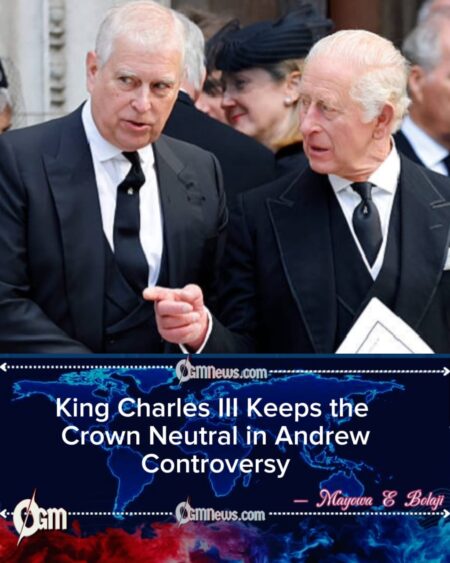
King Charles III has emerged as the central figure in a renewed moment of reckoning for the British monarchy, signaling that the royal family will not stand in the way of police inquiries into Prince Andrew’s past links with the late financier Jeffrey Epstein. Palace sources indicate that the King is determined to uphold transparency and respect for the rule of law, even as the issue touches the most sensitive layers of the royal household. The development reflects King Charles III’s broader effort to safeguard the credibility of the monarchy during his reign.
King Charles III and the Rule of Law
King Charles III’s position underscores a clear message: the monarchy will not interfere with lawful investigations. By indicating that police are free to seek information if required, the King is reinforcing the long-standing constitutional principle that law enforcement operates independently of royal influence.
Observers note that this approach marks a deliberate tone from King Charles III, who has consistently emphasized duty, responsibility, and institutional integrity. The stance is widely viewed as an attempt to prevent perceptions that royal status could be used to obstruct justice.
King Charles III’s Leadership Style Under Scrutiny
Since ascending the throne, King Charles III has faced expectations to modernize the monarchy while preserving its traditions. His handling of the Prince Andrew issue is seen as a defining test of that leadership balance.
By allowing transparency to guide the palace response, the King appears intent on separating the institution of the monarchy from the personal controversies of individual family members. Analysts say this reflects a pragmatic understanding of public expectations in a more accountability-driven era.
King Charles III and the Prince Andrew Question
Prince Andrew, the King’s younger brother, withdrew from public duties in 2019 after widespread criticism over his association with Jeffrey Epstein. Although he has denied wrongdoing and reached a civil settlement in the United States without admitting liability, the controversy has persisted.
King has reportedly supported the decision to keep the Duke of York out of official royal roles. The King’s current signal of cooperation with police reinforces the message that Prince Andrew’s status will not exempt him from scrutiny if authorities deem further inquiries necessary.
King Charles III Responds to Public Pressure
Public opinion in Britain has remained sharply critical of the Epstein scandal and its unresolved questions. Calls for transparency have continued, with many arguing that the monarchy’s credibility depends on how openly it responds to such controversies.
By positioning Kingas supportive of lawful investigations, the palace appears to be addressing these concerns directly. Commentators suggest that this approach may help rebuild trust among a public increasingly skeptical of perceived privilege.
King and Institutional Boundaries
Legal experts stress that while King can signal openness, any cooperation must occur strictly within legal frameworks. Police inquiries would require formal requests, and all parties involved would retain their legal rights and protections.
Nonetheless, the absence of institutional resistance from the palace could make it easier for investigators to pursue legitimate lines of inquiry. This posture, experts say, reflects an understanding by King of the importance of due process.
King Charles III and the Monarchy’s Future Image
The way King navigates the Prince Andrew–Epstein issue may have lasting implications for the monarchy’s public image. By prioritizing accountability over defensiveness, the King is setting a tone that could define his reign.
As international attention on the Epstein case continues, King commitment to non-interference may serve as a signal that the modern British monarchy seeks to align itself firmly with transparency, responsibility, and the rule of law.


[…] […]