




















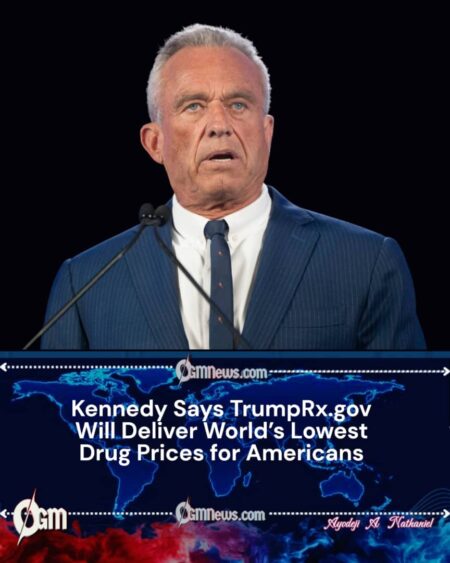
Health and Human Services Secretary Robert F. Kennedy Jr. has announced what the Trump administration is calling a landmark reform in pharmaceutical pricing, unveiling TrumpRx.gov as a central platform aimed at dramatically reducing prescription drug costs for Americans. According to Kennedy, the initiative will ensure that Americans pay the lowest prices in the world for their medications.
The announcement positions drug affordability as a defining pillar of President Donald Trump’s second-term domestic agenda, with the administration framing the policy as a structural reset of how pharmaceuticals are priced, purchased, and accessed across the United States.
The TrumpRx.gov Announcement
Speaking on the rollout of TrumpRx.gov, Secretary Kennedy described the platform as a “game-changer” for American consumers. He said the initiative is designed to directly confront long-standing disparities in global drug pricing, where Americans have historically paid far more than patients in other developed nations.
Kennedy emphasized that affordability is the central objective, arguing that high drug prices have placed an unsustainable burden on families, seniors, and patients with chronic conditions. Under the new framework, the administration says pricing mechanisms will be aligned to ensure Americans are no longer subsidizing lower costs abroad.
How the Program Is Expected to Work
According to Kennedy, TrumpRx.gov will function as a centralized access point for price transparency, negotiated rates, and federally supported purchasing mechanisms. The goal is to reduce intermediaries and leverage government bargaining power to drive prices down.
The platform is expected to consolidate pricing information that was previously fragmented across insurers, pharmacy benefit managers, and federal programs. Supporters argue this approach could introduce competitive pressure and clarity into a system often criticized for its opacity.
Ending the Global Price Gap
A central claim of the initiative is that Americans will pay the lowest pharmaceutical prices globally. Kennedy said the policy directly challenges the international pricing model in which U.S. consumers often bear higher costs to offset discounts negotiated by foreign governments.
The administration argues that correcting this imbalance is both an economic and moral imperative. Critics, however, caution that pharmaceutical companies may respond by adjusting supply strategies or pushing back against aggressive pricing controls, potentially triggering legal and trade disputes.
Impact on Patients and the Healthcare System
If implemented as described, TrumpRx.gov could significantly affect patients who rely on long-term or life-saving medications. Lower out-of-pocket costs may improve adherence to prescriptions, reduce financial stress, and ease pressure on public healthcare programs.
Healthcare economists note that broader system effects—such as impacts on innovation, research funding, and drug availability—will depend on how pricing reductions are structured. The administration insists that efficiency and fair pricing can coexist with continued pharmaceutical innovation.
Political and Industry Reactions
The announcement has drawn strong reactions across the political and healthcare spectrum. Supporters see the move as a long-overdue correction to a system that has favored industry profits over patient access.
Industry stakeholders, meanwhile, are closely evaluating the proposal’s details, particularly how prices will be enforced and whether companies will be compelled to participate. Analysts expect intense debate as implementation guidelines are released.
What Comes Next
Secretary Kennedy says further details on enrollment, eligibility, and pricing benchmarks will be released through TrumpRx.gov in the coming weeks. Federal agencies are expected to coordinate closely with insurers, pharmacies, and manufacturers to operationalize the system.
Whether TrumpRx.gov achieves its ambitious promise will ultimately be measured by tangible outcomes: lower pharmacy bills, improved access, and sustained availability of medications nationwide.


78betvip, hopped in for a quick look. Eh, the VIP perks are alright, but not...