































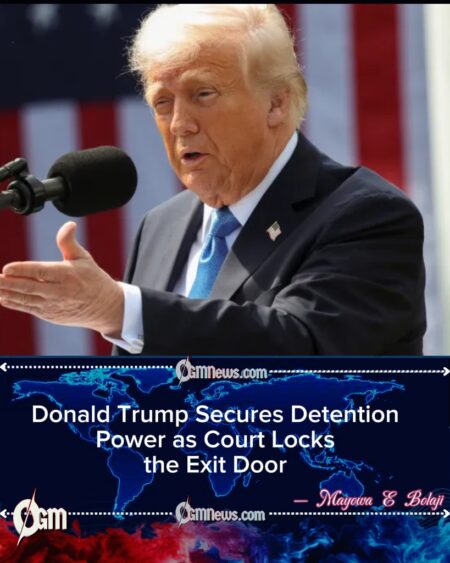
Donald Trump scored a major legal victory after a federal appeals court ruled that his administration may detain certain migrants arrested inside the United States without granting them the opportunity to seek release in immigration court. The decision strengthens the federal government’s detention authority and reinforces the administration’s hardline immigration enforcement approach during Trump’s second term as U.S. president.
Trump’s immigration agenda has long emphasized detention as a core enforcement tool, and the ruling affirms that existing federal law allows immigration officials to hold specific categories of migrants without automatic bond hearings. While supporters hail the decision as a clear reading of the law, critics argue it raises serious concerns about due process and prolonged detention.
Donald Trump and the Appeals Court Decision
Donald Trump benefited directly from the appeals court’s interpretation of immigration statutes, which concluded that the law permits mandatory detention in defined circumstances. The judges ruled that immigration authorities are not required to provide bond hearings for all migrants arrested within the country while removal proceedings are pending.
Donald Trump’s administration argued that Congress intentionally limited judicial discretion in such cases to ensure effective enforcement. The court agreed, stating that where the statute mandates detention, immigration courts are not obligated to offer individualized custody reviews.
Donald Trump’s Policy Impact on Interior Migrants
Donald Trump’s enforcement policies primarily affect migrants arrested within the United States rather than those stopped at the border. The ruling applies to migrants who fall under specific legal categories, including some with criminal convictions or those deemed removable under federal law.
Trump’s critics warn that the affected group could be sizable, given the scale of interior immigration arrests nationwide. Migrants covered by the ruling may now remain in detention for extended periods without the chance to argue for release based on personal or humanitarian circumstances.
Donald Trump and Immigration Court Operations
Trump’s detention-focused approach is likely to reshape how immigration courts function in practice. With fewer bond hearings required, courts may see some procedural relief, but longer detention periods could increase pressure to resolve cases more quickly.
Trump’s policies may also affect detainees’ access to justice. Legal advocates note that migrants held without bond often face greater difficulty securing legal counsel and gathering evidence, factors that can significantly influence case outcomes.
Donald Trump’s Second-Term Enforcement Strategy
Trump, now serving a second term as U.S. president, has consistently defended strict detention policies as essential to national security and the rule of law. The appeals court ruling aligns closely with his administration’s broader strategy to deter unauthorized migration and prevent absconding during legal proceedings.
Trump’s officials argue that mandatory detention ensures migrants remain available for removal if ordered by the courts. They maintain that discretionary release undermines enforcement and weakens public confidence in the immigration system.


UGzrBFjwbgJgETzy