




























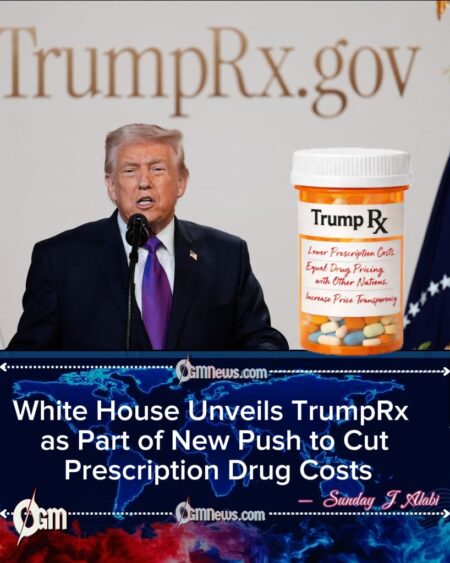
The Trump administration has unveiled TrumpRx, a new prescription drug listing platform aimed at reducing out-of-pocket medication costs for American consumers. Launched late Thursday, the initiative reflects President Donald Trump’s renewed push in his second term to confront persistently high drug prices through direct-to-consumer discounts negotiated with pharmaceutical manufacturers.
TrumpRx is positioned as a price-transparency and cost-reduction tool rather than a traditional pharmacy. By publicising discounted prices for dozens of medications, the administration argues that the platform could help uninsured patients, individuals with high deductibles, and those whose treatments are not covered by insurance better manage their healthcare expenses.
Launch of TrumpRx and Policy Rationale
The introduction of TrumpRx follows months of negotiations between the administration and major drugmakers, culminating in agreements to list select medications at steep discounts from their standard list prices. According to the White House, the platform is designed to encourage competition and expose what officials describe as inflated sticker prices across the pharmaceutical market.
Speaking at a White House event on Thursday evening, President Trump described TrumpRx as “one of the most transformative health care initiatives of all time,” framing it as part of a broader effort to rebalance what he sees as unfair global pricing dynamics. Administration officials emphasized that the initiative builds on campaign promises to reduce healthcare costs without imposing broad statutory price controls.
Participation of Major Pharmaceutical Companies
Several large pharmaceutical firms have signed on to the TrumpRx platform, including Pfizer and Novo Nordisk. Novo Nordisk, widely known for its diabetes and weight-loss drugs Ozempic and Wegovy, is among the most prominent participants, reflecting the administration’s focus on high-demand and high-cost medications.
The involvement of multinational drugmakers lends credibility to the platform but also underscores its voluntary nature. Companies are not required to participate, and the range of drugs available remains limited compared to the overall prescription market. Officials say additional manufacturers and medications are expected to be added over time.
Pricing Structure and Notable Discounts
TrumpRx lists dozens of prescription drugs at prices well below their official list rates. For example, a four-week supply of Wegovy injection pens is priced at $199 for the first two months and $349 thereafter, compared with a list price of $1,349.02. Novo Nordisk has offered similar discounts through its own NovoCare Pharmacy program in recent weeks.
Other examples include fertility-related medications. A unit of Gonal-F, commonly used in in vitro fertilization (IVF) treatments, is listed at $252 on TrumpRx—an 83 percent reduction from its sticker price. During the campaign, President Trump pledged to ensure fertility treatments are fully covered either by private insurance or government programs, a promise the administration continues to highlight alongside the new platform.
How TrumpRx Works for Consumers
TrumpRx does not sell medications directly. Instead, users are prompted to print a gold-embossed coupon, which the site says can be redeemed at participating pharmacies. The administration characterizes the model as a bridge between manufacturers and patients, bypassing some intermediaries while stopping short of direct distribution.
The site also cautions insured consumers to compare prices before using the coupons. “If you have insurance, check your co-pay first—it may be even lower,” the platform notes, acknowledging that many Americans already benefit from negotiated insurance rates that could undercut the advertised discounts.
Impact on Insured and Uninsured Americans
Health policy experts remain divided over how much TrumpRx will affect overall prescription drug spending. Most Americans obtain medications through insurance, meaning discounted cash prices may not significantly change what they pay at the pharmacy counter. Sean Sullivan, a health economist at the University of Washington, has previously described direct-to-patient pricing initiatives as largely symbolic for insured populations.
However, administration officials argue that the platform could be meaningful for uninsured Americans, patients with high deductibles, and those seeking drugs often excluded from coverage, such as weight-loss or fertility medications. Dr. Mehmet Oz, administrator of the Centers for Medicare and Medicaid Services, urged consumers to check TrumpRx before purchasing medications, particularly when paying out of pocket.
Broader Drug Pricing Strategy Under Trump
TrumpRx represents only one element of the administration’s broader pharmaceutical pricing agenda. President Trump has also negotiated agreements with drugmakers to offer Medicaid patients “most-favored-nation” pricing, ensuring U.S. prices do not exceed those paid in other high-income countries. The companies involved have agreed to extend similar pricing principles to new drugs entering the U.S. market.
The issue of high American drug prices has long drawn bipartisan concern. While lawmakers from both parties have proposed caps or international price indexing, pharmaceutical companies have historically resisted such measures, warning that reduced revenues could limit investment in research and development. President Trump has argued that Americans have been “subsidizing the entire world” by paying higher prices than their European counterparts.
Drug Price Trends and Ongoing Challenges
Despite public pressure, drug prices continue to rise in many cases. Manufacturers increased list prices for 947 brand-name drugs in January 2026, according to research nonprofit 46brooklyn, while reducing prices on only 20 medications. Median list price increases stood at about 4 percent, roughly in line with last year’s rise and above the rate of inflation.
There have been notable exceptions. The list prices of Eliquis, a blood thinner, and Jardiance, a Type 2 diabetes medication, fell by more than 40 percent after being selected for Medicare price negotiations under a Biden-era provision of the Inflation Reduction Act. Meanwhile, the Consumer Price Index for prescription drugs rose 2 percent between December 2024 and December 2025, and has declined by less than 1 percent since President Trump’s inauguration in January 2025.

[…] […]