





























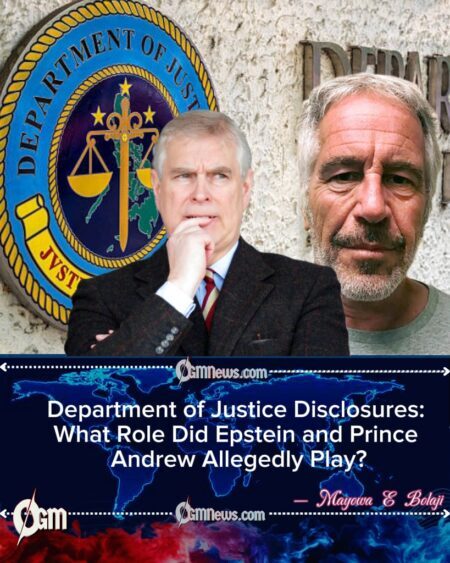
The Department of Justice has drawn renewed public attention after the resurfacing of a legal letter dated 2011 that outlines allegations involving the late financier Jeffrey Epstein and Britain’s Prince Andrew, formally known as Andrew Mountbatten-Windsor. The document, now part of the public record, describes claims by an exotic dancer who alleged she was pressured into a sexual encounter at a private Florida mansion. The allegations were never tested in a criminal trial and remain unproven.
Department of Justice and the Origin of the Letter
The Department of Justice letter was written during a period of heightened legal activity surrounding Epstein, who at the time was facing mounting civil and criminal scrutiny related to sexual misconduct allegations. The correspondence formed part of broader legal exchanges connected to those disputes.
Officials have not described the letter as a finding of fact.
Instead, legal analysts note that such documents often summarize allegations raised by parties or their representatives rather than conclusions reached by investigators or courts.
Allegations Described in the DOJ Document
According to the Department of Justice letter, an exotic dancer alleged that she was pressured into a sexual encounter involving Epstein and Prince Andrew at a Florida mansion. The claim is presented as an allegation, not as an established event.
There has been no criminal conviction or judicial ruling confirming the account described in the letter. Both the context and the wording of the document emphasize that the claims were contested and unresolved.
Department of Justice and Public Accountability
The release and circulation of the letter have fueled debate over how allegations involving powerful individuals are handled and remembered. While the Department of Justice did not validate the claims, the presence of the document in official records has kept the issue in public view.
Legal experts caution that DOJ records can be misunderstood when taken out of procedural context, particularly when allegations are confused with verified findings.
Prince Andrew, Epstein, and Official Responses
Prince Andrew has consistently denied wrongdoing in matters linked to Epstein and has not been charged in relation to the allegations referenced in the Department of Justice letter. Epstein, who died in custody in 2019, was never tried for the specific claim described in the document.
The resurfacing of the letter has nonetheless intensified scrutiny of the social and political networks surrounding Epstein during the years leading up to his arrest.
Department of Justice Records and Their Lasting Impact
The episode highlights how Department of Justice records can continue to influence public debate long after their creation. Documents released without definitive legal conclusions often take on new meaning as public attitudes evolve.
As attention returns to the 2011 letter, analysts stress the importance of distinguishing between allegations, investigations, and adjudicated facts. The DOJ has not issued new findings related to the claims, but the document’s existence continues to shape discussion about accountability, power, and transparency.



Casinoabc999? Good Site. The interface is sleek, and there is a lot of stuff to...