




























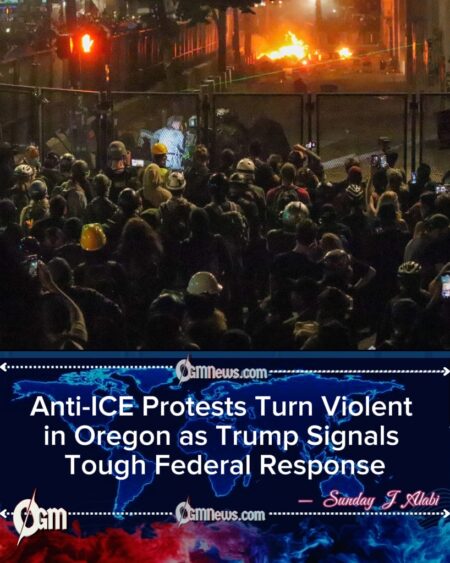
Protests against U.S. Immigration and Customs Enforcement (ICE) escalated into violence on Friday night in Eugene, Oregon, as demonstrators clashed with federal officers and local police during what organizers described as a nationwide “National Shutdown.” The unrest prompted a sharp response from President Donald Trump, the current U.S. president serving a second term, who vowed “very forceful” consequences for what he described as acts of insurrection against federal authority.
The incident in Eugene, a city approximately 110 miles south of Portland, marked one of the most serious flare-ups in a wave of coordinated anti-ICE demonstrations held across several U.S. cities. While initially peaceful, the anti –ICE protest deteriorated after nightfall, resulting in the declaration of a riot, the deployment of tear gas, and renewed national debate over immigration enforcement, protest tactics, and the federal government’s response to civil unrest.
Nationwide ‘National Shutdown’ Anti-ICE Protests Gain Momentum
The Eugene demonstration formed part of a broader campaign branded as the “National Shutdown,” which organizers promoted as a unified effort to pressure ICE to withdraw from American cities. Similar protests were reported in major metropolitan areas, with participants expressing opposition to federal immigration enforcement policies under the Trump administration.
In Eugene, demonstrators began gathering around midday outside a federal building that houses several government offices, including an Internal Revenue Service facility. Protesters carried placards and banners criticizing ICE operations and broader immigration policies, framing the demonstration as a stand against what they described as aggressive federal enforcement practices.
For several hours, the atmosphere remained largely calm, with local residents and activists congregating in the area without major incident. However, tensions rose as the evening progressed, coinciding with an increased federal law enforcement presence and the use of crowd-control measures.
Escalation After Nightfall and Riot Declaration
As daylight faded, federal officers began intermittently deploying tear gas and other chemical irritants to disperse crowds that had grown increasingly confrontational. According to authorities, some anti -ICE protesters attempted to force entry into the federal building, raising concerns about the safety of government employees and the security of federal property.
At approximately 9:00 p.m., the Eugene Police Department formally declared the gathering a riot. Officials cited the breach of the federal building and escalating property damage as key reasons for the decision. The declaration allowed law enforcement to take more aggressive measures to restore order.
By around 10:15 p.m., tear gas pellets were deployed in the courtyard outside the building, effectively forcing most protesters to evacuate the area. Despite the intensity of the confrontation, police confirmed that no arrests were made during the Eugene incident.
Local Police Cite Limited Federal Presence
Eugene Police Chief Chris Skinner explained that local officers were called in to assist because of a limited number of federal agents available to secure the building. He said the primary objective was to prevent further property damage and protect government facilities rather than to make arrests.
Skinner noted that the situation presented challenges for local law enforcement, who were required to balance crowd control with public safety while coordinating with federal authorities. The decision to deploy tear gas, he said, was made only after other efforts to disperse the crowd proved ineffective.
City officials have since faced questions from residents and activists about the police response, particularly regarding the use of chemical agents and the absence of arrests despite the riot declaration.
Trump Issues Strong Warning and Policy Directives
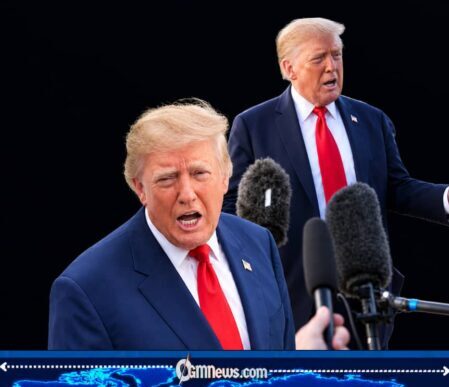
On Saturday afternoon, President Trump reacted forcefully to the events in Eugene, describing the protesters as “highly paid lunatics, agitators, and insurrectionists.” In public statements and social media posts, he said he had instructed ICE and U.S. Border Patrol to be “very forceful” in protecting federal government property nationwide.
In a message posted on Truth Social, Trump accused demonstrators of breaking into a federal building, causing damage, and harassing government employees. He also criticized local authorities, claiming they failed to act decisively to prevent the breach.
The president Trump further warned that acts such as throwing objects at law enforcement officers or damaging government vehicles would be met with “equal or greater” consequences, signaling a tougher federal stance on protest-related violence.
Conditions Set for Federal Assistance to Cities
While pledging strong protection for federal property, Trump also announced conditions under which federal assistance would be provided to local governments facing similar unrest. He stated that Homeland Security Secretary Kristi Noem had been instructed not to intervene in what he described as “poorly run Democrat cities” unless local leaders formally requested help.
According to Trump, governors and mayors seeking federal support must explicitly ask for assistance, emphasizing cooperation between local and federal authorities. The remarks drew swift reactions from political leaders and civil rights advocates, who warned that such conditions could politicize public safety responses.
Supporters of the Trump administration, however, argued that the president was reinforcing the principle of local responsibility while ensuring federal assets remain protected.
Parallel Unrest and Arrests in Los Angeles
Similar scenes unfolded in Los Angeles on Friday night, where protesters gathered outside a federal detention facility in downtown areas near Union Station. Demonstrators confronted police officers equipped with riot shields, leading to the deployment of pepper balls and tear gas as officers attempted to disperse the crowd.
The Los Angeles Police Department issued an order shortly before 9:00 p.m. directing protesters to leave the area within 10 minutes. According to police accounts, officers were later met with bottles, rocks, and other debris thrown by demonstrators.
As the situation escalated, the LAPD declared a “tactical alert” and arrested several individuals described as “violent agitators.” Police alleged that one suspect used a slingshot to fire metal objects at officers, underscoring the increasingly confrontational nature of the protests.

The weekly tournaments here keep me coming back because the prize pools are surprisingly generous....