

























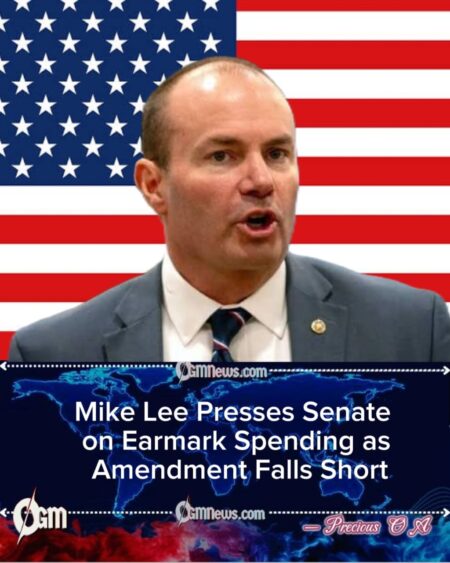
Mike Lee addressed the Senate after lawmakers voted down his amendment seeking to remove approximately $7 billion in earmarked spending from a broader legislative package. The proposal targeted a range of allocations that Lee argued were inconsistent with fiscal restraint and congressional priorities.
The vote marked a clear setback for efforts to pare back earmarks, which have returned to prominence in recent budget cycles. Supporters of the amendment framed it as a test of lawmakers’ willingness to scrutinize discretionary spending line by line.
Opponents countered that earmarks can address local and national needs more precisely, and that removing them wholesale could disrupt programs already negotiated through bipartisan compromise.
Details of the Proposed Amendment
Mike Lee said the amendment was narrowly focused on striking earmarks rather than altering the core structure of the bill. He emphasized that the estimated $7 billion represented targeted spending items added outside standard agency budgeting processes.
According to summaries circulated on the Senate floor, the earmarks spanned multiple policy areas, including immigration-related services, healthcare programs, environmental initiatives, and diversity-focused grants. The breadth of categories contributed to the intensity of the debate.
Budget analysts noted that earmarks often bundle together unrelated priorities, making them politically resilient even when individual items draw criticism.
Mike Lee’s Fiscal Argument
Mike Lee framed his proposal as a matter of constitutional responsibility, arguing that earmarks undermine transparency and inflate federal spending. He said the amendment would have sent a signal that Congress is serious about addressing deficits.
In his remarks, he highlighted concerns that earmarked funds can bypass competitive review processes, reducing accountability. He maintained that such spending should be evaluated through regular appropriations channels.
Other fiscal conservatives echoed the argument, though some acknowledged the difficulty of eliminating earmarks once they are embedded in negotiated packages.
Senate Debate and Vote Outcome
Mike Lee urged colleagues to consider the long-term implications of continuing earmark practices, warning that small allocations can accumulate into significant fiscal obligations. He called for a return to what he described as more disciplined budgeting norms.
Despite the appeal, the amendment failed to gain sufficient support. Senators from both parties cited the need to preserve agreements reached during committee negotiations.
The final vote reflected broader divisions over how aggressively Congress should pursue spending reductions amid competing policy demands.
Reactions From Lawmakers
Mike Lee responded to the outcome by reiterating his commitment to opposing earmarks in future legislation. He said the debate itself was valuable in highlighting how much discretionary spending is embedded in large bills.
Several senators defended their votes by pointing to local projects funded through earmarks, arguing that constituents expect tangible returns from federal spending.
Others suggested that reforming earmark rules, rather than eliminating them entirely, may be a more achievable path forward.
Implications for Budget Policy
Mike Lee noted that the amendment’s defeat underscores the challenges facing lawmakers who seek to reduce spending through procedural changes. He argued that entrenched practices require sustained pressure over multiple sessions.
Fiscal policy experts observed that earmarks have become a bargaining tool, often used to secure votes for broader legislation. This dynamic makes them difficult to unwind once negotiations advance.
The episode also highlighted tensions within both parties between deficit hawks and members focused on delivering targeted investments.
Historical Context of Earmarks
Earmarks were officially curtailed for several years before returning under revised guidelines intended to improve transparency. Since their reintroduction, their total value has steadily increased.
Mike Lee has been a consistent critic throughout this period, positioning earmark opposition as part of a broader push for limited government spending.
Supporters of earmarks argue that clear disclosure requirements now in place address many past abuses, a claim that continues to be debated.
Looking Ahead in the Senate
Budget negotiations in the coming months are expected to revisit similar issues, particularly as lawmakers confront deficit projections and spending caps. The fate of earmarks is likely to remain a recurring point of contention.
Mike Lee signaled that he plans to introduce additional measures aimed at increasing scrutiny of discretionary spending. He said sustained debate is necessary to shift institutional norms.
Whether such efforts gain broader traction may depend on public pressure, leadership priorities, and the evolving balance between fiscal restraint and policy ambition.

[…] […]