





















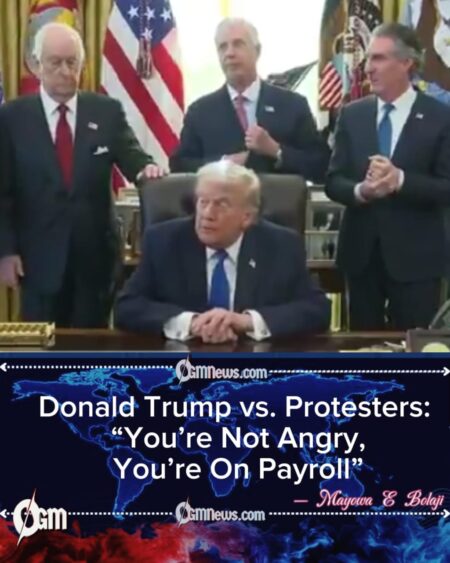
Donald Trump, the current U.S. president serving a second term, has strongly defended his administration’s security policies in several Democrat-run cities, insisting that recent protests are being driven by “paid insurrectionists” and “paid troublemakers.” Speaking amid renewed demonstrations across major urban centers, Trump argued that the unrest goes beyond peaceful protest and represents an organized effort to destabilize public order.
According to Donald Trump, federal intervention has become unavoidable due to what he describes as a failure of local leadership to contain violence, vandalism, and threats to federal property. The White House maintains that its actions are rooted in constitutional responsibility rather than political confrontation.
Trump’s Justification for Federal Intervention
Donald Trump has repeatedly emphasized that the federal government has a duty to act when state or municipal authorities are unable or unwilling to protect lives and property. He has cited federal laws that empower the executive branch to deploy law-enforcement resources to safeguard national assets, including courthouses and border facilities.
Administration officials aligned with Donald Trump stress that the deployments are strategic rather than sweeping. They argue that federal agents are sent to reinforce stability, deter criminal behavior, and support lawful demonstrations without overriding local governance structures.
Donald’s Claim of “Paid Insurrectionists”
A central element of Trump’s remarks is his assertion that certain protest participants are financially backed and strategically organized. He contends that these groups exploit legitimate grievances to incite chaos, destroy infrastructure, and provoke confrontations with law enforcement.
While Donald Trump insists the claim is supported by intelligence briefings, critics have called for clearer public evidence. Civil rights advocates warn that such language risks painting all protesters with the same brush, potentially undermining the distinction between peaceful civic action and criminal conduct.
Donald Trump and the Clash With Democrat-Run Cities
Donald’s approach has intensified tensions with Democratic mayors and governors who oversee the affected cities. Local leaders argue that federal involvement can escalate situations and weaken community-based policing efforts already strained by public distrust.
The Trump administration counters that repeated appeals for cooperation were rejected and that permissive local policies allowed unrest to spiral. From Donald Trump’s perspective, the dispute reflects a deeper disagreement over governance, accountability, and public safety priorities.
Donald Trump, Public Order, and Civil Liberties
[…] […]