



























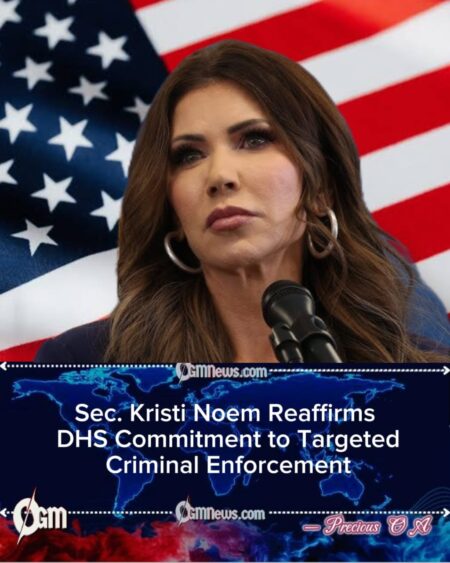
Sec. Kristi Noem addressed federal enforcement priorities during recent remarks, emphasizing the Department of Homeland Security’s continued focus on public safety and criminal accountability. She underscored that DHS remains committed to enforcing immigration and criminal laws in coordination with federal and local partners.
The secretary framed the department’s mission as one centered on prevention, arguing that proactive enforcement is necessary to reduce violent crime and protect communities. Her comments reflected the administration’s broader stance that law enforcement agencies must act decisively when credible threats are identified.
Observers noted that the remarks were delivered amid heightened national debate over immigration enforcement, border security, and the balance between civil liberties and public safety. DHS officials said the statements were intended to clarify policy direction rather than signal any immediate operational shift.
Enforcement Strategy and Public Safety Objectives
Sec. Kristi Noem explained that DHS enforcement actions are guided by intelligence assessments and legal thresholds, prioritizing individuals accused or convicted of serious crimes. She emphasized that operations are designed to remove dangerous actors before further harm can occur.
Federal officials stressed that the department’s approach relies on collaboration across agencies, including Immigration and Customs Enforcement, Customs and Border Protection, and federal prosecutors. These partnerships are intended to ensure that enforcement actions are lawful, targeted, and effective.
Policy analysts say the strategy reflects a long-standing emphasis within DHS on threat prevention rather than reactive enforcement. By focusing on individuals deemed high-risk, the department aims to allocate limited resources where they can have the greatest impact.
Legal Framework and Operational Limits
Sec. Kristi Noem noted that all DHS actions are conducted within existing statutory authority and subject to judicial oversight. She highlighted that enforcement efforts must comply with constitutional protections and due process requirements.
Legal experts point out that DHS operations are governed by a complex framework of federal laws, court rulings, and administrative guidelines. This structure limits the scope of enforcement while also defining the responsibilities of federal agencies.
Critics and supporters alike agree that transparency and accountability are central to maintaining public trust. DHS leadership has indicated that oversight mechanisms will remain in place to review enforcement outcomes and address concerns.
Sec. Kristi Noem and Interagency Coordination
Sec. Kristi Noem highlighted the role of interagency coordination in executing DHS priorities, stating that cooperation with state and local authorities is essential. She emphasized that shared intelligence and joint task forces enhance effectiveness while reducing duplication.
State officials have offered mixed responses to federal enforcement initiatives, with some welcoming additional resources and others expressing concern about jurisdictional boundaries. DHS maintains that participation in joint operations is voluntary and governed by formal agreements.
Security specialists argue that coordination improves situational awareness and response times, particularly in cases involving organized criminal networks. Such collaboration, they say, is increasingly important as threats become more complex and cross-jurisdictional.
Political and Public Response
Sec. Kristi Noem acknowledged that enforcement policies often generate strong political reactions, noting that DHS operates in a highly scrutinized environment. She maintained that public safety considerations must remain central regardless of political pressure.
Lawmakers from both parties have weighed in on DHS priorities, reflecting broader national divisions over immigration and law enforcement. Congressional oversight hearings are expected to further examine the department’s actions and resource allocation.
Public opinion remains divided, with some communities expressing support for firm enforcement measures and others calling for greater emphasis on humanitarian considerations. Analysts suggest that these debates are likely to intensify as policy decisions continue to unfold.
Long-Term Implications for Homeland Security
Sec. Kristi Noem stated that DHS is focused on long-term stability, not short-term political outcomes. She emphasized that sustained enforcement, paired with policy reform, is necessary to address underlying challenges.
Experts note that the department’s approach could influence future legislative proposals related to immigration, border security, and criminal justice. How these policies are implemented may shape public trust in federal institutions.
As DHS continues to navigate complex legal, political, and operational landscapes, officials say the department will remain committed to its core mission: protecting the public while adhering to the rule of law.



[…] […]