




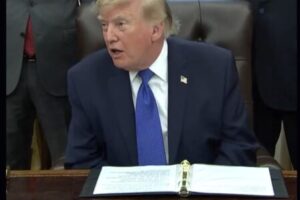

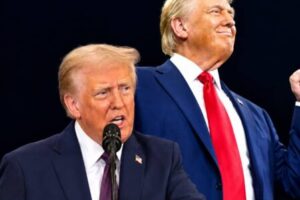
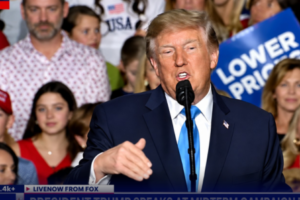


















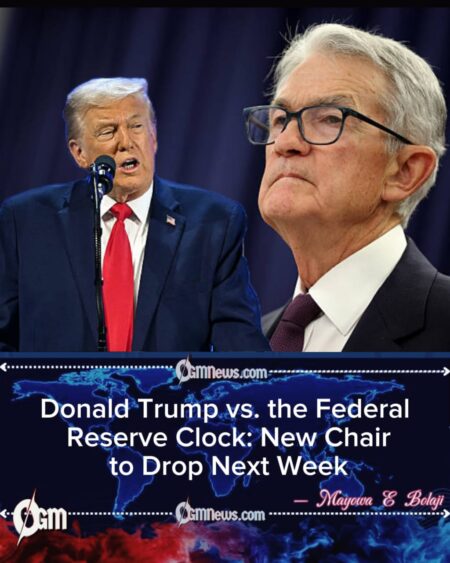
Donald Trump has confirmed that he will announce his choice to replace Federal Reserve Chair Jerome Powell next week, bringing clarity to weeks of intense speculation over the future leadership of the U.S. central bank. The announcement will come ahead of Powell’s term expiration in May, setting the stage for a key transition at a critical moment for the American economy.
The decision is being closely watched by financial markets, lawmakers, and international observers, as the Federal Reserve plays a central role in managing inflation, interest rates, and financial stability. With Trump serving his second term as U.S. president, the appointment is expected to reflect both economic priorities and institutional considerations.
Donald Trump Sets a Definitive Timeline
Trump’s declaration establishes a clear timeline after prolonged uncertainty surrounding the Federal Reserve’s next leadership. In recent weeks, speculation about potential successors had driven debate across economic and political circles, occasionally stirring market volatility.
By committing to a next-week announcement, Donald Trump has effectively narrowed the field of conjecture. Analysts say the move provides short-term reassurance, even as longer-term questions remain about the policy stance of the eventual nominee.
Donald Trump and the Transition from Jerome Powell
Donald Trump’s forthcoming decision will mark the end of Jerome Powell’s tenure as Federal Reserve chair when his term expires in May. Powell’s leadership spanned a period of economic disruption and recovery, requiring decisive action amid inflationary pressures and global uncertainty.
As Trump prepares to select a successor, evaluations of Powell’s record continue to inform public debate. Some credit Powell with safeguarding institutional stability, while others argue that a new approach is needed to address evolving economic challenges.
Trump, as president, holds the authority to nominate the Federal Reserve chair, subject to Senate confirmation. The power places him at the center of a decision that will influence monetary policy well beyond his current term.
Although the White House has not released specific selection criteria, Donald Trump has consistently emphasized economic growth, price stability, and resilience. Observers expect these priorities to guide the choice, alongside considerations of experience and credibility.
Donald Trump’s Announcement and Market Response
Donald Trump’s remarks have prompted measured reactions in financial markets, with investors assessing the potential implications of a leadership change at the Federal Reserve. Even without a named successor, expectations about policy direction can influence market behavior.
Market analysts note that Trump’s eventual pick will be judged less on personal background and more on signals regarding interest rates, inflation control, and the Fed’s independence. Initial statements from the nominee are likely to be closely scrutinized.
Donald Trump and the Future of Monetary Policy
Trump’s selection will shape the Federal Reserve’s approach to monetary policy during a period of economic adjustment. The next chair will confront decisions on interest rates, balance-sheet policy, and regulatory oversight, all of which carry long-term consequences.
Economists stress that while leadership changes can introduce new emphases, continuity in the Fed’s core mandate remains essential. Trump’s choice will therefore be evaluated on the balance between innovation and institutional stability.
Donald Trump Prepares for a Pivotal Announcement
As Trump prepares to unveil his nominee next week, attention is shifting toward the confirmation process and the reaction from lawmakers.
Senate hearings are expected to probe the nominee’s independence, policy philosophy, and crisis-management experience.
With the announcement imminent, Trump’s decision stands as one of the most consequential economic appointments of his second term. The choice will not only determine who succeeds Jerome Powell but also influence the direction of U.S. monetary policy in the years ahead.
Casinoabc999? Good Site. The interface is sleek, and there is a lot of stuff to...