














President Donald Trump is confronting a widening political crisis as unrest grows among his core MAGA supporters and the wider American public over deadly border enforcement actions in Minnesota, raising questions that could shape the trajectory of his second term in office. At the center of the controversy are two fatal shootings involving federal immigration officers, escalating public anger, and a presidential pledge to “de-escalate” tensions that has failed to satisfy critics across the political spectrum.
As new opinion polls show a majority of Americans blaming the Trump administration for the bloodshed, the president now finds himself navigating competing pressures: loyalty demands from his political base, accountability calls from voters, and an immigration agenda that is increasingly proving to be a political liability rather than a strength.
A Tipping Point in Trump’s Second Term
The events unfolding in Minnesota are rapidly emerging as a defining test for President Trump’s second term. The fatal shooting of 37-year-old intensive care nurse Alex Pretti by border guards in Minneapolis on Saturday has intensified scrutiny of federal immigration enforcement tactics and presidential leadership.
Video footage recorded by bystanders appears to contradict official accounts provided by the Department of Homeland Security, which stated that officers fired “defensively” after Mr. Pretti allegedly approached them with a firearm. The widely circulated clips show a brief scuffle lasting approximately 30 seconds before shots were fired, fueling public skepticism and demands for transparency.
The incident followed closely on the heels of another fatal shooting less than a mile away. On January 7, 37-year-old Renee Good was shot and killed by an Immigration and Customs Enforcement officer, deepening concerns about a pattern of lethal encounters involving federal agents operating in civilian neighborhoods.
Contradictions Between Official Accounts and Public Evidence
The disparity between government statements and video evidence has become a central issue in the unfolding controversy. While DHS officials have stood by their claim of self-defense in the Pretti case, legal experts and civil rights advocates argue that the footage raises serious questions about proportionality and the use of force.
The growing perception that federal agencies may be shielding officers from accountability has intensified public distrust. For many Americans, the visual evidence has become more persuasive than official briefings, reinforcing calls for independent investigations into both shootings.
This tension between institutional narratives and public evidence has also placed the White House under increased pressure to clarify its position. Critics argue that silence or deflection risks reinforcing the belief that the administration is unwilling to confront abuses within its own enforcement agencies.
Silence at the Rally and Focus on Economic Messaging
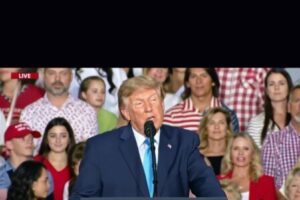
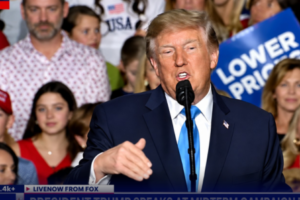
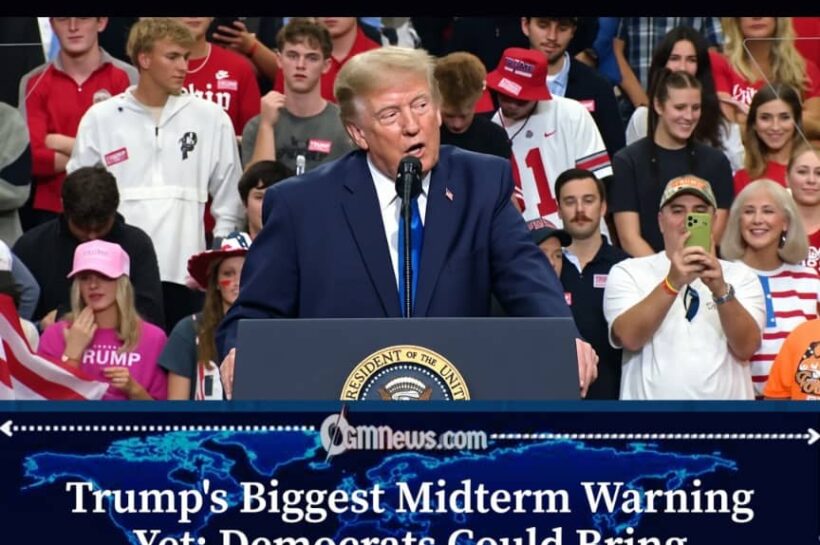
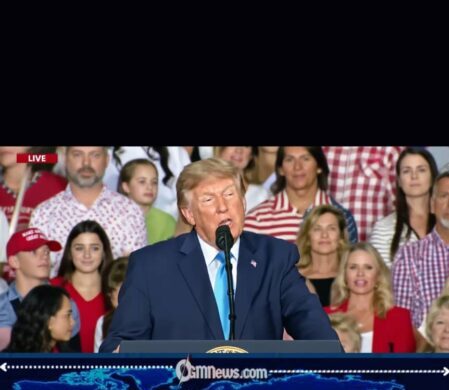
Despite the gravity of the situation, President Trump made no reference to the Minnesota shootings during a more than hour-long address to supporters at a rally in Iowa on Tuesday evening. Instead, he focused on economic themes, including tariffs, wages, inflation, and what he described as the achievements of his administration.
The omission was notable given the rally’s timing and audience. Many attendees were among the president’s most loyal supporters, some of whom have since expressed frustration that the issue was not addressed directly.
Political analysts suggest that the decision to avoid the topic may have been a calculated attempt to prevent further inflaming tensions. However, the absence of acknowledgment has also been interpreted as evasive, particularly by voters seeking reassurance that the administration understands the seriousness of the situation.
Polls Reveal Growing Public Discontent
New polling data underscores the scale of the challenge facing the president. A survey of 1,027 registered voters conducted by JL Partners found that one-third of respondents directly blame President Trump for the violence in Minnesota. An additional 20 percent place responsibility on ICE and Customs and Border Protection.
Taken together, 53 percent of respondents attribute blame to the Trump administration, compared with 35 percent who fault Democratic officials in Minnesota. The findings contradict White House efforts to shift responsibility to state leaders for allegedly failing to cooperate with federal immigration enforcement.
The data also highlight a broader erosion of confidence in the administration’s handling of immigration. Just 39 percent of Americans approve of President Trump’s approach to the issue, while 47 percent disapprove, making it one of the weakest areas of public support for the president.
Immigration Enforcement Becomes a Political Liability
Immigration, long a cornerstone of President Trump’s political identity, is now emerging as a significant vulnerability. According to the same polling, the aggressive posture of ICE has become the single largest driver of disapproval of the president.
Twenty-eight percent of Americans now cite ICE’s conduct as the primary reason for their dissatisfaction with Trump’s leadership, representing a sharp increase of ten points since before the Pretti shooting. This figure far exceeds other concerns, including cost of living and inflation, which ranked second at 16 percent.
Public opinion toward ICE itself has also shifted markedly. A majority of voters now support calls to halt immigration raids, reflecting growing unease with enforcement practices perceived as overly aggressive and insufficiently restrained.
Internal Repercussions and Policy Adjustments
The political fallout has already prompted changes within the administration. President Trump has reassigned DHS Secretary Kristi Noem, who strongly defended the Pretti shooting in its immediate aftermath, removing her from internal immigration enforcement oversight and redirecting her focus to border security.
The move is widely seen as an effort to contain internal dissent and signal responsiveness to public concern without fundamentally altering enforcement policy. However, critics argue that personnel shifts alone are unlikely to address the underlying issues driving public outrage.
As protests continue in Minneapolis and scrutiny intensifies nationwide, the administration faces mounting pressure to provide clearer answers and concrete policy responses. The coming days may prove critical in determining whether President Trump can regain control of the narrative—or whether the controversy will continue to erode support during a crucial political period.
[…] […]