








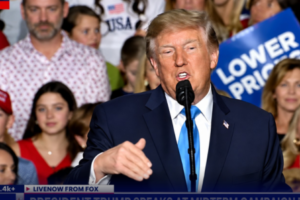




















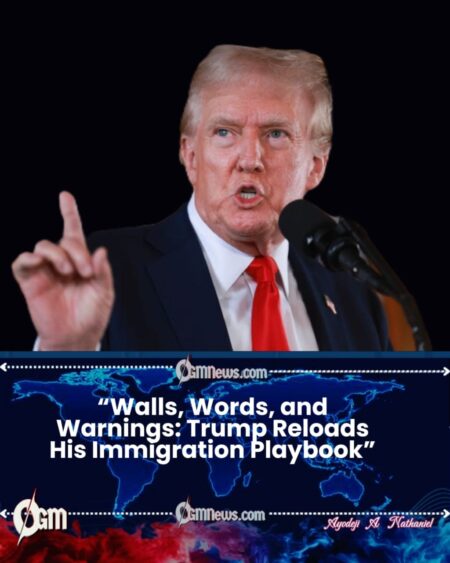
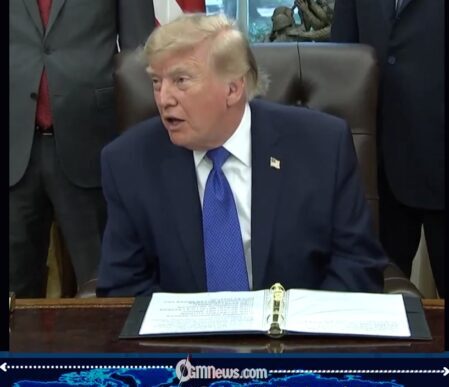
Speaking amid renewed debate over U.S. border policy, President Donald Trump, the current U.S. president serving a second term, has warned that the country must not “lose sight” of what he described as serious public safety risks tied to illegal immigration. In remarks that reflect long-standing positions of his administration, Trump alleged that violent criminals, drug traffickers, and individuals released from mental institutions have entered the United States through what he characterized as overly permissive border policies under Democratic leadership.
The comments have reignited national discussion around immigration enforcement, humanitarian obligations, and political accountability. As lawmakers, advocacy groups, and security officials respond, the statement underscores how border policy remains one of the most divisive issues in American public life.
A Renewed Emphasis on Border Security
President Trump’s statement places border security at the center of his administration’s domestic priorities. By framing immigration as a matter of public safety, the president sought to reinforce arguments for stricter enforcement, expanded border controls, and tougher screening measures for those entering the country.
Supporters of the administration argue that strong borders are essential to national sovereignty and crime prevention. They contend that gaps in enforcement can be exploited by transnational criminal networks, increasing risks to communities and straining law enforcement resources at the local and federal levels.
Claims of Criminal Infiltration and Public Safety Risks
In his remarks, President Trump asserted that individuals involved in serious crimes, including murder and drug trafficking, have crossed into the United States as a result of what he described as “open borders.” He also raised concerns about people with untreated mental health conditions being released into the country without adequate oversight.
Critics of these claims note that immigration data and crime statistics are often complex and contested. While there is evidence of cross-border criminal activity, many researchers caution against broad generalizations, emphasizing that the majority of migrants are fleeing violence or economic hardship rather than seeking to commit crimes.
Political Responsibility and Partisan Divides
The president directly attributed current border challenges to Democratic policies, intensifying partisan divisions on Capitol Hill. Immigration has long served as a political fault line, with Republicans generally favoring stricter controls and Democrats emphasizing humanitarian protections and pathways to legal status.
Democratic leaders have rejected accusations of promoting “open borders,” arguing instead that comprehensive reform, improved asylum processing, and international cooperation are more effective solutions. The exchange highlights how immigration remains not only a policy issue but also a powerful political narrative heading into legislative and electoral battles.
Mental Health, Migration, and Policy Gaps
Trump’s reference to individuals from mental institutions introduces another dimension to the debate: the intersection of immigration and mental health policy. Advocates stress that mental illness should not be conflated with criminality and warn that such rhetoric risks stigmatizing vulnerable populations.
At the same time, policy experts acknowledge gaps in cross-border coordination on health screening and post-arrival support. They argue that improved systems for assessment, treatment, and community integration could address concerns without resorting to exclusionary measures.
Broader Implications for Immigration Reform
The president’s comments arrive as Congress continues to struggle with comprehensive immigration reform. Proposals range from expanded border funding and expedited removals to pathways for citizenship and protections for asylum seekers.
Analysts note that lasting solutions will likely require bipartisan compromise, balancing enforcement with humanitarian obligations. Until then, high-profile statements such as Trump’s are expected to keep immigration at the forefront of national debate.
Public Reaction and the Road Ahead
Public response to the remarks has been sharply divided, reflecting broader national attitudes. Supporters view the president’s warning as a candid assessment of security threats, while opponents see it as reinforcing fear-based narratives.
As the administration advances its agenda, immigration policy is set to remain a defining issue. Whether through legislative action or executive measures, the challenge ahead lies in addressing security concerns while upholding the country’s legal and moral commitments.
Casinoabc999? Good Site. The interface is sleek, and there is a lot of stuff to...