

























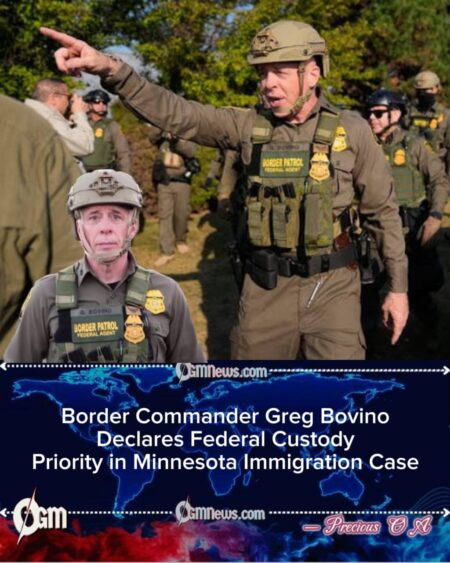
Border Commander Greg Bovino announced that federal authorities will not transfer custody of a Honduran national to St. Paul police, citing conflicts between federal immigration enforcement obligations and local sanctuary policies. The decision has placed renewed attention on jurisdictional boundaries between federal agencies and municipal governments.
The custody dispute emerged amid broader discussions about cooperation between Immigration and Customs Enforcement and local law enforcement agencies in cities that limit participation in federal immigration actions. Officials familiar with the case say the individual remains under federal authority due to immigration-related violations.
Legal analysts note that similar disputes have surfaced in other jurisdictions, particularly in states where sanctuary policies restrict local cooperation. The Minnesota case has become a focal point in ongoing debates about public safety, enforcement authority, and constitutional limits.
Border Commander Greg Bovino Addresses Enforcement Authority
Border Commander Greg Bovino said federal agencies have a responsibility to act independently when local policies prevent cooperation. He emphasized that federal law enforcement must operate within its legal mandate, regardless of municipal positions on immigration enforcement.
According to federal officials, the decision reflects established policy rather than a one-off response. They argue that federal custody is necessary when there is concern that local jurisdictions may not honor immigration detainers or enforcement requests.
Border Commander Greg Bovino also pointed to past incidents in which disagreements between federal and local agencies complicated enforcement efforts. He stated that clarity in authority is essential to ensure consistent application of the law.
Sanctuary Policies and Local Government Response
City officials in St. Paul reiterated their commitment to sanctuary policies, which they say are designed to encourage trust between immigrant communities and local law enforcement. Local leaders argue that such policies help ensure that residents report crimes without fear of immigration consequences.
Supporters of sanctuary measures maintain that immigration enforcement should remain a federal responsibility and that local police resources should focus on community safety rather than immigration status. They contend that cooperation limits are lawful and constitutionally grounded.
Border Commander Greg Bovino responded by noting that federal agencies respect local governance but cannot defer enforcement decisions when federal statutes apply. He stated that disagreements over policy should not obstruct lawful federal actions.
Legal Framework and Federal Authority
Immigration law experts explain that federal agencies possess broad authority over immigration enforcement under longstanding statutes. While local governments may limit their participation, they generally cannot compel federal agencies to relinquish custody.
Court rulings over the past decade have reinforced the federal government’s primary role in immigration matters. However, they have also upheld the right of states and cities to decline certain forms of cooperation, creating a complex legal landscape.
Border Commander Greg Bovino emphasized that the current situation reflects that legal balance. He stated that federal officials are acting within existing legal frameworks while acknowledging the broader policy disagreements involved.
Political Reactions and Public Discourse
The custody decision has drawn reactions from state lawmakers and advocacy groups on both sides of the issue. Some legislators praised the federal stance, arguing that consistent enforcement is necessary to maintain the rule of law.
Others criticized the move, warning that heightened tensions between federal and local authorities could undermine public trust. Civil rights organizations have called for clearer guidelines to avoid confusion and conflict.
Border Commander Greg Bovino addressed the criticism by stressing that enforcement decisions are not political statements. He said federal agencies remain focused on statutory responsibilities rather than partisan considerations.
Broader Implications for Immigration Enforcement
Policy analysts say the Minnesota dispute highlights ongoing challenges in coordinating immigration enforcement across different levels of government. As sanctuary policies continue to expand, similar conflicts are expected to arise nationwide.
Federal officials argue that clearer legislative guidance could reduce uncertainty and prevent jurisdictional clashes. Meanwhile, cities continue to defend their autonomy in setting law enforcement priorities.
Border Commander Greg Bovino concluded by stating that cooperation remains possible when legal boundaries are respected. He emphasized that resolving such disputes will likely require continued dialogue, legal clarity, and mutual recognition of authority.


[…] […]