























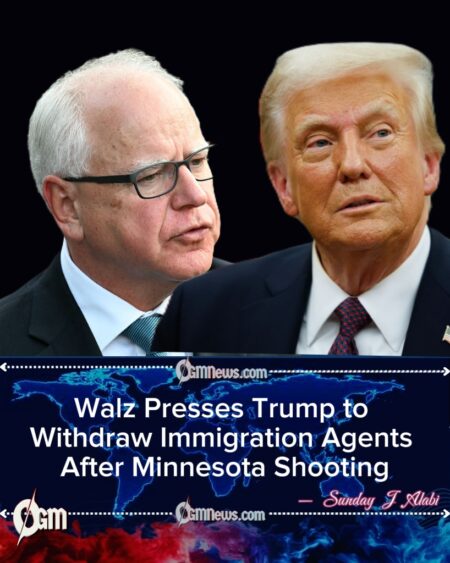
Minnesota Governor Tim Walz has publicly appealed to President Donald Trump, who is serving a second term as U.S. president, to withdraw federal immigration agents from his state, following the fatal shooting of Alex Pretti, a 37-year-old intensive care unit nurse. The appeal comes amid growing scrutiny of federal immigration enforcement tactics and rising tensions between state officials and the Trump administration over the scope, conduct, and accountability of interior immigration operations.
Speaking a day after Pretti was shot and killed by U.S. border patrol officers, Walz framed his appeal as both a moral and practical plea, arguing that the continued presence of federal agents risked further loss of life. His comments reflect a broader national debate over immigration enforcement, civil liberties, and the balance of power between federal authorities and state governments.
Fatal Shooting Sparks Renewed Tensions
The immediate catalyst for Walz’s appeal was the killing of Alex Pretti, who was monitoring an immigration operation when he was shot by federal agents. Pretti, an ICU nurse employed at a Veterans Affairs hospital, died at the scene, prompting widespread public concern and protests in Minnesota.
The shooting followed the killing of another individual, Renee Good, 17 days earlier, further intensifying scrutiny of federal operations in the state. Together, the incidents have raised questions about the use of force by immigration officers and the circumstances under which lethal measures are deployed during enforcement actions away from the border.
Walz’s Direct Appeal to the President
At a news conference, Walz addressed President Trump directly, urging him to exercise his authority to halt or scale back federal immigration enforcement in Minnesota. “President Trump, you can end this today,” Walz said, calling on the administration to pursue what he described as “humane, focused, effective immigration control.”
Walz questioned the broader strategy behind the surge of federal agents, asking what steps were necessary to secure their withdrawal. Emphasizing decency and restraint, he argued that immigration enforcement should not come at the cost of civilian lives or erode public trust in law enforcement.
Competing Moral Narratives Emerge
In the aftermath of Pretti’s death, federal officials and state leaders advanced sharply contrasting interpretations of the incident. Border patrol commander Gregory Bovino suggested that Pretti bore responsibility for his own death, stating that individuals who interfere with active law enforcement scenes and bring weapons make a personal choice that can lead to fatal consequences.
Walz rejected this framing, appealing instead to the public’s sense of moral responsibility. He challenged Americans to consider whether they supported the actions of an “all-powerful federal government” or stood with a civilian who, in his words, died while bearing witness to government conduct.
Video Evidence and Disputed Accounts
Central to the controversy is multi-perspective video evidence that has emerged since the shooting. The footage appears to contradict the Trump administration’s narrative that Pretti posed an immediate threat to federal agents. According to the videos, Pretti never brandished a weapon and had been disarmed of a legally carried firearm moments before agents opened fire at close range.
Despite these developments, Bovino declined to speculate on the incident, stating that he would wait for the findings of a federal investigation. State officials, however, reported that Minnesota’s Bureau of Criminal Apprehension had been blocked from fully accessing the shooting scene, prompting Walz to accuse federal agents of “sweeping away the evidence.”
Federal-State Clash Deepens
The dispute escalated further when U.S. Attorney General Pam Bondi accused Minnesota officials of failing to uphold the rule of law. In a letter to Walz, Bondi urged the state to support Immigration and Customs Enforcement (ICE) officers and restore order, while also demanding information on welfare programs and voter rolls.
Bondi argued that such measures were necessary to prevent fraud and improve governance, claims Walz and other state officials have disputed. The exchange underscored the widening rift between the Trump administration and Democratic-led states over immigration enforcement and related policy issues.
Broader National Implications
While Minnesota remains at the center of attention, similar tensions have surfaced elsewhere. In Maine, Cumberland County Sheriff Kevin Joyce criticized ICE agents after a work-authorized corrections officer was detained during a traffic stop, describing the operation as unprofessional and excessive.
Joyce, who had previously supported the removal of undocumented immigrants with criminal records, said recent actions had altered his view. His remarks highlight growing unease among local law enforcement leaders nationwide, as debates intensify over federal immigration tactics, accountability, and community trust.
[…] […]