



























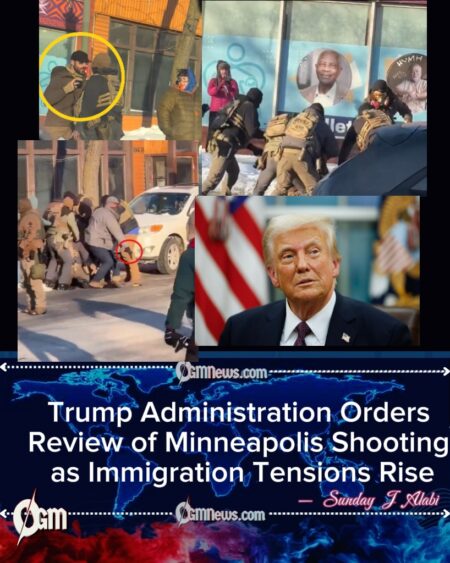
President Donald Trump, serving his second term as U.S. president, has voiced disapproval over the fatal shooting of Minnesota nurse Alex Pretti during a federal immigration enforcement operation in Minneapolis, while simultaneously escalating pressure on state and local leaders to cooperate more fully with federal immigration authorities. The president Trump described the incident as troubling and confirmed that his administration is reviewing the circumstances surrounding the shooting, even as he suggested the possible withdrawal of federal agents from the state.
The case has quickly become a focal point in a broader national debate over immigration enforcement, the role of federal agents in local jurisdictions, and the limits of state cooperation. It has also intensified political tensions between the White House and Minnesota’s Democratic leadership, led by Governor Tim Walz.
President Trump Response and Initial Remarks
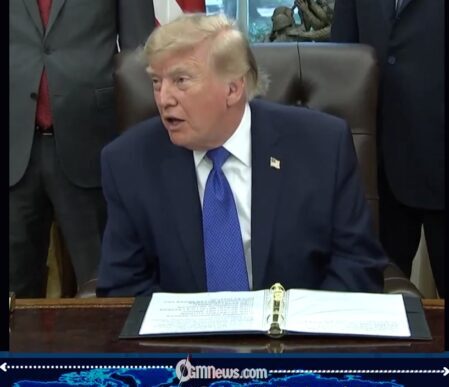
Speaking in a brief exchange with The Wall Street Journal, President Trump acknowledged discomfort with the fatal encounter, stating that he does not approve of shootings of any kind. While he stopped short of fully defending the Border Patrol agent involved, the president Trump emphasized concerns about public safety and the presence of firearms during protests or confrontations with law enforcement.
Trump’s remarks reflected a measured tone that balanced sympathy over the loss of life with his long-standing emphasis on law and order. He underscored that situations involving armed civilians and federal officers are inherently volatile, noting that such dynamics complicate assessments of responsibility.
The president Trump also indicated that the administration is actively reviewing the shooting and would issue a formal determination. In the same discussion, he suggested that federal immigration officers could eventually be withdrawn from Minneapolis, saying, “At some point we will leave,” once the review process is complete.
Details of the Shooting and Federal Account
Alex Pretti, 37, an intensive care unit nurse based in Minnesota, was shot and killed on Saturday morning during what federal authorities described as a targeted immigration enforcement operation in Minneapolis. The Department of Homeland Security (DHS) said Border Patrol officers encountered Pretti in broad daylight and alleged that he approached agents while armed with a 9mm semiautomatic handgun.
According to DHS, officers feared for their lives during a brief physical struggle and fired their weapons in what the agency characterized as a defensive response. DHS Secretary Kristi Noem stated that agents acted after Pretti “violently resisted” and posed a perceived threat.
However, Minneapolis police later confirmed that Pretti had no serious criminal history and was a lawful gun owner with a valid permit. These disclosures, alongside emerging video footage, have raised questions about the federal account and intensified calls for an independent investigation.
Video Evidence and Conflicting Narratives
Footage captured by bystanders and circulated online appears to show Pretti being disarmed before shots were fired. In several videos, Pretti is seen holding what appears to be a mobile phone rather than a firearm, and no footage clearly shows him pointing a weapon at officers at the moment shots were fired.
Legal and firearms experts have weighed in on the footage, with some suggesting that the first gunshot may have been an accidental or negligent discharge by an agent after removing Pretti’s weapon from its holster. Rob Dobar, a lawyer for the Minnesota Gun Owners Caucus, publicly argued that a negligent discharge could have triggered the subsequent fatal shots.
Federal officials dispute that interpretation, maintaining that officers acted in self-defense. The divergence between official statements and video evidence has fueled public skepticism and sharpened demands for transparency as the investigation proceeds.
White House Pressure on Minnesota Leadership
Amid the fallout, President Trump issued a lengthy statement on his Truth Social platform calling on Governor Tim Walz, Minneapolis Mayor Jacob Frey, and Democratic leaders nationwide to cooperate fully with federal immigration enforcement. The president Trump demanded that Minnesota transfer all incarcerated immigrants with criminal histories to federal custody and assist in the arrest of immigrants accused of crimes.
Trump argued that sanctuary policies undermine public safety and urged Congress to pass legislation ending sanctuary cities altogether. He described such policies as “the root cause” of violence and disorder, asserting that cities should prioritize the safety of law-abiding citizens.
The Trump administration’s position was reinforced by Attorney General Pam Bondi, who sent a formal letter to Walz accusing state officials of anti-law-enforcement rhetoric and requesting expanded cooperation with Immigration and Customs Enforcement. Her letter also sought access to Minnesota’s voter rolls to verify compliance with federal law.
Governor Walz’s Rebuttal and Call for Withdrawal
Governor Walz forcefully rejected the administration’s claims, calling them misleading and urging President Trump to pull federal agents out of Minnesota. In a public address, Walz argued that federal immigration officers had exceeded their authority and accused the administration of smearing Pretti’s reputation in the immediate aftermath of his death.
Walz emphasized that immigration enforcement and local law enforcement are distinct responsibilities, stating that Minnesota authorities would not assume federal roles. He appealed directly to the president to adopt what he described as humane and focused immigration enforcement, saying such an approach would receive bipartisan support.
The governor also revealed that he had spoken with Pretti’s family, who, according to Walz, want Americans to continue pressing for accountability and to ensure that Pretti’s story is not forgotten. His remarks framed the incident as a broader test of civil liberties and federal power.
Broader Implications and Ongoing Review
The shooting has intensified scrutiny of federal immigration operations in heavily Democratic cities, particularly those with large immigrant populations such as Minneapolis, which is home to one of the largest Somali communities in the United States. President Trump has repeatedly alleged widespread fraud within the state, claims Minnesota officials strongly deny.
As investigations continue, the case highlights unresolved tensions between federal authority and state autonomy, as well as public concerns over the use of force by federal agents. The administration’s review, alongside potential congressional action on sanctuary policies, is likely to shape the national conversation in the weeks ahead.
For now, the death of Alex Pretti remains under examination, with competing narratives underscoring the complexity of immigration enforcement and law-enforcement accountability in the current political climate.

Casinoabc999? Good Site. The interface is sleek, and there is a lot of stuff to...