




















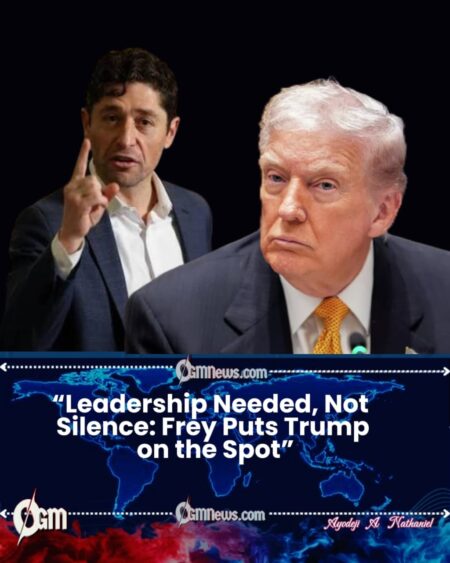
Mayor Jacob Frey of Minneapolis has issued a pointed public appeal to President Donald Trump, who is currently serving a second term as U.S. president, urging him to “act like a leader” as the nation confronts heightened political tension, public unrest, and strained relationships between federal and local authorities. Frey’s statement reflects growing concern among city leaders about the tone and direction of federal leadership during periods of instability.
The mayor’s remarks come amid ongoing debates over immigration enforcement, protest management, and the balance between federal authority and local governance. While brief, the statement has resonated nationally as part of a broader call for restraint, accountability, and unity from the White House.
Mayor Jacob Frey’s Appeal and Its Underlying Message
Mayor Jacob Frey’s comment was framed as a direct appeal rather than a partisan attack, emphasizing the importance of presidential conduct in shaping national discourse. By invoking leadership, Frey signaled a belief that words and actions from the Oval Office carry consequences that extend far beyond policy details.
City officials familiar with the mayor’s thinking say the message reflects frustration with what they view as escalatory rhetoric and inconsistent coordination between federal agencies and local governments. Frey’s appeal underscores expectations that presidential leadership should lower tensions rather than amplify them.
Local Governments Caught Between Order and Trust
Municipal leaders across the country have increasingly found themselves navigating the tension between maintaining public order and preserving community trust. In cities like Minneapolis, officials argue that federal actions—particularly those perceived as aggressive or unilateral—can complicate local efforts to keep communities stable.
Mayor Jacob Frey has previously emphasized collaboration and communication as essential tools for effective governance. His latest remarks reflect concern that a lack of alignment between federal objectives and local realities risks undermining public confidence in institutions.
President Trump’s Leadership Style in Focus
President Donald Trump has consistently defended a strong, assertive executive style, portraying decisiveness and firmness as necessary traits of leadership. Supporters argue that such an approach projects strength and deterred disorder, especially during times of unrest.
Critics, including Frey, contend that leadership also requires empathy, restraint, and a willingness to unify a divided public. The contrast between these perspectives highlights an ongoing national debate over what effective presidential leadership should look like in moments of crisis.
Political and Public Reactions Nationwide
Frey’s statement has drawn varied responses across the political spectrum. Some local officials and civil society organizations echoed his call, arguing that the country needs steadier rhetoric and clearer guidance from national leadership.
Others dismissed the comment as symbolic or politically motivated, noting that disagreements between Democratic city leaders and the Trump administration are longstanding. Regardless, the remark has added momentum to a wider discussion about the responsibilities of federal leadership toward local communities.
Federal–Local Relations Under Strain
The exchange reflects broader structural tensions between city governments and Washington, particularly on issues such as immigration enforcement and public demonstrations. Local leaders argue that policies designed at the federal level often play out most visibly—and contentiously—in urban areas.
Mayor Jacob Frey’s appeal highlights the desire among municipal officials for greater coordination, predictability, and respect for local governance as federal initiatives are implemented.
Leadership Expectations in a Divided Era
Analysts note that moments of national stress often sharpen public expectations of leadership. Frey’s call to President Trump reflects a belief that leadership is not only about authority, but also about calming divisions and reinforcing democratic norms.
As political and social pressures persist, the debate over leadership style is likely to remain central to the national conversation. Whether or not the appeal leads to changes in tone or policy, it underscores the continuing dialogue over how power should be exercised in a deeply divided political environment.
[…] […]