
























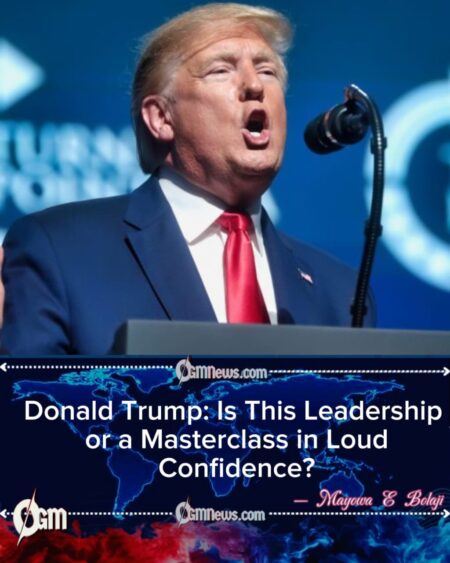
President Donald Trump, serving the first year of his second term as the current U.S. president, marked the eve of his inauguration anniversary on Sunday night with a confident review of his administration’s performance. In remarks delivered to supporters and shared through media channels, he portrayed the past twelve months as a period of economic recovery, assertive leadership, and restored national pride. The president argued that his government had fulfilled key campaign promises despite fierce political opposition and global uncertainty.
Trump’s reflections set the tone for what aides describe as an ambitious second year agenda focused on border security, trade reform, and domestic energy expansion. The address sought to remind Americans of the contrast between his administration and that of his predecessor, emphasizing lower unemployment figures and new international agreements. While critics continue to challenge his policies, the White House believes the anniversary offers an opportunity to reset the national conversation.
A Night of Self-Assessment
Speaking from a reception attended by party leaders and donors, President Trump listed what he called “landmark victories” achieved since returning to office. He highlighted growth in manufacturing, reductions in inflation, and increased oil production as evidence that his economic blueprint was working. According to the president, the country is “stronger, safer, and more respected” than it was a year ago.
Administration officials echoed that message in interviews following the speech. They noted that several executive orders signed during the first weeks of the term had begun to yield measurable results. Supporters in the audience responded with chants and applause, underscoring the continued loyalty of his political base.
Economic Claims and Counterclaims
Central to the president’s review was the performance of the U.S. economy. Trump pointed to job creation figures released by the Labor Department and argued that tax incentives had encouraged companies to keep production at home. He also credited his hardline approach to trade negotiations for securing better terms with key partners in Asia and Europe.
Independent economists, however, remain divided over how much of the improvement can be directly attributed to White House policy. Some analysts warn that rising interest rates and global tensions could still threaten progress. Nevertheless, consumer confidence surveys cited by the administration show a modest uptick, lending weight to the president’s optimistic narrative.
Foreign Policy and National Security
The president devoted a significant portion of his remarks to international affairs, describing a series of diplomatic breakthroughs as proof of renewed American influence. He referenced new defense agreements with allies and ongoing talks aimed at ending conflicts in Eastern Europe and the Middle East. Trump maintained that his willingness to engage personally with foreign leaders had prevented escalation in several hotspots.
Critics argue that some of these initiatives remain fragile and lack bipartisan support at home. Yet Pentagon officials have acknowledged increased military readiness and modernization funding approved by Congress. The White House insists these steps demonstrate that the United States is reclaiming a leadership role on the world stage.
Immigration and Border Measures
Another theme of the anniversary message was immigration enforcement. Trump praised federal agencies for what he described as record seizures of illegal drugs and a decline in unauthorized crossings at the southern border. He reiterated his commitment to completing physical barriers and expanding deportation operations targeting violent offenders.
Civil rights groups continue to challenge the humanitarian impact of these policies, and several lawsuits are moving through the courts. Administration spokespeople counter that the measures are necessary to protect communities and uphold the rule of law. The debate is expected to remain a defining issue as the next election cycle approaches.
Political Landscape at Home
Domestically, the president faces a closely divided Congress and persistent investigations into aspects of his first year agenda. In his speech, Trump accused opponents of attempting to obstruct progress and called for bipartisan cooperation on infrastructure and healthcare reform. He urged lawmakers to “put America before party,” a line that drew mixed reactions on Capitol Hill.
Republican leaders praised the address as a unifying message, while Democratic figures dismissed it as campaign rhetoric. Polling averages show the president’s approval rating hovering near the midpoint, reflecting a nation still sharply polarized. How effectively he can convert anniversary momentum into legislative wins remains uncertain.
Trump: Looking Toward Year Two
President Trump outlined priorities for the months ahead, including further tax reductions, expanded domestic energy projects, and a renewed push for school choice initiatives. He promised to continue holding frequent rallies to maintain direct communication with voters. Advisers say preparations are already underway for a series of policy announcements in the coming weeks.
As the second year of his second term begins, the president appears determined to frame the narrative on his own terms. Whether the achievements he celebrated on Sunday night will translate into lasting consensus is a question that will shape American politics in the year ahead. For now, the administration is intent on projecting confidence as it embarks on the next chapter of its agenda.
[…] […]