




























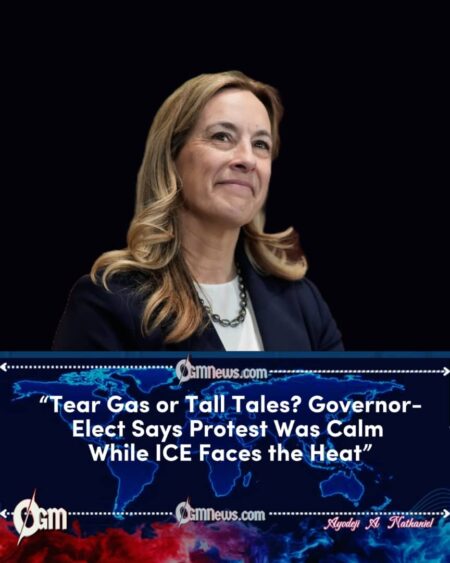
New Jersey Governor-elect Mikie Sherrill affirmed this week that many of the protests following a controversial immigration enforcement operation in Minnesota have been peaceful while sharply criticizing the tactics used by federal immigration agents, including Immigration and Customs Enforcement (ICE). Sherrill, a former prosecutor and military veteran, spoke out amid national debate after an ICE agent fatally shot a local woman during an enforcement action, triggering demonstrations and legal challenges.
Sherrill framed the demonstrations not as violent uprisings but as largely law-abiding expressions of concern over federal actions, saying she has observed or reviewed footage of protesters and found their conduct peaceful. She contrasted that with what she described as “aggressive” behavior by some ICE personnel, arguing that the use of force in certain contexts has created distrust and fear among community members.
Sherrill on Peaceful Protest and Federal Tactics
Sherrill, referring to the extensive protests that followed the fatal shooting of Renee Nicole Good — a 37-year-old Minnesota woman killed during an ICE operation — stressed that many demonstrators were nonviolent and exercising their democratic rights. Local judges have also recognized the peaceful nature of many demonstrators; a federal court recently barred ICE agents from arresting or using force against peaceful protesters without reasonable suspicion of criminal activity.
In televised remarks, Sherrill noted that images and reports from the Twin Cities showed residents in organized, non-aggressive protest, contradicting some federal characterizations of the demonstrations as unruly or dangerous. Her comments align with a broader bipartisan effort to protect constitutional rights while still debating the role and methods of federal immigration enforcement.
Criticism of ICE Conduct and Deployment
While affirming protester conduct, Sherrill has also echoed concerns about the tactics ICE and other federal agents have employed. She argued that aggressive measures can escalate tensions and erode trust in law enforcement, particularly when peaceful citizens are present in large numbers. This view reflects testimony from rights groups and legal advocates who have sought judicial limits on federal agents’ engagement with peaceful demonstrators.
Sherrill’s remarks came as a federal judge in Minnesota issued an order limiting how immigration agents can engage with demonstrators, prohibiting the use of tear gas, pepper spray, arrests, or detention of peaceful, non-obstructive protesters. The ruling underscores the legal and constitutional backdrop against which the protests and enforcement debate are unfolding.
Political and Regional Reactions
Sherrill’s comments have been echoed by other Democratic leaders who argue for restraint and accountability in federal enforcement operations. At the same time, local officials in Minneapolis and elsewhere have been vocal in calling for clearer rules and oversight, particularly after the fatal shooting that sparked widespread outrage.
The debate over federal immigration enforcement has also highlighted broader disagreements about public safety and civil liberties. Supporters of the ICE deployment argue it targets criminal networks and unlawful immigration, while critics warn that tactics used in civilian settings risk escalating conflict and undermining constitutional protections.
Legal Developments and Ongoing Oversight
Federal judges have begun imposing restrictions on ICE enforcement tactics in Minnesota, limiting agents’ ability to detain or use force against peaceful protesters absent clear evidence of criminal obstruction. These rulings reflect substantial legal scrutiny of federal methods and highlight the tension between enforcing immigration statutes and protecting First Amendment rights.
Sherrill’s comments add political weight to calls for clarity and accountability. While the situation continues to evolve, state leaders like Sherrill are likely to remain engaged in discussions about how federal enforcement policies can be balanced with civil liberties.
Ae888covenuscasino, okay, I'm curious. Gonna check out this site and try to find some amazing...