
























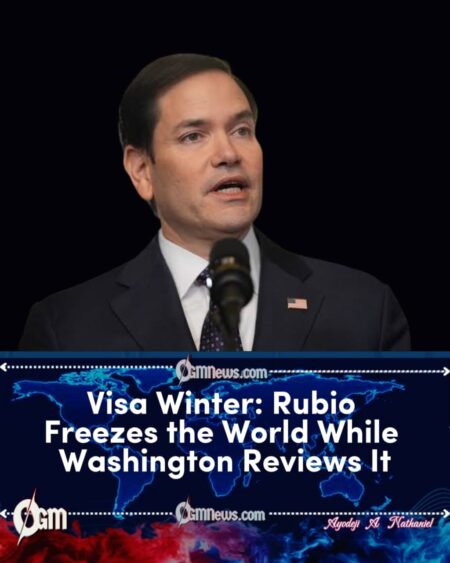
Secretary Marco Rubio has ordered a temporary freeze on selected U.S. immigration visas for nationals of more than six dozen countries, with the directive set to take effect Wednesday, January 21. The decision, announced through the State Department, places an immediate pause on visa processing as part of a broader reassessment of immigration standards, fiscal impact, and national interest considerations.
Secretary Marco Rubio’s move affects applicants from countries including Somalia, Afghanistan, Iran, Egypt, Nigeria, Yemen, Brazil, and others. According to officials, the freeze will remain in force until a comprehensive review is completed, with no fixed end date announced. The administration describes the action as administrative and preventative, rather than a permanent policy shift.
Secretary Marco Rubio and the Scope of the Visa Freeze
Under the directive issued by Secretary Marco Rubio, immigration visas for nationals from more than 75 countries are being temporarily suspended. While full details of the affected visa categories have not yet been publicly released, officials indicate that the focus is on long-term immigration pathways rather than short-term diplomatic or official travel.
Consular offices worldwide have been instructed to halt processing for affected applicants and inform them of expected delays. The broad geographic spread of the countries involved has drawn attention from international partners and advocacy groups alike.
State Department sources say the review will examine compliance records, overstay rates, and the overall effectiveness of screening mechanisms currently in place.
Secretary Marco Rubio’s Rationale: Fiscal and National Interest Review
Secretary Marco Rubio has justified the freeze by pointing to concerns about taxpayer exposure and the sustainability of existing immigration programs. Administration officials argue that applicants from the affected countries are statistically more likely to rely on public assistance programs, increasing pressure on federal and state resources.
Supporters of the policy emphasize that the suspension is designed to allow for data-driven reassessment rather than reactive enforcement. They argue that pausing visa issuance temporarily provides space to recalibrate eligibility criteria and oversight mechanisms.
Critics, however, contend that such broad measures risk unfairly generalizing entire populations and may lack sufficient transparency regarding the data used.
Legal, Humanitarian, and Diplomatic Reactions
The decision by Secretary Marco Rubio has prompted concern among immigration advocates, who warn that refugees, family reunification cases, and skilled workers could be adversely affected. Legal experts note that the duration and breadth of the freeze will be key factors in determining whether it faces successful court challenges.
Several foreign governments are seeking clarification through diplomatic channels, particularly regarding possible exemptions for humanitarian, medical, or emergency cases. Human rights organizations have urged the administration to ensure protections for vulnerable applicants during the review period.
At the time of reporting, no formal legal challenges had been filed, but multiple advocacy groups have signaled that litigation remains a possibility.
Secretary Marco Rubio and the Political Debate in Washington
Secretary Marco Rubio’s directive has intensified political debate in Washington over immigration policy and executive authority. Supporters within the administration and among immigration hardliners have praised the move as a decisive step to protect national interests and public finances.
Opposition lawmakers have called for greater transparency, urging the State Department to release the metrics guiding the reassessment. They warn that prolonged uncertainty could damage America’s international reputation and strain diplomatic relationships.
As Secretary Marco Rubio oversees the ongoing review, the outcome is expected to shape future immigration policy discussions and set precedents for how broad visa pauses are implemented.
What Comes Next
The State Department says the freeze will remain in effect until the reassessment is completed, though officials have not provided a specific timeline. Additional guidance to embassies and consulates is expected in the coming days.
Applicants affected by the suspension have been advised to follow official State Department updates. Until further notice, delays in visa processing are expected to continue.
The final scope and duration of the policy will depend on the conclusions reached during the review initiated under Secretary Marco Rubio.
[…] […]