



























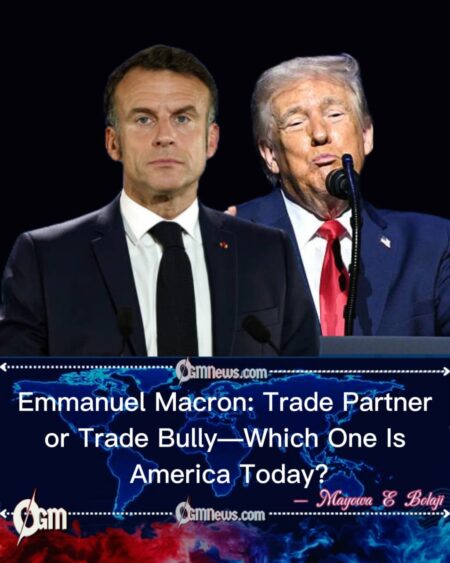
French President Emmanuel Macron is preparing to press the European Union to activate its anti-coercion instrument following the announcement of fresh U.S. tariffs on several European countries. The proposed move signals a hardening stance from Paris and reflects growing concern within the bloc that transatlantic trade relations are entering a more confrontational phase. European officials fear that the new duties could weaken key industries and undermine economic recovery efforts across the continent.
The French leader is expected to raise the issue at upcoming EU meetings, urging member states to present a united front.
Diplomats say Macron believes the anti-coercion mechanism—designed to counter economic pressure from third countries—offers the most credible response to Washington’s latest trade measures. The development comes as European capitals debate how far to go in challenging the policies of President Donald Trump, the current U.S. president serving a second term, without triggering a damaging trade war.
Rising Transatlantic Tensions
Relations between the United States and the European Union have become increasingly strained since the tariff announcement. The measures, which target strategic sectors including steel, automobiles, and agricultural products, have drawn swift criticism from Brussels. EU trade officials argue that the duties violate international trade rules and threaten thousands of European jobs.
Macron has emerged as one of the most vocal critics, warning that Europe cannot afford to appear divided or indecisive. French government sources say the president views the tariffs as part of a broader pattern of economic pressure that requires a coordinated European answer. Other member states, including Germany and Italy, have expressed similar worries, though some remain cautious about immediate retaliation.
What the Anti-Coercion Instrument Entails
The EU’s anti-coercion instrument was adopted to protect the bloc from economic intimidation by foreign powers. It allows Brussels to impose countermeasures—such as tariffs, restrictions on services, or limits on public procurement—when a third country uses trade as a political weapon. Supporters describe it as a defensive tool aimed at restoring balance rather than escalating conflict.
French officials argue that the current U.S. tariffs fit precisely the scenario the mechanism was designed for. By invoking it, the EU could respond in a targeted and legally grounded manner, avoiding ad-hoc reprisals by individual states. Critics, however, warn that activation could deepen divisions with Washington and complicate cooperation on security and climate issues.
Economic Stakes for Europe
European industries are bracing for significant disruption if the U.S. duties remain in place. Automakers in Germany, wine producers in France, and machinery exporters in Italy are among those most exposed. Business groups have urged political leaders to defend European interests while keeping channels for negotiation open.
Economists estimate that prolonged tariffs could shave billions of euros off EU growth this year. Smaller economies that rely heavily on exports to the American market are particularly vulnerable. For Macron, the economic argument strengthens the case for a firm collective response rather than bilateral deals that could fragment the single market.
Diverging Voices Within the EU
Despite broad unease over the tariffs, EU capitals are not fully aligned on how to react. Northern European countries with strong trade ties to the United States have urged restraint, fearing retaliation. Eastern member states, dependent on American security guarantees, are also wary of confrontational language.
Macron faces the challenge of building consensus among the 27 members. French diplomats say the president will emphasize that the anti-coercion instrument is compatible with dialogue and does not preclude negotiations with Washington. The coming weeks are expected to test Europe’s ability to act as a cohesive geopolitical actor.
Prospects for Negotiation
While advocating for defensive measures, Paris insists the door to diplomacy remains open. Macron has reportedly signaled willingness to engage directly with the Trump administration to seek exemptions or a broader trade settlement. EU Trade Commissioner officials are also exploring talks at the World Trade Organization to contest the legality of the tariffs.
Analysts note that previous trade disputes between the two sides have eventually ended in compromise. However, the current climate is more volatile, with domestic politics on both sides of the Atlantic limiting room for concessions. Much will depend on whether Washington interprets EU action as a negotiating tactic or a hostile escalation.
A Defining Test for European Unity
The tariff dispute is rapidly becoming a defining moment for the European Union’s new economic security architecture. If the bloc activates the anti-coercion instrument, it would mark the first major use of a tool intended to assert Europe’s strategic autonomy. Supporters say such a step would demonstrate that the EU can defend its interests without relying solely on the goodwill of partners.
For Macron, the issue goes beyond trade figures to the broader question of Europe’s place in a changing world order. His push reflects a conviction that the continent must be able to respond decisively to external pressure. Whether fellow leaders rally behind France will determine not only the fate of the tariffs but also the credibility of the EU as a united economic power.
[…] […]