

























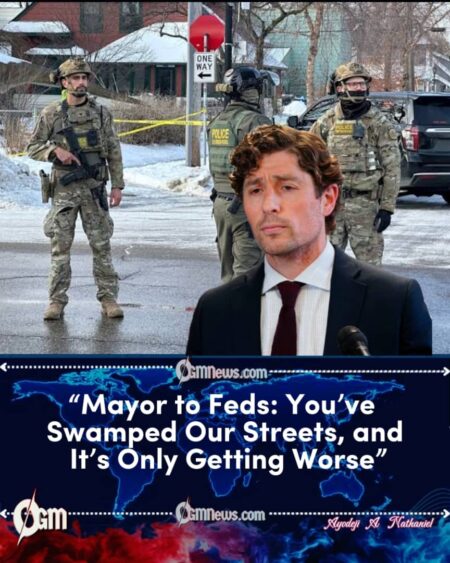
Minneapolis Mayor Jacob Frey issued a stark warning about the city’s capacity to manage rising tensions between local law enforcement and federal Immigration and Customs Enforcement (ICE) agents, framing the situation as “unsustainable” and highlighting the stark imbalance between Minneapolis’ modest police force and the large federal presence. His remarks come amid a highly contentious environment that has included multiple federal-agent-related shootings, large enforcement operations, and widespread public protest.
Frey’s office has criticized federal tactics, accused ICE of aggravating instability, and stressed the challenge for a city whose own 600 police officers are vastly outnumbered by thousands of ICE and related agents operating in and around the Twin Cities. The Minneapolis mayor called for a return to public safety priorities and legal clarity as civil tension escalates.
Mayor Frey Outlines a Growing Crisis
In a press conference, Jacob Frey framed the situation as untenable, describing a city pushed to the brink by overlapping enforcement efforts that pit local priorities against federal immigration actions. Frey warned that Minneapolis was being “put in this position because we have approximately 600 police officers … and approximately 3,000 ICE agents in the area,” underscoring the strain on resources and command structures.
Residents and community leaders have echoed concerns about the disproportionate scale of federal involvement, particularly as enforcement operations have expanded rapidly in recent weeks. ICE agents, federal law enforcement, and related agencies have increased presence amid prosecutions tied to immigration and alleged fraud investigations, prompting localized confrontations and heightened public unease.
Frey asserted that two governmental agencies should not be in practical conflict on city streets, noting that Minneapolis police are tasked with local public safety while ICE’s mandate centers on federal immigration enforcement—overlapping responsibilities that, in practice, are creating confusion and tension.
Federal Enforcement and Recent Shootings in Minneapolis
The deployment of an elevated ICE presence followed a fatal incident earlier this month, where an ICE agent shot and killed a Minneapolis resident, drawing national attention and sparking protests. The Department of Homeland Security has justified federal enforcement tactics, while local leaders—including Mayor Frey—have challenged official accounts, disputing claims of lawful self-defense and describing operations as counterproductive to public safety.
Subsequent enforcement activity led to additional confrontations, including reports of a man shot in the leg by a federal officer after a physical struggle during an arrest operation—a development that sustained concerns about law enforcement tactics and oversight.
These incidents have intensified a broader debate over the scope of federal power in local jurisdictions and the mechanisms by which different law enforcement agencies coordinate on public safety, particularly in cities that have adopted sanctuary policies or other local law enforcement stances distinct from federal priorities.
Public Safety, Resources, and Community Impact
Mayor Jacob Frey has stressed that Minneapolis must prioritize the safety of its residents over escalatory confrontations between authorities. In his remarks, Frey framed the city’s limited resources as an acute challenge: he emphasized that local police, already stretched thin, cannot be expected to “fight ICE agents on the street” or be pulled away from core public safety duties.
Local officials report that the rise in federal enforcement has coincided with growing community anxiety and logistical challenges tied to both policing and civic trust. The presence of federal agents in large numbers has fueled concern among immigrant communities, local activists, and civil liberties groups, who argue that aggressive enforcement creates fear, discourages cooperation with local authorities, and undermines public confidence in law enforcement overall.
Political and Legal Controversies
The surge of ICE and federal enforcement agents in Minneapolis has quickly become a flashpoint in broader political disagreements over immigration policy and federal authority. Governor Tim Walz and other Minnesota officials have vocally criticized federal actions, filing legal challenges and demanding transparency and accountability in investigations related to force and tactics.
Mayor Frey’s critique aligns with a growing chorus of local leaders nationwide who push back against what they see as overreach and disregard for municipal decision-making. The legal debate centers on issues of jurisdiction, civil rights, and the interplay between local ordinances and federal immigration enforcement, especially when federal action appears to outpace or conflict with local law enforcement priorities.
Looking Ahead: Safety, Coordination, and Community Trust
As tensions persist, Mayor Jacob Frey and city officials continue to advocate for a clearer operational framework that protects public safety while respecting legal boundaries and civil liberties. Frey has called for lawful coordination, greater oversight, and mechanisms that prevent overlapping enforcement from devolving into on-street conflict.
City leaders have stressed the importance of engaging community stakeholders to address fear and restore stability, even as federal and local leaders disagree over enforcement strategies. The efforts to balance public safety with lawful enforcement underscore ongoing challenges in managing complex, multi-jurisdictional law enforcement operations in urban environments.
[…] […]