


















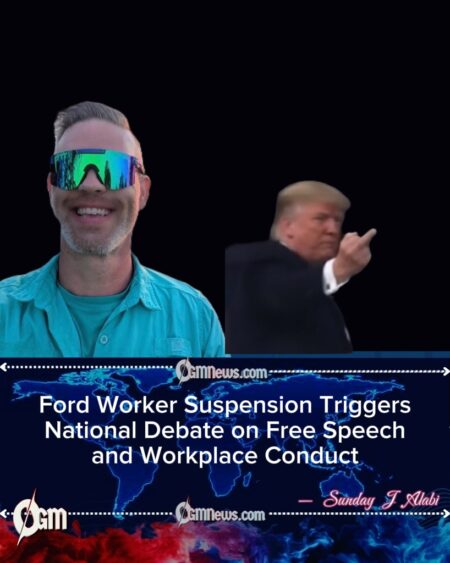
A confrontation between a Ford Motor Company employee and President Donald Trump during a factory tour in Michigan has escalated into a broader national debate over workplace conduct, free speech, and political expression. The episode, which resulted in the suspension of line worker TJ Sabula, has drawn strong reactions from labor leaders, members of Congress, and political commentators across the ideological spectrum.
Within hours of the incident, Sabula emerged as a polarizing figure, celebrated by supporters as a symbol of working-class dissent and criticized by others for violating workplace norms. The rapid mobilization of union support and the swift accumulation of more than $600,000 in online donations have further intensified attention on the case.
The Factory Encounter That Sparked Controversy
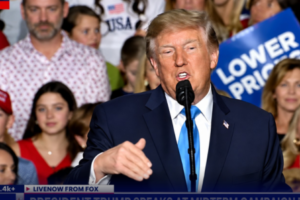
The incident occurred Tuesday at Ford’s Dearborn Truck Plant in Michigan, where President Trump, currently serving his second term as U.S. president, was touring the facility. Video footage circulating online shows the president walking along an elevated gangway when a worker below shouted an insult referring to Trump as a “pedophile protector,” an apparent reference to the Jeffrey Epstein case.
The footage also appears to show the president responding with profanity and making an obscene gesture toward the heckler as he continued walking. White House officials later characterized the exchange as a response to what they described as aggressive and inappropriate behavior by an individual in the crowd.
Disciplinary Action and Sabula’s Response
Ford subsequently suspended TJ Sabula, 40, a line worker at the plant, citing company policies regarding appropriate conduct within its facilities. While Ford declined to discuss specific personnel actions, a company spokesperson emphasized that respect is a core corporate value and that processes exist to address violations when they occur.
Sabula, however, expressed no remorse over the encounter. In interviews following the suspension, he said he believed the moment presented a rare opportunity to confront political power directly and that he acted according to his personal convictions as both a citizen and a worker.
Union Support and Labor Rights Claims
United Auto Workers (UAW) Local 600 leadership quickly rallied behind Sabula, issuing a statement asserting that he was exercising his rights and should not be subjected to vulgar language or behavior by anyone, including the president of the United States. The union pledged to ensure Sabula receives full protection under the collective bargaining agreement.
Union officials stressed that Sabula was acting as an individual and not as a representative of Ford or the UAW, while also framing the issue as one of free speech and worker dignity. They reiterated that safeguarding members’ rights on the job remains a central mission of the union.
Political Reactions From Capitol Hill
The incident drew sharp reactions from Democratic lawmakers. Representative Pat Ryan of New York publicly praised Sabula, describing him as a working-class hero and framing the encounter as an example of speaking “truth to power.” Ryan argued that the president’s response undermined his pro-worker rhetoric.
Representative Rashida Tlaib, whose district includes Dearborn, also voiced support for Sabula’s criticism of the president. She stated that Trump should not expect a warm reception in her district and renewed calls for the release of files related to Jeffrey Epstein, aligning herself with the substance of Sabula’s protest.
Fundraising Surge and Public Polarization
Two separate GoFundMe campaigns were launched on Sabula’s behalf, collectively raising more than $600,000 in less than 24 hours before one organizer closed their page. The rapid influx of donations highlighted the depth of public engagement and the degree to which the incident resonated beyond the factory floor.
Supporters portrayed Sabula as a symbol of resistance against political authority, while critics questioned whether fundraising on such a scale was appropriate for a workplace disciplinary matter. The divide underscored broader cultural tensions surrounding political expression, labor rights, and decorum in professional settings.
Official Responses From Ford and the White House
Ford spokesperson David Tovar sought to downplay the controversy, describing the factory tour as a successful event overall and reiterating the company’s commitment to respectful conduct. He emphasized that Ford does not condone inappropriate language within its facilities but avoids commenting on individual employee cases.
The White House, through spokesman Steven Cheung, defended the president’s actions, characterizing the heckler as engaging in a profane outburst and stating that the president’s response was “appropriate and unambiguous.” The administration’s comments framed the incident as provoked rather than spontaneous.
[…] […]