





























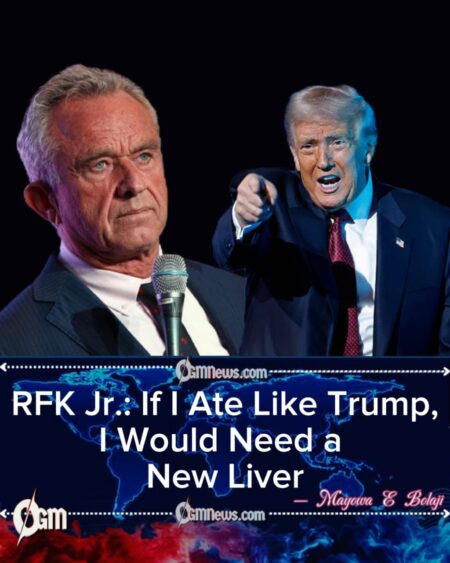
Robert F. Kennedy Jr., Health and Human Services Secretary expressed open astonishment on Wednesday at President Donald Trump’s well-known appetite for McDonald’s meals, candy, and Diet Coke, remarking that he finds it remarkable the 79-year-old leader remains energetic and active.
Kennedy, a long-time advocate of healthier diets, admitted that the president’s lifestyle sharply contrasts with the nutritional reforms he hopes to champion within the administration. Yet he credited Trump with possessing what he described as “the constitution of a deity,” suggesting an unusual resilience that defies conventional medical expectations.
The comments have reignited public conversation about the intersection of personal habits and presidential fitness. While Trump has often joked about his love for fast food, Kennedy’s candid observation offered a rare glimpse into private discussions within the cabinet. Supporters see the remarks as light-hearted, while critics argue they highlight the challenge of promoting national wellness when the country’s most visible figure embraces indulgence.
A Candid Admission from the Health Chief
Kennedy’s statement came during an informal exchange with reporters following a departmental meeting in Washington. He noted that as a lifelong campaigner against processed foods, he is frequently puzzled by the president’s menu choices. “If I ate like that for a week, I’d be in serious trouble,” he reportedly quipped, drawing laughter from those present.
The HHS secretary emphasized that his surprise was not meant as criticism of President Trump but as a testament to the unpredictability of human biology. According to Kennedy, some individuals appear naturally equipped to withstand habits that would harm others. His remarks underscored the delicate balance he must strike between respecting the president and advancing a national health agenda focused on reducing sugar and ultra-processed foods.
Trump’s Public Relationship with Fast Food
President Donald Trump, currently serving his second term, has never hidden his affection for fast-food brands. From campaign flights stocked with burgers to White House banquets featuring drive-through favorites, the president has turned his tastes into a signature trait. He often describes such meals as convenient and dependable, a preference formed during decades in the real-estate business.
Nutritionists have long debated the implications of this diet, particularly for a man approaching 80. Yet annual medical summaries released by the White House have consistently portrayed Trump as being in stable health. His supporters argue that his stamina on the campaign trail and in office demonstrates that traditional metrics do not always capture individual vitality.
Clash Between Policy and Personal Example
Kennedy Jr. has entered office promising an aggressive overhaul of America’s food system, targeting additives, excessive sugar, and childhood obesity. His mission inevitably contrasts with the president’s culinary image, creating an unusual dynamic at the top of the administration. Observers note that successful public-health campaigns often rely on leaders modeling the behaviors they promote.
However, allies of both men insist the differences can coexist. They argue that Kennedy’s role is to expand choices and education, not to police the president’s plate. The episode, they say, illustrates the diversity of perspectives within the cabinet rather than any policy rift.
Medical Experts Weigh In
Following Kennedy’s remarks, several physicians offered measured perspectives on Trump’s durability.
Cardiologists interviewed on major networks explained that genetics, stress tolerance, and access to top-tier healthcare can offset less-than-ideal diets. They cautioned, however, that such resilience should not be interpreted as a general endorsement of fast food.
Public-health scholars added that the symbolism matters as much as the science. When influential figures celebrate indulgent eating, it can complicate efforts to curb rising rates of diabetes and heart disease. Kennedy’s astonishment, they said, reflects the broader challenge of aligning national messaging with personal freedoms.
Political and Cultural Reactions
The exchange quickly became fodder for late-night comedians and social-media commentators. Memes portraying Trump as an indestructible fast-food superhero circulated widely, while opponents accused the administration of sending mixed signals. Conservative voices, meanwhile, praised Kennedy for his honesty and for maintaining respect toward the president.
Within the White House press briefing, aides described the president as amused by the discussion. One spokesperson reiterated that President Trump follows the advice of his doctors and remains focused on governing rather than dieting. The light-hearted response suggested the episode would not create lasting tension.
What It Means for the Health Agenda
As Kennedy prepares to roll out initiatives on school lunches and food labeling, the anecdote may shadow his early tenure. Advocates hope he can leverage the attention to spark serious debate about nutrition rather than allowing it to dissolve into personality politics. The secretary has indicated he intends to meet Americans “where they are,” acknowledging that change must be gradual.
For now, the story serves as a reminder that public health is as much about culture as calories. Whether President Trump ever trades his Diet Coke for kale remains uncertain, but the conversation has already drawn unprecedented attention to the nation’s eating habits.


Casinoabc999? Good Site. The interface is sleek, and there is a lot of stuff to...