
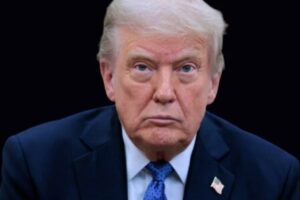




























Donald Trump, serving a second term as president of the United States, has again drawn international attention by indicating that his long-standing interest in Greenland will not be easily dismissed and that U.S. action related to the territory could take place within weeks or months. The remarks have revived debate over sovereignty, security, and the limits of U.S. power in the Arctic.
Greenland, a semi-autonomous territory of Denmark, occupies a strategically significant position in the North Atlantic and Arctic regions. Any suggestion of U.S. involvement beyond existing agreements is therefore being closely watched by allies and rivals alike.
President Donald Trump Revives a Controversial Idea
President Donald Trump has previously described Greenland as vital to U.S. national security and economic interests, citing its location, rare-earth resources, and proximity to key Arctic routes. His latest comments suggest that the administration views the issue as unresolved and strategically urgent.
While Trump did not outline specific actions, the suggestion of movement within months has fueled speculation about diplomatic, economic, or security initiatives short of formal annexation.
Greenland’s Strategic Importance
Greenland sits at the crossroads of emerging Arctic shipping lanes and hosts critical infrastructure, including long-standing U.S. military facilities. Analysts say melting ice and growing global competition have elevated the island’s importance far beyond its population size.
President Donald Trump has repeatedly argued that U.S. influence in Greenland is essential to counter rival powers expanding their Arctic presence, framing the issue as one of long-term security rather than short-term politics.
Denmark and Greenland Respond Cautiously
Officials in Denmark have historically rejected any suggestion of selling or transferring Greenland, emphasizing that the territory’s future is a matter for Greenlanders themselves. Greenland’s local government has likewise stressed self-determination and economic development on its own terms.
Diplomats say renewed U.S. interest could strain relations if not handled carefully, particularly within NATO, where Denmark remains a key ally.
President Donald Trump and U.S. Legal Constraints
President Donald Trump’s comments have also reignited discussion among legal scholars about what actions the U.S. government can realistically take. Formal annexation would face significant legal, diplomatic, and political barriers under international law.
Experts note that increased investment, expanded security cooperation, or economic partnerships are far more plausible near-term options than outright annexation.
Domestic and International Reactions
Reaction in Washington has been mixed. Supporters of the administration argue that strengthening U.S. presence in Greenland is a pragmatic response to global competition. Critics counter that rhetoric about annexation risks unnecessary diplomatic fallout.
Internationally, allies are urging caution, while analysts warn that aggressive posturing in the Arctic could contribute to wider geopolitical tension.
What Comes Next
For now, President Donald Trump’s remarks appear to signal intent rather than a finalized policy. Any concrete steps would likely begin with diplomatic engagement and security discussions rather than unilateral action.
As Arctic competition intensifies, Greenland is expected to remain a focal point of U.S. strategic planning, regardless of how far the administration ultimately chooses to go.

[…] […]