




























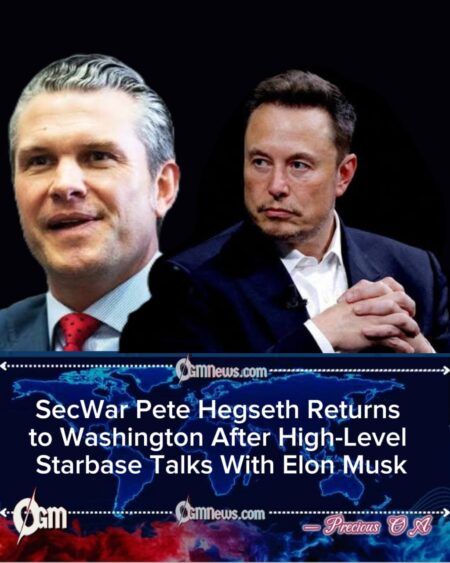
SecWar Pete Hegseth arrived at the conclusion of a high-profile visit to Starbase, Texas, with aides confirming that he is headed back to Washington, D.C., following meetings that drew attention across political, defense, and technology circles. The trip, framed as an exchange of ideas with industry leaders, placed Hegseth at the center of discussions about emerging aerospace technologies, private-sector innovation, and the evolving relationship between government and cutting-edge engineering hubs.
Observers described the visit as carefully choreographed, featuring a tour of SpaceX facilities, briefings on reusable rocket systems, and closed-door conversations about future public-private cooperation. The timing of the trip—coinciding with renewed national conversations about space security, supply chains, and industrial capacity—added to the perception that Starbase was chosen not merely for optics, but for strategic relevance.
Travel logistics were kept deliberately low-key, though social media images and local reports quickly circulated. The return to Washington is expected to mark the beginning of a new phase of follow-up meetings, memos, and policy coordination, as staffers compile summaries of what was discussed and how those ideas might be translated into concrete initiatives.
Meetings With Industry Leaders
The centerpiece of the visit was a private meeting with Elon Musk, whose companies have become synonymous with rapid iteration, vertical integration, and ambitious timelines. According to people familiar with the discussions, the exchange focused on the pace of innovation, workforce pipelines, and how regulatory frameworks can both protect public interests and avoid stifling progress.
SecWar Pete Hegseth also met with senior engineers and operations managers who outlined Starbase’s production rhythms, test-flight schedules, and safety protocols. These briefings reportedly emphasized lessons learned from rapid prototyping and the importance of building resilient manufacturing ecosystems that can scale quickly during periods of heightened demand.
Local officials joined portions of the visit, highlighting regional infrastructure needs, housing considerations for a growing workforce, and environmental stewardship efforts. The presence of municipal leaders underscored how national-level policy conversations increasingly intersect with local planning and community development.
SecWar Pete Hegseth and Strategic Technology
In a separate session, executives detailed how private launch providers are reshaping access to orbit and accelerating satellite deployment cycles. The briefings touched on communications resilience, Earth-observation platforms, and the potential for commercial services to complement public programs.
SecWar Pete Hegseth listened as analysts described the strategic implications of rapid launch cadence, noting how quicker turnaround times can influence everything from disaster response to scientific research. The discussions reportedly explored how procurement models might evolve to keep pace with innovation while maintaining rigorous accountability.
Participants said the tone was pragmatic rather than speculative, with an emphasis on actionable steps. The goal, according to those present, was to identify areas where collaboration could yield near-term benefits without requiring sweeping legislative overhauls.
SecWar Pete Hegseth: Implications for National Policy
The return to Washington will likely be accompanied by a flurry of internal briefings aimed at synthesizing what was learned in Texas. Staff teams are expected to evaluate how commercial best practices might inform procurement strategies, workforce training programs, and technology adoption across agencies.
SecWar Pete Hegseth is anticipated to chair follow-up meetings to prioritize recommendations and determine which ideas merit pilot programs. These sessions could shape guidance on contracting flexibility, innovation sandboxes, and interagency coordination mechanisms designed to reduce duplication and speed deployment.
Policy analysts suggest that even incremental changes—such as streamlined approval pathways or standardized data-sharing protocols—could have outsized effects on timelines and costs. The Starbase visit, they say, may serve as a catalyst for such refinements.
Reactions From Capitol Hill
Lawmakers from both parties have taken note of the visit, with some praising the engagement with industry innovators and others urging caution about transparency and oversight. Statements released by congressional offices emphasized the importance of balancing speed with safeguards, particularly when public funds and national security interests are involved.
SecWar Pete Hegseth is expected to brief key committees upon his return, offering a readout of the meetings and fielding questions about potential next steps. These briefings could influence budget deliberations and the scope of future authorizations related to technology development.
Advocacy groups have also weighed in, calling for clear guardrails around data privacy, environmental impact, and labor standards. Their input may shape how any proposed initiatives are structured and communicated.
What Comes Next
The immediate agenda in Washington includes internal memos summarizing the Starbase visit, interagency consultations, and preliminary outlines for pilot collaborations. Officials familiar with the process say the emphasis will be on identifying “quick wins” that demonstrate value while laying groundwork for longer-term reforms.
SecWar Pete Hegseth will reportedly engage with budget and legal teams to assess feasibility and compliance considerations. This step is seen as critical to ensuring that any new initiatives can move forward without running afoul of existing statutes or procurement rules.
Beyond the near term, stakeholders anticipate a series of roundtables bringing together government leaders, private-sector innovators, and academic experts. These forums are expected to refine ideas and build consensus around best practices for public-private partnerships.
Looking Ahead
The Starbase visit has already sparked conversations about how government can better leverage private innovation while maintaining accountability. Analysts note that the challenge lies in adopting agile practices without compromising transparency or equity.
As Washington absorbs the lessons from Texas, the focus will likely shift to implementation. The coming weeks may reveal which concepts move from discussion to demonstration, and which require further study.
SecWar Pete Hegseth is positioned to play a central role in translating these conversations into policy action, shaping how emerging technologies are integrated into national frameworks. Whether the visit becomes a turning point or simply an informative stop will depend on how effectively its insights are operationalized in the months ahead.



[…] […]