

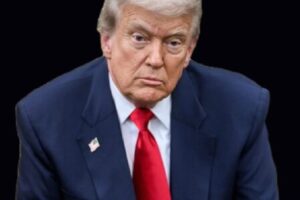












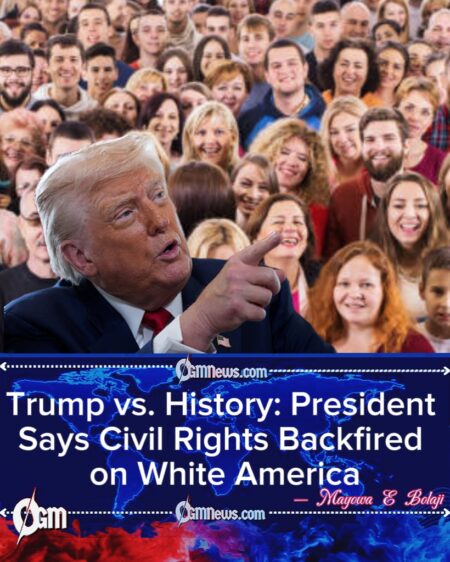
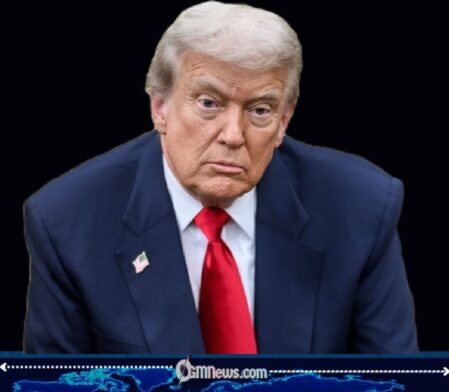
U.S. President Donald Trump, now serving a second term in office, has stirred renewed national debate after stating that civil rights policies in the United States have led to white Americans being “very badly treated.” The remarks, delivered during a recent public address, have reopened long-standing arguments over the intent, impact, and modern relevance of civil rights laws that were originally enacted to address racial discrimination.
Trump’s comments arrive at a time of heightened political polarization around issues of race, equality, and government policy.
Supporters argue that his statement reflects frustrations among some voters who believe current policies unfairly disadvantage certain groups, while critics contend that the remarks mischaracterize the purpose and outcomes of civil rights legislation.
Context of the President’s Remarks
President Trump made the statement while discussing what he described as the unintended consequences of decades of civil rights enforcement. According to him, policies designed to correct historical injustices have, over time, evolved into systems that he believes discriminate against white Americans in areas such as employment, education, and public contracting.
The White House did not immediately release a detailed policy document to accompany the remarks, but aides suggested the president was speaking broadly about affirmative action, diversity initiatives, and federal regulations tied to civil rights compliance.
These policies have long been the subject of legal and political scrutiny across multiple administrations.
Civil Rights Laws and Their Original Purpose
Civil rights legislation in the United States, particularly laws passed in the 1950s and 1960s, was designed to dismantle segregation and ensure equal treatment under the law for historically marginalized groups.
Measures such as the Civil Rights Act and the Voting Rights Act sought to address systemic discrimination in housing, employment, education, and voting.
Over time, these laws have been expanded through court rulings and administrative policies. Proponents argue that such expansions are necessary to address persistent inequalities, while critics maintain that some modern interpretations go beyond the original intent of the legislation.
Supporters’ Perspectives on Trump’s Claim
Supporters of President Trump’s remarks say he is voicing concerns shared by many Americans who feel overlooked by current equity-driven policies. They argue that race-conscious programs can disadvantage individuals who do not belong to protected groups, even when those individuals face economic or social hardships of their own.
Some conservative advocacy groups have pointed to college admissions and corporate hiring practices as examples where they believe merit-based systems have been compromised. From this perspective, Trump’s comments are seen as a call to reexamine how fairness is defined and applied in contemporary policy.
Criticism and Pushback from Civil Rights Advocates
Civil rights organizations and many Democratic lawmakers strongly criticized the president’s statement, describing it as misleading and divisive. They argue that civil rights protections remain necessary due to ongoing disparities in income, education, criminal justice, and health outcomes across racial groups.
Critics also caution that framing civil rights policies as harmful to white Americans risks undermining decades of progress. They emphasize that equal protection under the law does not equate to discrimination against any group, but rather seeks to create a more balanced and inclusive society.
Legal and Policy Implications
Trump’s remarks could signal future policy or legal shifts under his second-term administration. His presidency has previously supported efforts to limit or roll back affirmative action and diversity requirements, particularly through executive actions and support for court challenges.
Legal experts note that any substantial changes to civil rights enforcement would likely face challenges in federal courts. Such debates are expected to intensify as cases involving admissions policies, workplace diversity programs, and government contracting continue to move through the judicial system.
Public Reaction and Political Impact
Public reaction to the president’s statement has been sharply divided along political lines. Supporters praised what they see as a willingness to address uncomfortable issues, while opponents accused Trump of inflaming racial tensions for political gain.
As the nation moves deeper into his second term, analysts say the controversy highlights how race and civil rights remain central — and unresolved — themes in American politics. How these debates are translated into policy will likely shape both Trump’s legacy and the broader national conversation.
My interest in numismatics has grown recently. I was looking for numismatic articles, but many...